Get all your news in one place.
100’s of premium titles.
One app.
Start reading
Tom’s Guide
Tom’s Guide
Technology
Ruth Jones

My sleep tracker says I keep waking up at 3 a.m. but an expert told me not worry as long as my sleep score also shows these 3 things

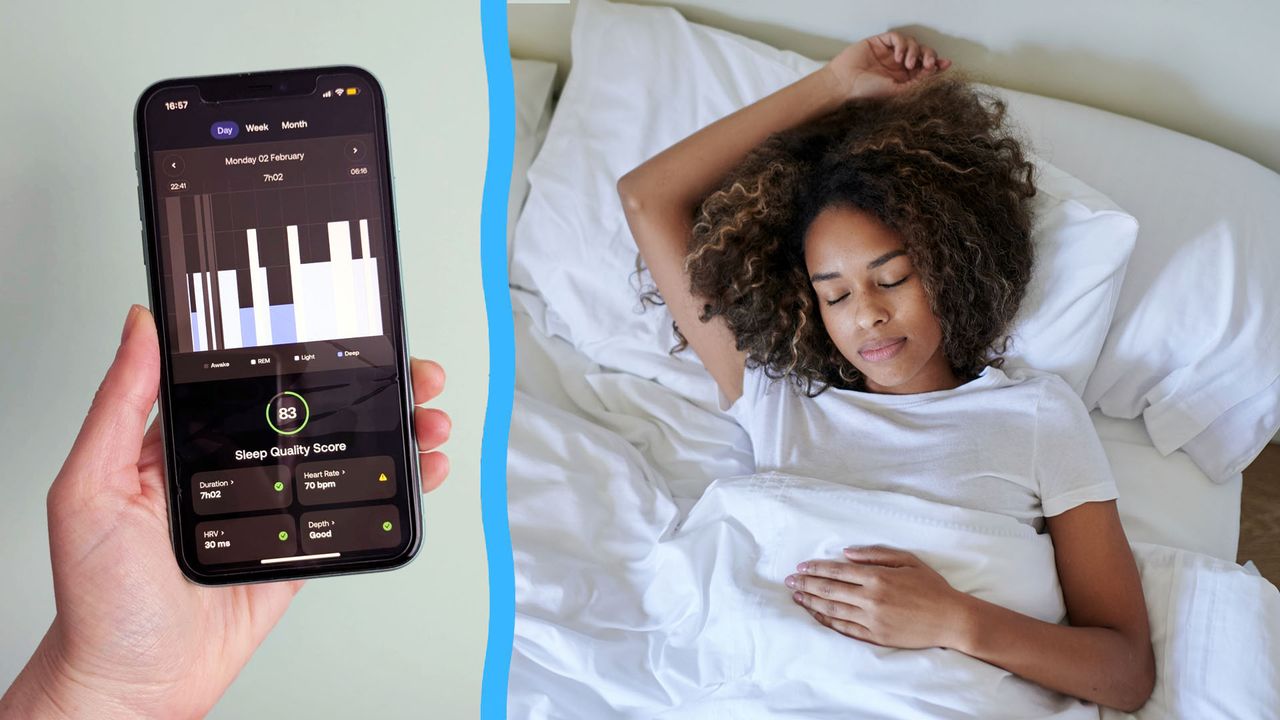
On the left, a close up of hand holding a phone showing data insights from the Withings sleep tracker on the Withings app. On the right, a woman lies on her back in bed, sleeping peacefully.

On Monday mornings I open my sleep tracker app with trepidation in my heart. Following a Sunday night punctuated by 3 a.m. wake ups and endless tossing and turning, I worry I'll have earned a rock bottom sleep score and a telling off from my Withings Sleep Tracker, which costs around $199.95 / £129.95 at Withings.

However, I'm often in for a pleasant surprise. Yes, my data lags behind the results for the days of the week I don't have an anxiety-inducing early morning commute, but they tend to be good overall — scores in the high 70s and green lights for many of the metrics tracked (such as sleep regularity, and breathing quality during sleep).

And the Withings track pad I use is among the best sleep trackers we've tested, so I won't chalk this up to bad tech either.

I asked Hannah Shore, Head of Sleep Science at Mattress Online, why my sleep tracker has a positive outlook on my sleep even after what feels like a disaster night, and what I can do to boost my sleep score further. Here's what she said...

What's waking me up at 3 a.m.?

My worst sleep of the week comes like clockwork on Sunday night, and that's something my sleep tracker can confirm. I use the Withings Sleep Analyzer to track my rest and my scores are consistently lower on Monday morning.

This is due to the 'Sunday Scaries' — that creeping anxiety over the return to work — combined with the 'Commute Creepies', a new term I'm using to describe my worry that I'll sleep through my alarm, miss my train, and start the work week frazzled and frustrated.

(Image credit: Getty Images)

When I'm trying to fall asleep, some part of me stays alert, listening out for my alarm.

Anxiety is a major culprit behind 3 a.m. wake ups because it increases cortisol levels. (Known as the stress hormone, cortisol naturally starts to rise at around 3 a.m. to get you ready for the morning.)

If your cortisol levels are already elevated due to anxiety, the gradual increase can trigger an unwelcome wake up. This is my experience.

What the experts (and my sleep tracker) say about my 3 a.m. wake ups

I was always wary of sleep trackers – I thought being so hyper-focused on my sleep quality each morning would cause orthosomnia (when you become obsessed with having perfect sleep).

However, the most surprising thing about my sleep tracker is how consistent my good results are.

I was worried I'd be scolded, but instead I feel supported. Here's why my sleep tracker helps me feel better about my bad nights...

It's all about quality, not quantity

“Quality sleep isn’t just about how long we sleep, but the balance of sleep stages we move through," explains Shore, an Oxford-trained sleep specialist.

"We need a healthy mix of deep sleep, light sleep, and REM sleep to feel truly refreshed."

(Image credit: Getty Images)

Although my Sunday Scaries might leave me short of my desired sleep length, when I do drift off I cycle through these different sleep stages.

"Quality of sleep is about spending enough time in each different sleep stage to help you recover from the previous day and be ready for the next," explains Shore.

Balanced sleep stages

On Monday mornings, my deep sleep measurements fall behind my REM and light sleep cycles. I used to wonder how my tracker could classify my sleep as 'good' when I was missing out on this all-important step.

But Shore explains that 'deep sleep' isn't the 'magic bullet' we often think it is.

"Although everyone sleeps slightly differently, we're looking for a range of around 12-25% of deep sleep each night," she notes. Honestly, that percentage is significantly less than what I was expecting to hear.

My Sleep Score is regularly in the high 70s and 80s, apart from on Sunday nights when it starts to tank (Image credit: Withings / Future)

"This may fluctuate depending on what you have been doing throughout the day / week, how you are feeling, and your overall health," she adds.

And if I'm lacking deep sleep, it might be because my body has made a strategic decision.

"Your body will naturally go into the stages of sleep it thinks you need in order to recover optimally; you just have to provide it with the right environment and the optimal amount of time to do so," says Shore.

She explains that deep sleep is best for physical restoration, while light sleep and REM sleep help with learning, emotional processing and memory consolidation.

Consistency

So, one reason my sleep looks good, even if it's short, is because I'm achieving a good mix of sleep stages.

And as Shore explains, this isn't a matter of luck: "If we have a good, regular sleep routine where we are getting the same amount of good quality sleep each night, our body will know exactly the type of sleep we need in order to feel better the following day, and will cycle through them easily."

This is the Withings Sleep Tracker I've been using to monitor my 3 a.m. wake ups (Image credit: Future)

And that's something my sleep tracker has also picked up on: I'm pretty consistent with my sleep.

While I have my ups and downs, I'm regularly getting seven to eight hours most nights across the course of the week.

It's a guideline, not gospel

"As an individual, wearing the same tracker over a prolonged amount of time can give you insights on how well you are sleeping," notes Shore.

"Just don’t get too bogged down in the data. Use it how you would your weighing scales at home; good to know the information, but don’t overthink it."

The big picture of my sleep is positive, but my tracker has helped me identify areas of improvement. Trying to reduce 3 a.m. wake ups is one, improve my sleep schedule on the weekend is another.

3 techniques I'll be using to get the best sleep quality from now on

"Small changes in your sleep routine will ensure the body knows when it is time for bed and therefore, will start getting you ready for bed before you get into it," Shore explains.

"Meaning when you do get into bed, sleep should come easily, optimizing your time in bed for sleep and therefore improving your sleep quality."

Here's what she recommends...

1. Stick to a regular sleep schedule

I'm a menace for oversleeping at the weekend and it's a habit I've struggled to kick. It's also probably one of the reasons my sleep suffers on a Sunday, as social jet lag confuses my body clock...

"Going to bed at the same time every day can help your body know when it is time for sleep," explains Shore.

"It will start producing the right hormones at the right time, meaning it will be easier for you to fall asleep and wake up, hopefully spending less time in bed staring at the ceiling."

2. Find a relaxing, cortisol-lowering evening routine

A good wind down routine can help shorten your sleep latency (how long it takes to fall asleep), so you can dedicate more time to quality shut-eye.

"A calming and relaxing bedtime routine also lets your body know when it's time for bed," advises Shore.

(Image credit: Shutterstock)

A calming wind-down routine can also help lower your cortisol levels, so you're less likely to be disrupted by your circadian rhythms starting the wake-up process in the early morning.

I've found methods like Sleep Stories from the Calm App and dark showering to be good ways for me to relax before bed.

Hacks like the constructive worry method are also useful for fighting anxiety — I use this dedicated 'worry period' to write down my problem (what if I sleep through my alarm?) with a solution (turn the volume up on my alarm.)

3. Perfect your sleep environment

When I'm already on high alert waiting for my alarm, the smallest disturbance can wake me up. Cue my heating accidentally kicking in at 3 a.m...

Improving your sleep environment can help reduce these disruptions. A sleep mask can block out light, the best sleep ear buds can mask noisy interruptions, and choosing the best mattress for your sleep needs helps you avoid aches and pains.

I place the sleep tracker pad under my mattress and beneath the bed frame. Even though there's nothing on my wrist, the sleep tracking on the Withings is powerful (Image credit: Future)

"Turn the big light off and have low-level lighting in the evening," recommends Shore, "ensure your bedroom temperature is slightly cooler than the rest of the house, and of course, make sure your bed is comfy, supportive, and suits your unique sleep needs."

When should you speak to a doctor about your 3 a.m. wake ups?

Sleep trackers are useful but not infallible and in some cases, it's better to speak to a health care professional to receive personalized, hands-on advice about how to improve your sleep quality.

If you regularly wake up at night and struggle to fall back to sleep, you've been experiencing sleep problems for three months or more, or sleep deprivation is impacting your health and wellbeing, speak to a doctor.


Follow Tom's Guide on Google News and add us as a preferred source to get our up-to-date news, analysis, and reviews in your feeds.


Sign up to read this article
Read news from 100’s of titles, curated specifically for you.
Already a member? Sign in here
Related Stories
Top stories on inkl right now
One subscription that gives you access to news from hundreds of sites
Already a member? Sign in here
Our Picks
Fourteen days free
Download the app
One app. One membership.
100+ trusted global sources.