
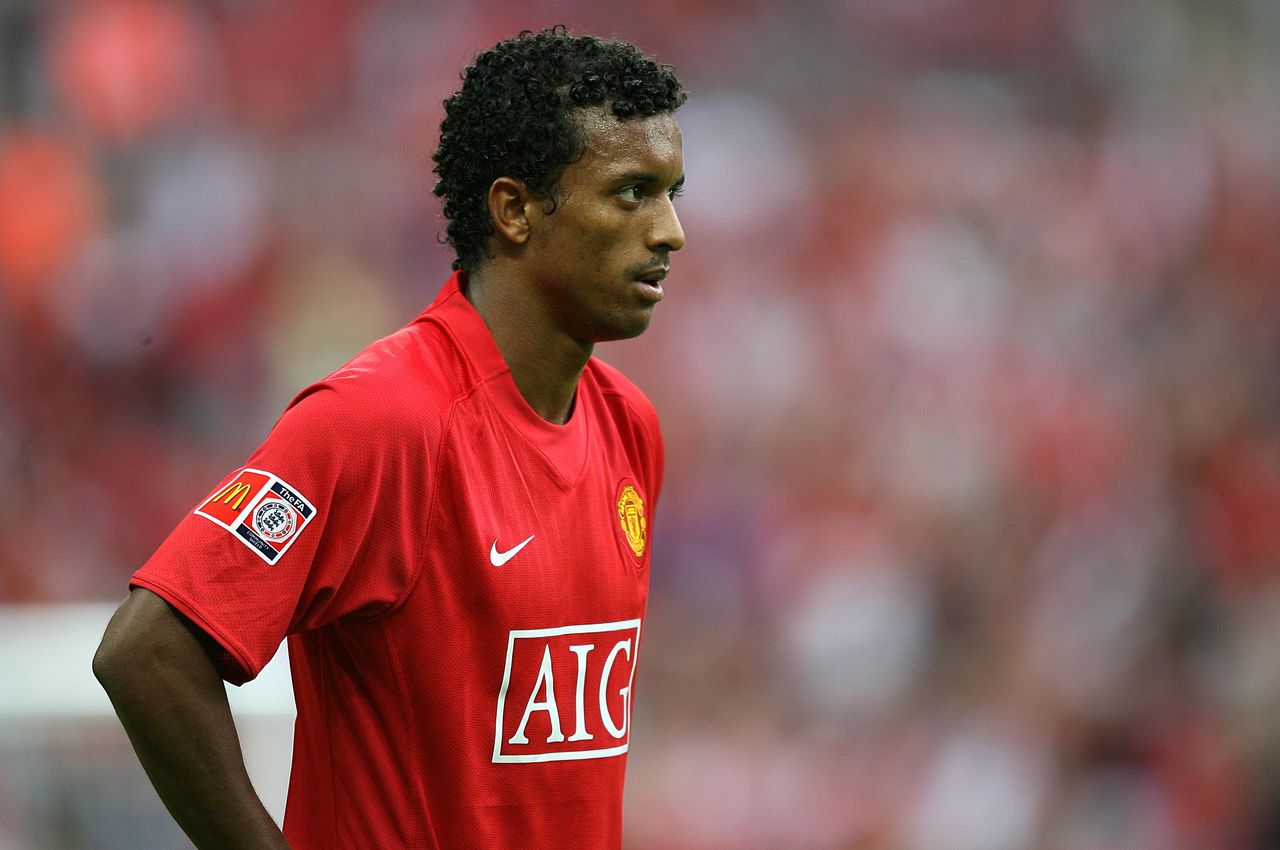
He was born Luis Carlos Almeida da Cunha, but to football fans across the globe, he was simply known as just ‘Nani’.
The former Portugal and Manchester United winger made more than 700 appearances for club and country during a 20-year career that saw him play club football in seven countries across the world and turn out in five major international tournaments.
The name Nani there adorned shirts in some of the biggest games in the world - but as he explains, the story behind his nickname is more personal than many realise.
Nani on his nickname origin story

“It goes back to my childhood,” Nani tells FourFourTwo when asked about the origins of his nickname. “I had an older sister who looked after me all the time.
“Sometimes she’d feed me and, while sharing out the food, she’d joke, ‘For you, for me… for Nani.’”
It may have been merely a throwaway line in a busy household, but the name struck a chord.
“These little things stick, she kept calling me that all the time and, when I started going out and dancing, everyone called me Nani too. The name stayed with me.”
While Nani would go on to enjoy a hugely successful career that included four Premier League titles and a Champions League with Manchester United, plus a Euro 2016 winners’ medal with Portugal, life was far from easy as he grew up.
But what he did have was a supportive family, as his childhood was shaped as much by resilience as it was by resources.
“My brothers and sisters had a huge, positive influence on my life,” he continues. “I was the youngest of nine, so everyone took great care of me.

“When there wasn’t enough food at home, they always tried to find a way for us to share what we had so I’d never go without. They were very protective, especially because we lived in a tough neighbourhood, and it was vital to have them close to guide me.
“They helped to keep me away from walking the wrong path. There were many temptations and situations that weren’t good for young kids. One of my brothers, for example, wouldn’t let me stay out too late or spend too much time on the streets with friends who might have been a bad influence, to stop me from smoking or doing things that weren’t right for a child.
“My siblings were incredibly important.”