Get all your news in one place.
100's of premium titles.
One app.
Start reading
Tom’s Guide
Tom’s Guide
Technology
Kaycee Hill

My lawn was completely fried after the heatwave — to save it I had to stop making these 3 mistakes

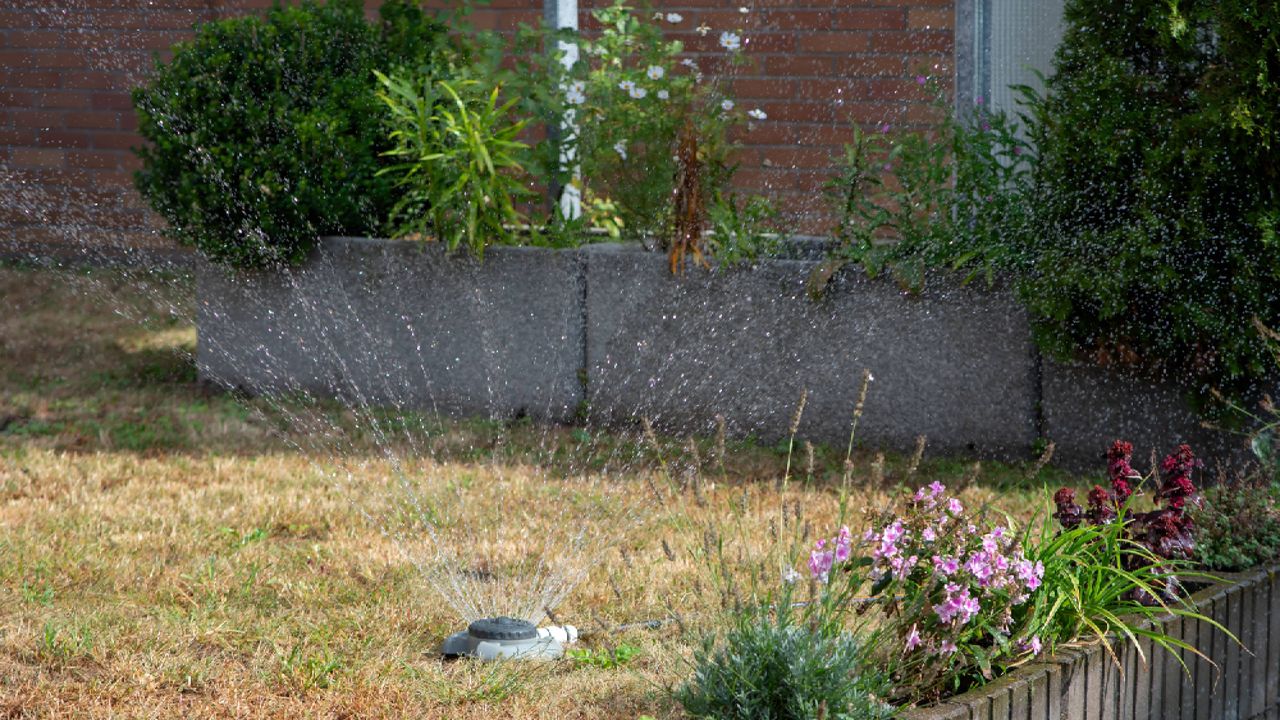
A lawn sprinkler operates on a scorched grass lawn.

A week of brutal heat and your lawn turns brown. It looks fried. Looks dead. Your instinct is to do something: pull out the hose at sunset, grab fertilizer, lower the mower blade. These feel like solutions. They're not.

Most of that browning is dormancy, not death. Your grass is shutting down to survive the heat, which is exactly what it should do. The problem is that three specific mistakes can actually kill what dormancy doesn't. These mistakes are so common that most people don't realize they're doing them.

Here's what's going wrong and how to fix it before you accidentally kill what's still salvageable.

Stop watering at sunset

Evening watering seems logical but it's counterproductive. Sprinkling for 10 or 15 minutes at sunset leaves your lawn damp overnight, creating ideal conditions for fungus and rot.

More critically, shallow watering only penetrates the top quarter-inch of soil, forcing grass roots to remain near the surface instead of growing deep into cooler, moisture-retaining soil. When heat hits the next day, these shallow roots scorch.

The solution is straightforward: water between 5 and 8 AM only, and apply deep waterings three times weekly, soaking 4 to 6 inches down.

This forces roots to develop deep enough to access cooler soil and resist heat stress. Use the tuna can method to measure: place an empty can on the lawn and water until it fills to one inch. That's your target.

Don't fertilize dormant grass

This is the most damaging mistake homeowners make. Brown grass signals dormancy, not death.

The plant has intentionally shut down its metabolism to protect the crown and conserve resources. Applying heavy nitrogen fertilizer forces the grass to push soft new growth when it lacks the water reserves to support it. This burns out the root system entirely.

Do not apply synthetic fertilizers during summer heat. Instead, top-dress bare patches with rich compost or apply organic root-boosters like liquid kelp. These support root health without triggering dangerous leaf growth. Wait until fall temperatures drop before resuming regular fertilization schedules.

Raise your mower blade now

Cutting grass short is a critical error during heat stress. Tall grass blades provide shade for the soil underneath. When you scalp the lawn short, direct sunlight bakes the topsoil, evaporating ground moisture in hours and exposing root crowns to extreme temperatures.

This also creates bare patches where heat-loving weed seeds like crabgrass germinate and establish.

Set your mower deck to 3.5 to 4 inches immediately. Taller grass reduces water evaporation by up to 30 percent, shades its own root system, and prevents crabgrass colonization. Yes, you'll mow more frequently, but your lawn will actually survive.

More from Tom's Guide

Sign up to read this article
Read news from 100's of titles, curated specifically for you.
Already a member? Sign in here
Related Stories
Top stories on inkl right now
One subscription that gives you access to news from hundreds of sites
Already a member? Sign in here
Our Picks
Fourteen days free
Download the app
One app. One membership.
100+ trusted global sources.