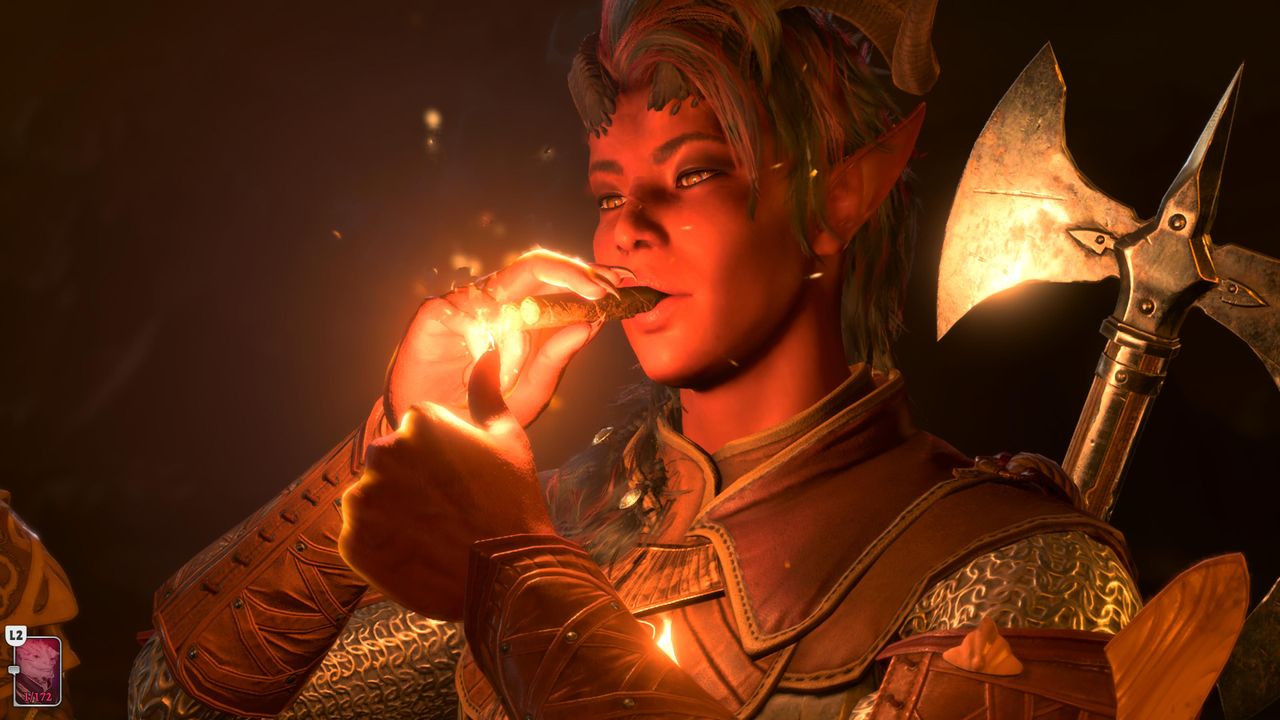
Character classes don't exist in Divinity Original Sin 2. Not in the typical sense, anyway. This crucial information totally escaped me when I sat down for my first ever playthrough, despite knowing full well that this is no Dungeons and Dragons RPG like Baldur's Gate 3.
When I queried the best class for an elf, Google dredged up the most incredibly specific results. Blood mage. Necro-storm cleric. So, like a well-trained BG3 devotee, I went hunting for a tab marked "class" in my character creator. Imagine my surprise when combat abilities, civil abilities, attributes, and talents greeted me instead. I clicked around worriedly, with absolutely no idea what I was supposed to be doing, and hoped for the best.

Such was the very slow, pronounced process of unpicking my BG3-ified brain. It's a pattern that has reared its head repeatedly as I've trucked my way to Arx. Every so often, certain expectations I've unwittingly carried with me throw me into a state of white hot panic as I forget which game I'm playing – although it makes me appreciate both even more for their differences.
Roleplaying with the punches

Getting the hang of Original Sin 2 being a points-based rather than class-based RPG was just the beginning. Next, I had to contend with the Larian's very different approach to combat and armor.
It might be a rare take, but I actually quite enjoy it. There are no spell slots to speak of, no long and short rest economy, and there are very few limitations to what your characters can do if specced correctly.
Most interesting is the armor. Every enemy has magic armor, physical armor, or a combination of both atop their red health bars. Destroy their armor (or choose a talent like Torturer to utterly ignore said armor), and you can whittle the health bars down next. DOS2's combat system feels simple and straightforward in general, opting for a more Top Trumps-esque "highest number wins" condition over the dice roll and chance in Baldur's Gate 3. If your character is a higher level than an enemy and uses heavy duty spells, you'll likely win an altercation. If the opposite is true, you probably need to save scum a little. That much, at least, is consistent between both games.
But unlike BG3, where it's possible to cheese your way out of even the toughest boss battles when you're quite underleveled, DOS2 lets you know when you've met your match. It tells you to flee when you engage in battle with a higher-level foe, and try as I did, it proved very hard to cheese things in those early game hours. More fool me for trying to turn everyone into a chicken and throw them into fire, I guess, but it would have worked on Balthazar!

DOS2 feels wilder in that regard, full of chaos and experimentation
Broadly, enemies are a completely different ballgame here. Neither game involves enemy scaling, but where Emerald Grove and its environs provide a gentler leveling curve and fewer moments of being underpowered, moving through Fort Joy felt like getting XP out of a stone. I finished the act at level five, and the final battle on the Lady Vengeance was still a bastard – but I think that's how Larian wants me to feel.
As a source-less sourcerer with a ragtag band of fellow Godwoken, my character is weak by design in Act 1. I'm not meant to feel prepared, because I didn't see any of this coming. These are some of the most punishing hours I've experienced in my 96-hour playthrough so far; if anything I feel like DOS2 gets easier as I go along. Meanwhile, Baldur's Gate 3 sets up a tale where the opening hours are the easiest in the game, and that fairytale opener guides you into the belly of the beast.
I still have to take a breath sometimes and remind myself of the small differences between the two games, yet how much of an impact those changes make. I came to Divinity expecting the flexible yet entrenched rules and regulations of Dungeons and Dragons without knowing it, and instead, I have a world of possibility at my fingers. DOS2 feels wilder in that regard, full of chaos and experimentation, and now that I'm halfway through Act 4, I can't believe I'd been so wrong once upon a time.
The two might look and feel similar, each boasting the slick sheen of a top-down Larian RPG, but they are not to be played in the same way at all. I learned it the hard way, and I almost don't regret it… even if I spent far too long in character creation for all the wrong reasons.
Check out all the upcoming RPGs on the horizon if you can't wait for your next roleplaying fix