One of the more anxious feelings in golf is watching a tee shot sailing on the wind towards the out of bounds. Will it come down? Is there anything to stop it? It triggers a feeling of forlorn hope mixed with abject helplessness.
More often than not, nothing will stop the ball’s inexorable progress and there will be nothing for it but to reload. But, just occasionally, the golfing gods are generous and put a handy obstacle in the way.

You can’t believe your luck, a solid wall marking the boundary line comes to your aid. Your brand-new Titleist strikes the wall near the very top and ricochets back into perfect position on the fairway. Thank the lord!
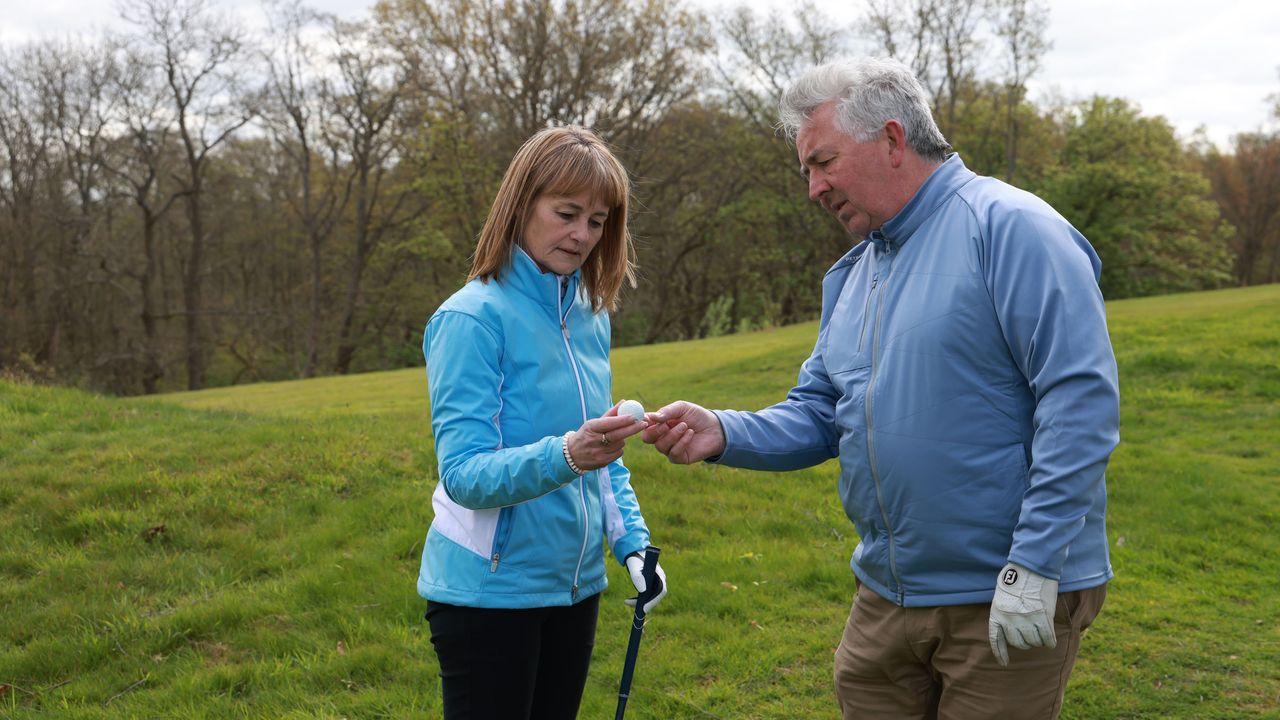
But the ball has hit the stonework with such venom that you fear for its integrity. On reaching the ball, it’s sitting so you can’t see the side that made contact with the boundary. It could have a massive chunk out of it and you’re reluctant to hit without discovering if that’s the case.
What can you do according to the Rules? Can you check it for damage before you play your second?
The answer is a simple one – Yes, you can. It’s covered by Rule 4.2c. Rule 4 covers equipment, Rule 4.2 is specific to balls and Rule 4.2c is – “Ball becomes cut or cracked while playing hole.”
That Rule says that if you “reasonably believe” your ball may have become cut or cracked during the hole you are playing, you can lift it to check.
Given you’ve seen your ball smacking off a stone wall at high velocity, it’s fair to say you can have a very reasonable belief that it may have been damaged.
But, before you lift it – you must mark its position with a ball marker, a tee or similar. You could also hold a club on the ground right by the ball’s spot.
If you were to lift the ball without first marking its position, you would incur a one-stroke penalty. If you were to lift a ball without reasonable belief it was cut or cracked (even if you marked the spot), you would also receive a one-stroke penalty.
But you have reasonable belief and you have marked the spot so you can lift it and inspect it.
If you find it to have been cut or cracked, you can either choose to play it or substitute in a different ball. Either must be placed on the original spot before you then play.
If you lift your ball and find it has not been cut or cracked, if it is just scraped or discoloured, you must replace it on the original spot and play on.
If you were to substitute it for another ball when it wasn’t cut or cracked, you would incur a one-stroke penalty.
Fairly straightforward this one then. If you reasonably believe your ball may have been cut or cracked in striking a wall, you can fairly mark it, lift it and inspect it. If it has been cut or cracked you can use a different ball.