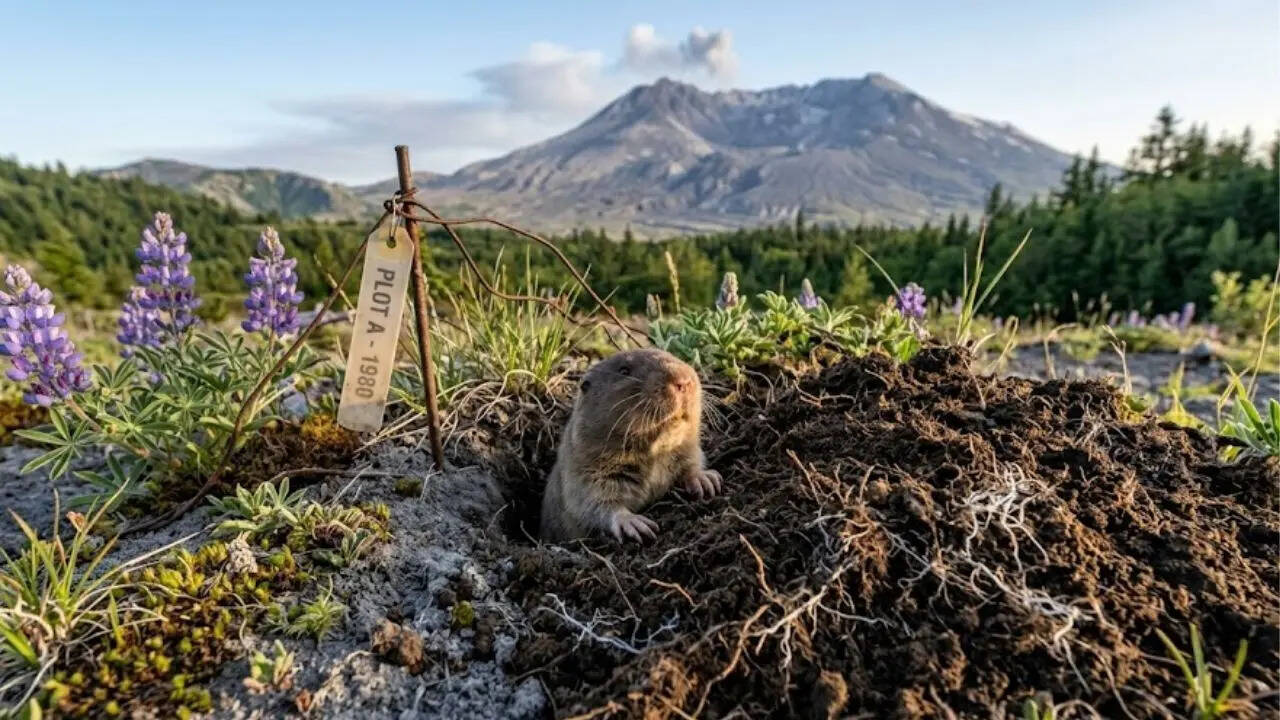
When Mt. St. Helens erupted in 1980, a green and vibrant landscape turned into a desolate ash and grey wasteland. But, within the grey barrenness, scientists conducted a courageous 24-hour study: they put pocket gophers in the blast zone. More than 40 years later, this short intervention has led to phenomenal results, with this rodent being credited for reigniting ecological recovery.
By churning the volcanic crust, the subterranean rodents pushed much-needed nutrients and symbiotic fungi to the surface. These ‘ecosystem engineers’ are now given credit for expediting the forest's restoration from the barren moonscape it once was into the life-rich habitat it is today. The secret to their success lay in a collaboration between animal behaviour and soil microbiology. Such remarkable regeneration demonstrates how small-scale biological disruptions can trigger massive environmental shifts, proving that even a wasteland can breathe again.