
Get all your news in one place.
100's of premium titles.
One app.
Start reading
Android Central
Android Central
Technology
Brady Snyder

Moto G Stylus 2026 vs. Samsung Galaxy S26 Ultra: Two styluses, two price points

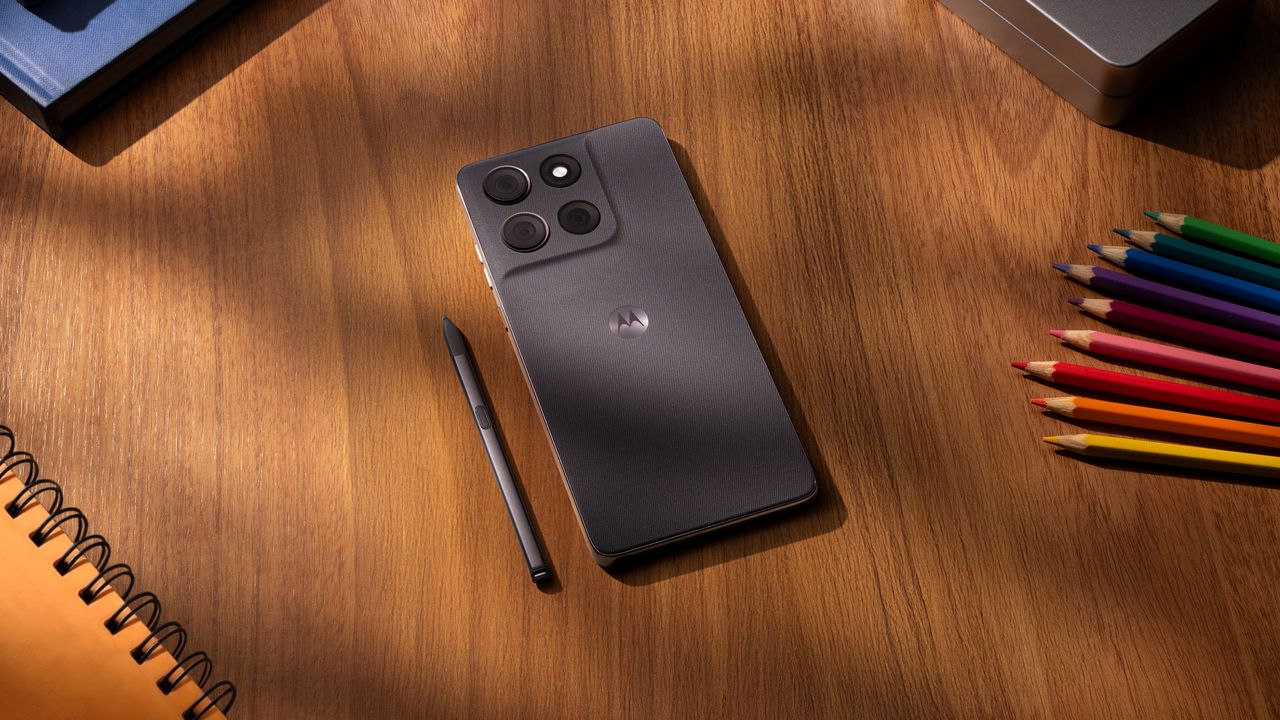
The Moto G Stylus 2026 next to the pen on a table.

Is the S Pen on Samsung Galaxy phones here to stay? No one knows the answer to that question, but there's reason for Android stylus fans to be skeptical.

Of course, Samsung killed the Galaxy Note many years ago, but it also axed the S Pen for foldables with the release of the Galaxy Z Fold 7 just last year. It canned Air Actions, the S Pen's Bluetooth remote control features, with the Galaxy S25 Ultra. From the outside looking in, it seems Samsung isn't prioritizing the S Pen as it once did — even though the latest Samsung Galaxy S26 Ultra includes one.

At the same time, Motorola is doubling down on styluses. It announced pens for the upcoming Razr Fold and Moto Pad, and just unveiled the Moto G Stylus 2026. The latest model includes an active stylus for the first time, adding features like pressure sensitivity and tilt detection. That puts the Moto G Stylus 2026 in the same league as the Galaxy S26 Ultra, which also sports an active stylus in the S Pen.

But is there anyone willing to grab the $500 Moto G Stylus 2026 instead of the $1,300 Galaxy S26 Ultra, and accept the compromises that come with the lower price? Let's find out.

Moto G Stylus 2026 vs. Samsung Galaxy S26 Ultra: The pens

(Image credit: Motorola)

The two things tying the Moto G Stylus 2026 and the Galaxy S26 Ultra together are their built-in styluses. Both phones now support active styluses, which means they use tiny internal batteries to communicate with their screens. This is how features like Air View hover previews with the S Pen or pressure-sensitive drawings on the Moto G Stylus 2026 are possible.

Motorola says its stylus will last 100 hours on a single charge, and powers up in 15 minutes when docked inside the Moto G Stylus 2026. Samsung doesn't advertise the S Pen's battery life, but it works the same way. When stored in its silo, the pen charges, and it's ready to go when you pull it out.

Each phone offers distinct software tricks that make use of the pen. Motorola built entire Android OS behaviors around the new active stylus, like how you can drag and drop images or magnify text using the pen. There's also a new Handwriting Calculator that solves your math problems as you draw them. You get a button on the stylus for highlighting text that can be shared to the Notes app.

(Image credit: Nicholas Sutrich / Android Central)

The Galaxy S26 Ultra's stylus has a slight design problem — the S Pen can only be docked in one direction. It's curved to match the curvature of the device chassis, so it won't fit if inserted upside down. Aside from that limitation, it's as capable as ever, with software tools like AI Select, AI Drawing, and Air Commands. Longtime S Pen users will notice that Air Actions, otherwise known as Bluetooth S Pen features, are missing for the second straight year.

Motorola Moto G Stylus 2026 vs. Samsung Galaxy S26 Ultra: Design and display

(Image credit: Nicholas Sutrich / Android Central)

The overall designs of the two smartphones are quite different. Samsung's Galaxy S26 Ultra is larger, while Motorola's Moto G Stylus 2026 is more compact. The former has a 6.9-inch screen, and the latter has a 6.7-inch screen. Samsung's display is special because it supports the Privacy Display feature that uses custom wide and narrow pixels that can be turned off individually to limit viewing angles.

Both displays are OLED and capable of 120Hz refresh rates. The Moto G Stylus 2026 is actually brighter than the Galaxy S26 Ultra, with a peak rating of 5,000 nits compared to 2,600 nits. The Stylus 2026 has a Super HD display, while the Galaxy S26 Ultra has a QHD+ resolution, and each has its own quirks. Motorola's screen has a Water Touch mode that improves accuracy when the surface is wet, while Samsung's Gorilla Armor 2 coating is anti-reflective.

The Galaxy S26 Ultra is wider and taller than the Moto G Stylus 2026, but it's also thinner, measuring 7.9mm thick. The Moto G Stylus is slightly thicker at 8.3mm, and features interesting vegan leather Pantone Coal Smoke and Pantone Lavender Mist colorways.

(Image credit: Motorola)

In terms of durability, the Galaxy S26 Ultra supports IP68 dust- and water-resistance, but the Moto G Stylus 2026 takes that up to IP69. It's an even tougher standard that improves water-resistance against high-pressure and high-temperature water jets.

Motorola Moto G Stylus 2026 vs. Samsung Galaxy S26 Ultra: Hardware and specs

(Image credit: Motorola)

Raw hardware and specs won't help the Moto G Stylus 2026 stand out. The Qualcomm Snapdragon 6 Gen 3 powering the experience is the exact same chip we saw on the Moto G Stylus 2025. It's an old, underpowered chip that doesn't help Motorola justify this year's $100 price increase. The 8GB of memory and 128GB or 256GB of storage aren't anything special, either — though the Moto G Stylus 2026 does support up to 1TB of expandable microSD card storage.

That's before we bring the Galaxy S26 Ultra into the conversation, which will unsurprisingly blow Motorola's budget offering out of the water. It uses a state-of-the-art Qualcomm Snapdragon 8 Elite Gen 5 processor paired with either 12GB or 16GB of RAM. It's arguably the best chip on the Android side of the smartphone market, and can handle your needs of today and tomorrow.

Category

Motorola Moto G Stylus 2026

Samsung Galaxy S26 Ultra

Display

6.7" Extreme AMOLED, 1.5K Super HD (2712 X 1220) 446ppi, 100% DCI-P3 color space 10-bit; Over a billion shades of color, up to 120Hz refresh rate, 5000 nits peak brightness, Display Color Boost, Water Touch

6.9-inch QHD+ (3,120x1,440) AMOLED, 120Hz Adaptive Refresh Rate, Corning Gorilla Glass Armor 2, Anti-reflective coating, Privacy Display, up to 2,600 nits

Processor

Qualcomm Snapdragon 6 Gen 3

Qualcomm Snapdragon 8 Elite Gen 5 for Galaxy

RAM

8GB

12GB / 16GB

Storage

128GB, 256GB

256GB, 512GB/ 1TB

Rear Camera 1

50MP, f/1.8 (wide)

200MP, f/1.4,(wide)

Rear Camera 2

13MP, f/2.2 (ultrawide)

10MP, f/2.4, 3x (telephoto)

Rear Camera 3

N/A

50MP, f/2.9, 5x (periscope telephoto)

Rear Camera 4

N/A

50MP, f/1.9 (ultrawide)

Front Camera

32MP, f/2.2

12MP, f/2.2

Ingress Protection

IP68/IP69

IP68

Connectivity

5G (sub-6GHz), Wi-Fi 6E, Bluetooth 5.4

5G (sub-6GHz, mmWave), Wi-Fi 7, UWB, Bluetooth 6.0

Battery

5,200mAh

5,000mAh

Charging

68W wired, 15W wireless

60W, Qi 2.2 Magnetic Compatibility w/ 25W wireless speeds

Dimensions

162.2 x 74.8 x 8.3 mm

163.6 x 78.1 x 7.9 mm

Weight

192 grams

214 grams

OS

Android 16 (two generations of OS upgrades)

One UI 8.5 w/ Android 16 (seven generations of OS upgrades)

The Moto G Stylus 2026 might struggle to meet tomorrow's needs, given its short software support guarantee that spans only two major Android OS upgrades. You do get Android 16 out of the box, but anything beyond that is a risk because Motorola has a subpar track record in this area. Meanwhile, the Galaxy S26 Ultra starts with the Android 16-based One UI 8.5 and comes with seven years of Android OS updates.

Motorola does win the battery battle with a larger capacity and faster wired charging speeds. The Moto G Stylus 2026 has a 5,200mAh capacity and charges at 68W over a cable, but wirelessly it drops to 15W. The Galaxy S26 Ultra has a 5,000mAh battery and supports 60W wired charging, but offers faster 25W speeds wirelessly.

(Image credit: Nicholas Sutrich / Android Central)

The Galaxy S26 Ultra offers the vastly superior camera system, with a quadruple-sensor layout on the rear including a 200MP primary shooter, a 50MP ultrawide, a 50MP 5x zoom telephoto, and another 10MP 3x zoom telephoto. Motorola's phone features a 50MP main sensor and a 13MP ultrawide on the back, but that's it. Although a light sensor and flash are disguised to look like extra camera lenses, they aren't ones.

Motorola Moto G Stylus 2026 vs. Samsung Galaxy S26 Ultra: A worthy competitor?

(Image credit: Motorola)

If you're looking for an Android phone with a stylus, the Moto G Stylus 2026 makes you wonder how much smartphone you really need. Could a $500 phone handle your daily messages, calls, photos, and social media scrolling? It's possible, and I'm always ready to admit that few people truly require a flagship phone costing in excess of $1,000. However, Motorola didn't do much to convince users that the Moto G Stylus 2026 is ready to challenge phones like the Galaxy S26 Ultra.

The Moto G Stylus 2026 is powered by the Snapdragon 6 Gen 3 processor, which is carried over from the 2025 model and first released in 2024. It's not just a low-end mobile chip; it's also an aging one. Plus, the Moto G Stylus 2026 only comes with two years of Android OS upgrades, and we're familiar with Motorola's poor track record with software updates. The camera system is identical to the one on the Moto G Stylus 2025, too.

So, if Motorola's goal by adding an active stylus and raising the price by $100 was to make the Moto G Stylus 2026 a closer competitor to the Galaxy S26 Ultra, I don't think it met the mark. The stylus is great, and so is the display, IP69 certification, and battery. The other things that make an excellent Android phone, like a fast processor, great cameras, and long software support, just aren't flagship-caliber — and aren't even really that close.

It's the same story as usual for the Moto G Stylus 2026. This is an outstanding phone for the price, and, incredibly, you get an active stylus for $500. You'll just have to give up a lot compared to the best of the best, like the Galaxy S26 Ultra. Considering Motorola's stylus phone is $800 cheaper than Samsung's, that shouldn't come as a huge surprise.

Sign up to read this article
Read news from 100's of titles, curated specifically for you.
Already a member? Sign in here
Related Stories
Top stories on inkl right now
One subscription that gives you access to news from hundreds of sites
Already a member? Sign in here
Our Picks
Fourteen days free
Download the app
One app. One membership.
100+ trusted global sources.