Get all your news in one place.
100's of premium titles.
One app.
Start reading
The Independent UK
The Independent UK
Steve Fowler

Most Brits don’t want Labour to put the brakes on the electric car switch

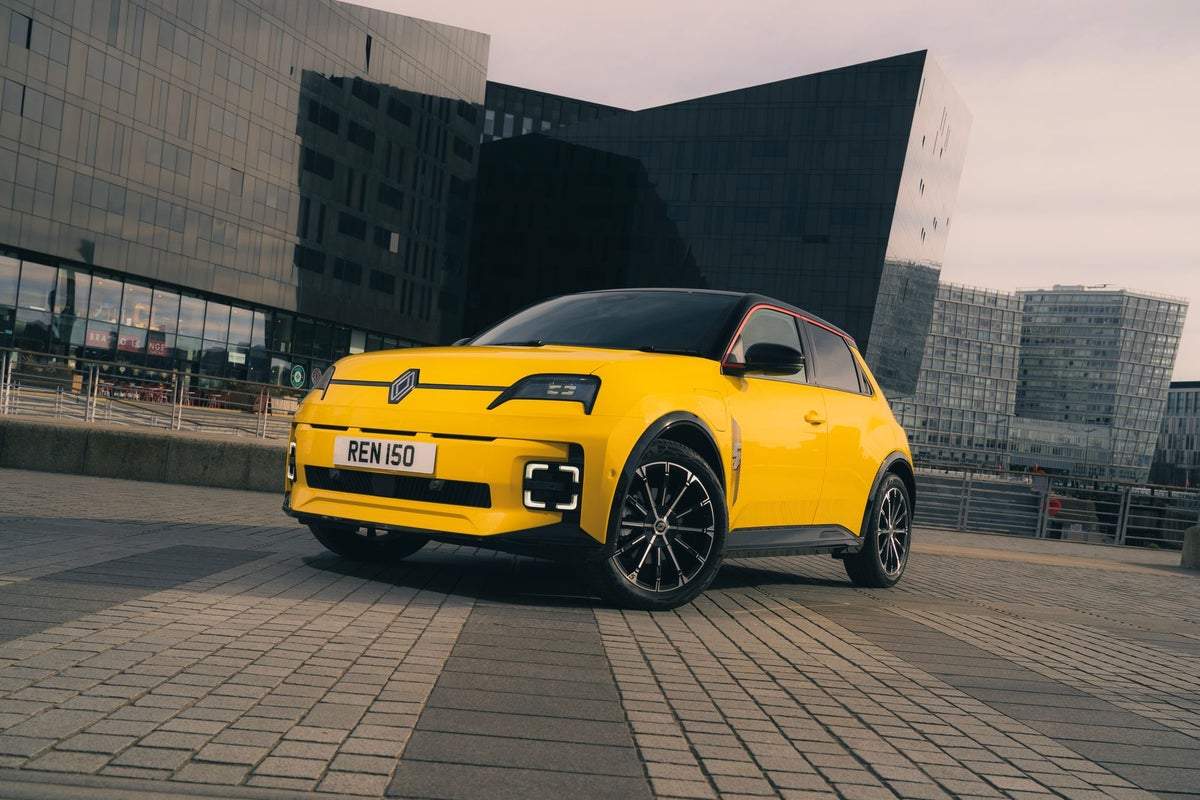
The Renault 5 is one of the UK’s best-selling electric cars - (Renault)

Most people in Britain would rather the government didn’t ease off on the switch to electric cars, according to a new poll arriving as Labour faces fresh questions over its EV plans.

Despite pressure from the car industry for the government to relax the current ZEV mandate that means car makers must hit a 33 per cent target for electric car volume this year, the YouGov survey, commissioned by charging industry trade body ChargeUK, found only 37 per cent believe the move should be slowed. By contrast, 34 per cent think the pace is about right and 19 per cent want it sped up.

That puts 53 per cent in the keep-going-or-go-faster camp, while 11 per cent said they didn’t know.

Among people who voted Labour in 2024, only 21 per cent favour a slowdown. Some 41 per cent are happy with the current pace and 27 per cent want faster progress.

ChargeUK says that rethinking the ZEV mandate could put charging investment at risk (Vauxhall)

Green voters are keener still, with 30 per cent supporting the current speed and 46 per cent wanting the transition accelerated. Among Liberal Democrat voters, 39 per cent say the pace is right and 25 per cent want it increased.

There’s a clear age split, too. More than a third of 18 to 24-year-olds – 36 per cent – want the transition accelerated. That falls to 21 per cent among 25 to 49-year-olds, 14 per cent for those aged 50 to 64 and 11 per cent among people aged 65 and over.

The findings land as Prime Minister Andy Burnham’s new government comes under pressure over the zero-emission vehicle mandate.

Mike Hawes, CEO of car industry trade body SMMT, recently said: “A sustainable transition will not happen merely by compelling supply when underlying demand is not keeping pace despite year-on-year growth. We need urgent reform of the regulation, else Britain risks undermining its competitiveness and the jobs and livelihoods that depend on this industry.”

While car makers have been pushing for changes to the rules, ChargeUK has warned that another rethink could put charging investment at risk.

Jarrod Birch, ChargeUK’s head of policy and public affairs, said: “The British public is supportive of cleaner, cheaper driving – Labour voters especially. So, if Andy Burnham wants to deliver a voter-backed win for people’s pockets whilst reducing the country’s reliance on foreign oil, he need look no further than committing to an ironclad ZEV Mandate.

“Combined with action to address the policies unnecessarily pushing up the costs of public EV charging, this would ensure even more drivers can enjoy the significant savings from electric driving – on top of the nearly four and a half million EV drivers who are already reaping the benefits.”

Gurjeet Grewal, chief executive of Octopus Electric Vehicles, said: “The message from the public is clear: they don’t want the UK to slam the brakes on the EV transition. Crucially, among younger people – who will live with the consequences longest – a third want to see it go faster.

“There is real demand for electric cars, and the industry is responding. What drivers need now is certainty, not mixed messages. The government has a chance to give drivers and manufacturers a clear direction of travel and back the transition, rather than risk confusing people by constantly moving the goalposts.”

Perran Moon, Labour MP for Camborne and Redruth and chair of the Electric Vehicle All-Party Parliamentary Group, said: “This report highlights the significant political risks of diluting the ZEV mandate. It is clear that the government only has ears for legacy manufacturers that have failed to invest adequately in the EV transition but is not listening the EV supply chain – from UK lithium mining, to UK battery production and then the UK charge point operators who are today investing billions into the infrastructure needed to support the transition.

“The irony of all of this is that over than 77 per cent of all cars manufactured in the UK are not even subject to the UK ZEV mandate as they are exported. But we all know that the real reason for their lobbying of government is to ultimately delay the banning of new petrol and diesel vehicles from 2030 – which was a manifesto commitment. The dilution of the ZEV mandate should be resisted by government.”

Sign up to read this article
Read news from 100's of titles, curated specifically for you.
Already a member? Sign in here
Related Stories
Top stories on inkl right now
One subscription that gives you access to news from hundreds of sites
Already a member? Sign in here
Our Picks
Fourteen days free
Download the app
One app. One membership.
100+ trusted global sources.