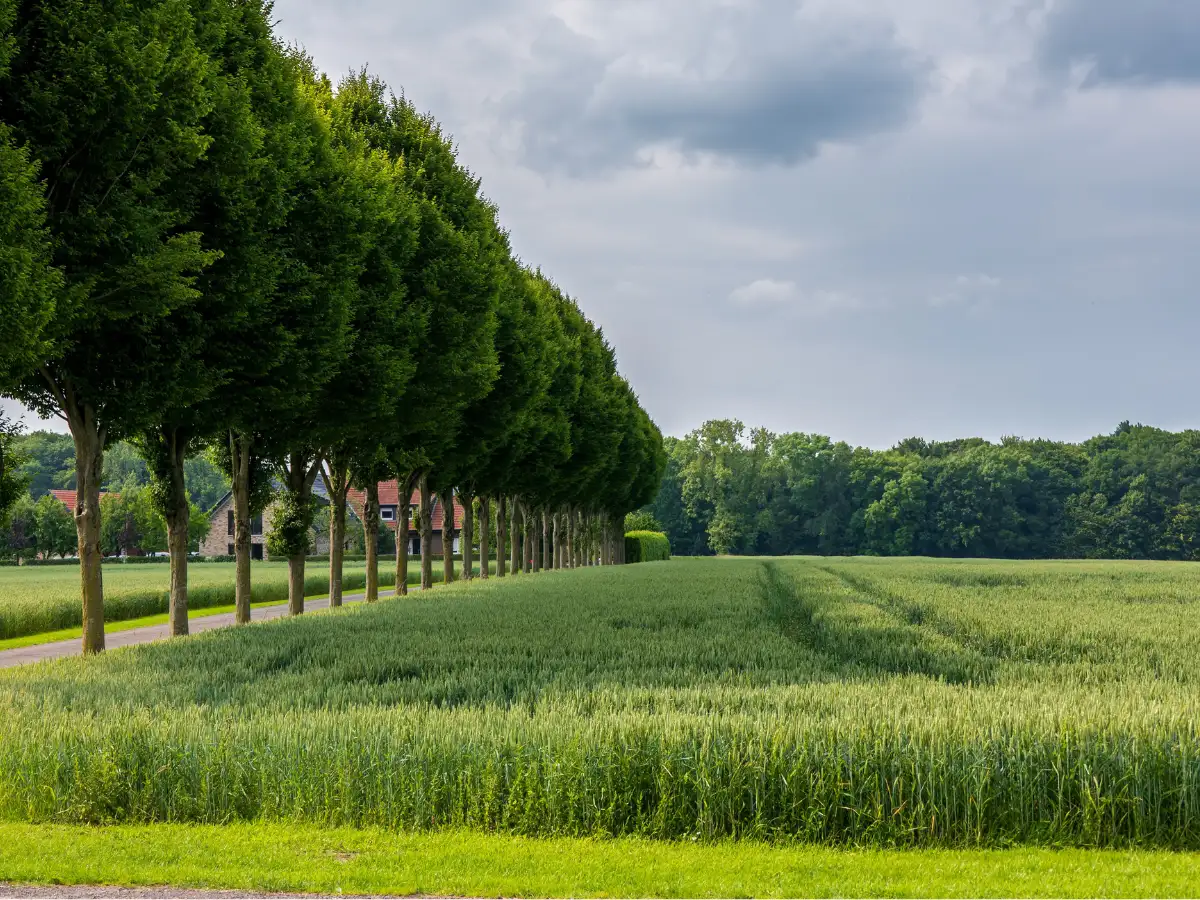
Most of us were probably taught that planting trees is good for the planet, good for the climate, good for wildlife, good for all of it. So it might come as a surprise to learn that in some landscapes, planting trees can actually cause bird populations to plummet dramatically. That is the precise argument of a new study, and the implications reach far beyond Japan, where the research was done.
According to a study, ‘Shelterbelts support edge birds but limit grassland and wetland specialists in agricultural landscape,’ published in the Journal of Environmental Management by a multidisciplinary team of researchers from institutions including Hiroshima University, the University of Tokyo, Kyoto University, and the University of British Columbia, rows of trees planted on farmland as windbreaks, known as shelterbelts, significantly reduce the abundance and diversity of open grassland and wetland bird species. The results are a blow to one of the most common assumptions in agricultural conservation, that planting trees on farmland is an easy win for biodiversity.

What are shelterbelts and why you see them everywhere
Shelterbelts are lines of trees or shrubs that are planted along field edges to protect crops from strong winds. They are a familiar sight on farmland across the world, and conservation programs in the US, Europe and Asia have long promoted the planting of woody vegetation, mostly on the assumption that it is good for wildlife.
According to the Journal of Environmental Management study, most of the research supporting the assumption comes from dry croplands and grasslands in Europe and North America. But very little of it examines what happens in wet agricultural landscapes, such as rice paddies, which are common across Asia and provide critical habitat for migratory birds that travel long distances each year.
Where the research was done
The team from Hiroshima University conducted their fieldwork on farmland surrounding Lake Kahokugata on the western coast of central Japan. Large tracts of rice paddies, lotus fields, cultivated cropland, and pastureland punctuate its landscape. It lies on the East Asian-Australasian Flyway, one of the world's major bird migration routes. Nearly 300 bird species have been recorded in the area. Wintering species come in the colder months and breeding species in the summer.
The team conducted bird surveys using a point-count method in February and March 2021 and in June 2023, comparing sites next to shelterbelts with open sites approximately 1 km away.