Get all your news in one place.
100's of premium titles.
One app.
Start reading
The Times of India
The Times of India
World
TOI World Desk

More than half of America’s 100,117 historic places face wildfire exposure, and 3,446 are in severe danger as the West’s landmarks enter fire’s crosshairs

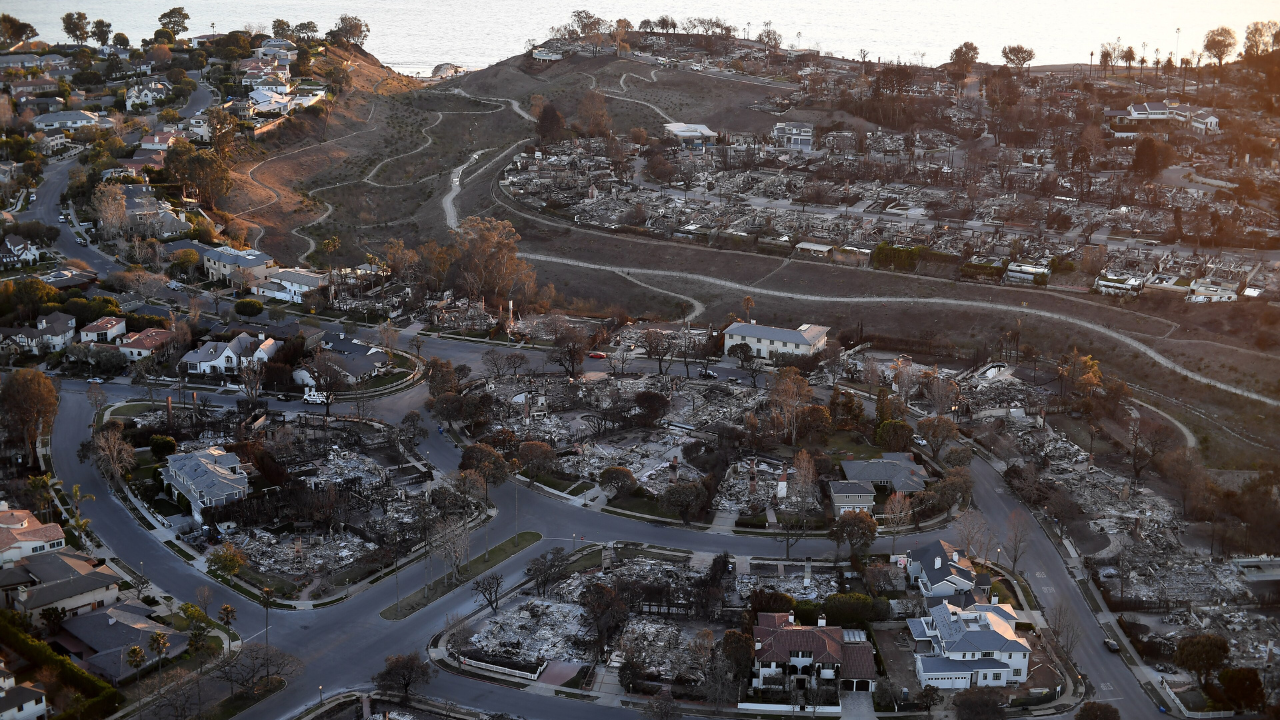
When the Palisades Fire destroyed the historic Will Rogers Ranch House in Los Angeles and the Dragon Bravo wildfire later claimed the nearly century-old Grand Canyon Lodge, the losses extended beyond buildings. They erased pieces of American history that cannot simply be rebuilt. Now, a new nationwide analysis suggests those disasters are not isolated events. More than half of the 100,117 places listed on the National Register of Historic Places are exposed to wildfire, with 3,446 classified as facing severe wildfire danger. Researchers say it is the first national-scale assessment to measure wildfire risk to America’s cultural heritage, revealing that many of the country’s most treasured landmarks are increasingly vulnerable as fires grow more destructive, according to the Scientific Reports study by researchers at the University of California, Santa Barbara’s National Center for Ecological Analysis and Synthesis (NCEAS).

Get breaking news anytime, anywhere. Download the TOI app now!

The places at greatest risk aren’t just forests

The researchers combined wildfire hazard models from the Fire Simulation (FSim) project with the locations of historic places listed on the National Register. Their analysis found that wildfire exposure is concentrated across the western United States, with additional hotspots in parts of Oklahoma, Arkansas, and the Southeast. Buildings and historic districts account for roughly 90% of listed cultural resources, making them especially vulnerable because their historical significance is closely tied to their original structures. Once destroyed, much of that heritage may be impossible to recover, even if reconstruction is attempted. According to the National Register data analysed in the study, only 36% of exposed places are nationally significant, while most at-risk sites are recognised at state or local levels, meaning countless community landmarks could disappear with little national attention.

The study also highlights that wildfire planning has traditionally focused on protecting homes, infrastructure and ecosystems, while cultural heritage has received comparatively little attention. Historic buildings, archaeological sites, bridges, monuments and districts often remain outside dedicated wildfire mitigation strategies despite being immovable and irreplaceable. Researchers argue that protecting these places requires understanding not only where fires are likely to occur, but also which kinds of cultural resources would suffer the greatest loss if destroyed.

Why climate change is raising the stakes

Wildfire risk has become increasingly complex as hotter temperatures, prolonged drought and changing vegetation patterns reshape fire behaviour across much of the United States. The authors note that climate change is expected to expand wildfire hazards into regions that historically experienced lower fire risk, placing additional historic places in danger over time. Events such as the destruction of the Will Rogers Ranch House and Grand Canyon Lodge illustrate how rapidly these threats can materialise when extreme fires intersect with culturally significant locations.

Researchers stress that exposure does not guarantee a landmark will burn. Instead, it identifies places where wildfire hazards overlap with valuable cultural resources, allowing agencies to prioritise preparation before disasters occur. Their findings are intended to provide a national framework for identifying vulnerable heritage sites rather than predicting the fate of any individual landmark. According to the study’s abstract, the analysis provides “a foundation for proactive planning to safeguard the places that anchor community identity, collective memory and national heritage before they are permanently lost.”

How researchers say historic landmarks can still be protected

The researchers argue that wildfire resilience and historic preservation do not have to conflict. Instead of relying solely on emergency response, they recommend preventative measures tailored to historic properties, including vegetation management around sites, carefully selected fire-resistant building materials where preservation standards allow, and discreet fire suppression systems that protect structures without compromising their historic character. The team has also made its national dataset available to help land managers and preservation agencies identify the sites facing the greatest wildfire exposure before another destructive fire season arrives.

As wildfires continue reshaping landscapes across the American West, the challenge extends beyond protecting forests or neighbourhoods. It is also about preserving the landmarks that tell the country’s story. Many of these places have survived wars, economic upheaval and more than a century of change. Whether they survive the next generation of wildfires may depend on decisions made long before flames appear on the horizon. The study is intended to help agencies move from reacting after catastrophic losses to protecting irreplaceable heritage before it disappears.

Sign up to read this article
Read news from 100's of titles, curated specifically for you.
Already a member? Sign in here
Related Stories
Top stories on inkl right now
One subscription that gives you access to news from hundreds of sites
Already a member? Sign in here
Our Picks
Fourteen days free
Download the app
One app. One membership.
100+ trusted global sources.