Get all your news in one place.
100's of premium titles.
One app.
Start reading
The Guardian - UK
The Guardian - UK
World
Diane Taylor and Rajeev Syal

More than 16,000 refugees unable to reunite with families in UK, says Refugee Council

People crowded on a small inflatable boat
Migrants on a small boat approaching Dover after crossing the Channel. Photograph: Dan Kitwood/Getty Images

More than 16,000 refugees have been unable to reunite with families in the UK, leaving them either stuck in conflict zones or resorting to using people-smugglers to reach safety, according to the Refugee Council.

The government suspended the refugee family reunion route last September. It allowed a person granted refugee status to apply to bring immediate family members such as a spouse and their children under 18 to reunite with them in the UK. The indication was that the suspension would last until the spring of this year.
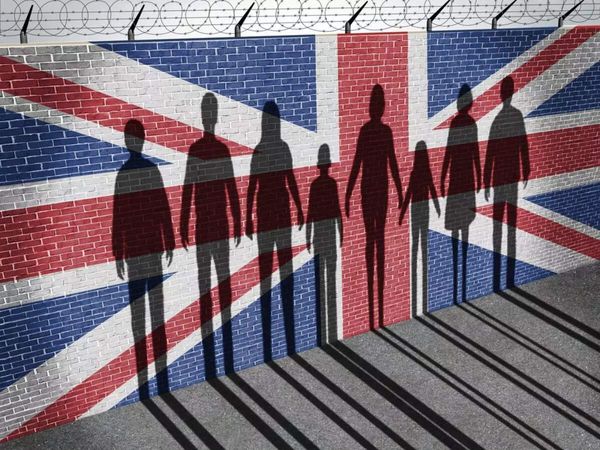
However, no confirmation has yet been made of any resumption of this route, which provides a lifeline for thousands of families separated by war. The Refugee Council calculated 16,300 people have been barred from applying since the suspension came into force 10 months ago, using published Home Office data from the months prior to the suspension. Nine out of 10 of those granted refugee family reunion are women and children. Based on the data, they estimate that this figure includes 9,273 children and 5,835 women.

The government operates other safe and legal routes for the most vulnerable refugees, but these arrivals have fallen by more than a third in the last year. New routes have been announced, such as community sponsorship, where a community supports refugees of their choice with housing, finding a job and integration.

However, Home Office sources told the Guardian that the scheme, as it has operated for the last decade, has brought just 1,000 individuals to the UK, mainly in family units, so only a small number of families have benefited from it each year. The government said it expected the new community sponsorship scheme, along with new study and work routes, would initially bring refugees in in the low hundreds. Several hundred asylum seekers cross the Channel in small boats on a moderately busy day.

One Iranian refugee, who lives in London with her two children aged 21 and 16, said she was distraught about the refugee family reunion suspension as her husband was trapped in very dangerous circumstances in Iran. She and her children arrived here four years ago and claimed asylum but had to wait nearly a year-and-a-half for their initial Home Office interview. Their case was initially rejected and then won on appeal.

“Had the Home Office processed our case quickly, we could have brought my husband here before the ban on refugee family reunion was imposed,” she said. “It is agonising torture knowing my husband is still trapped in Iran. In my view, what is happening is a clear and direct violation of human rights. It cruelly tears families apart and has stripped away our last shred of hope.”

Imran Hussain, the director of external affairs at the Refugee Council, said: “Safe and legal routes save lives. Women and children attempting to flee devastating wars and brutal regimes in countries like Sudan and Afghanistan are being driven into small boats by desperation. No parent risks their child’s life crossing the Channel in a small boat unless they believe the dangers they are fleeing are even greater than those they face at sea.

“We welcome the government’s commitment to creating new safe routes, but these must not come at the expense of existing pathways that have already saved lives. The government should urgently restore refugee family reunion, alongside expanding new safe routes, so families can find safety together, rebuild their lives, integrate and play their part in Britain.”

A Home Office spokesperson said: “The immigration and asylum bill will reform human rights laws to preserve protection for those in need, while bearing down on abuse of the asylum system.

“We have also recently announced that the rollout of new safe and legal routes for refugees will begin in the autumn.

“Under this government’s reforms to create a fairer asylum system, family reunion will no longer be automatic. Those seeking to bring family members to the UK will need to meet stricter criteria.”

Sign up to read this article
Read news from 100's of titles, curated specifically for you.
Already a member? Sign in here
Related Stories
Top stories on inkl right now
One subscription that gives you access to news from hundreds of sites
Already a member? Sign in here
Our Picks
Fourteen days free
Download the app
One app. One membership.
100+ trusted global sources.