Get all your news in one place.
100’s of premium titles.
One app.
Start reading
The Times of India
The Times of India
World
TOI World Desk

Mohammed bin Salman urged Donald Trump to impose sanctions on UAE, report claims

Saudi Crown Prince Mohammed bin Salman had urged US President Donald Trump to consider sanctions tied to the Emirati govt’s support for an armed group fighting in Sudan’s civil war, the New York Times reported.

Amid the feud between Saudi Arabia and the United Arab Emirates, Donald Trump came and had a November conversation that reportedly turned Gulf whispers into a full-blown war.

A Saudi official offered a different account, saying that Prince Mohammed asked Trump to place additional sanctions on the Sudanese armed group to prevent it from getting external support, not to impose measures on the Emirates directly.

The Saudi leadership made the request because it believed that if the Emirati govt backed down, the war in Sudan would end, according to the official. A US official said that Prince Mohammed never asked President Trump to impose sanctions on the Emirates, but did not comment on the call.

While the details are in dispute, the fallout is not. Soon after Trump’s call, latent tensions between the Saudi and Emirati govts erupted into a public feud. The information relayed by Trump infuriated senior Emirati officials, who felt betrayed by Saudi Arabia, once one of their closest allies, the four people briefed on the conversation said. Relations rapidly deteriorated, hitting a nadir in December when Saudi Arabia bombed an Emirati shipment to Yemen.

The discord between the two neighbours, both oil-rich countries that have cultivated vast global influence, has far-reaching consequences, with the potential to move markets and exacerbate wars. Their competition for dominance in the region has already reshaped the future of Yemen and threatens to worsen conflicts in the Horn of Africa, where the two powers have situated themselves on opposing sides in multiple countries. The rift also presents a potential diplomatic headache for the Trump administration, which hopes to win support from both Saudi Arabia and the Emirates for its Middle East policies, including in Gaza and Iran.

The four people briefed by the Emirati officials all spoke on the condition of anonymity to discuss diplomatically sensitive conversations, as did the US official and the Saudi official. The Emirati foreign ministry declined to comment on the call.

Sudan’s devastating civil war previously received little attention from the Trump administration. Saudi Arabia supports the Sudanese armed forces, while the Emirates has been the principal backer of the Rapid Support Forces, or RSF, a paramilitary group fighting for control of the country. There is substantial evidence that the Emirates has funnelled money, weapons and drones to the RSF

In recent months, the Emirates faced growing international criticism as the RSF has been accused of committing massacres and other grave human rights violations, particularly around the city of El Fasher in Darfur. United Nations-backed experts said last week that the RSF campaign bore the “hallmarks of genocide.”

The Emirati govt in a statement to The New York Times said this week that it “categorically rejects allegations” it has given material support to the RSF It said that its role in the war is limited to providing humanitarian aid and supporting cease-fire efforts.

A decade ago, Sheikh Mohammed and Prince Mohammed were close partners, largely aligned in their priorities across the region. They joined forces in a disastrous military intervention in Yemen to beat back Houthi rebels. They later partnered in an effort to isolate another Gulf state, Qatar, accusing its govt of supporting terrorism, which Qatar denied.

Over the past few years, Prince Mohammed turned Saudi Arabia’s focus inward, emphasising that it needs stability in the Middle East in order to successfully diversify its economy. His ambitions to turn the kingdom into a global business and tourism hub have increasingly butted up against those of Dubai, the largest Emirati city and the Middle East’s financial capital. Sheikh Mohammed, in contrast, pursued a more assertive foreign policy for the Emirates. That strategy appears to be rooted, at least partly, in antagonism toward Islamism, which he views as a regional and national security threat.

Privately, some Emirati officials say that they see the RSF in Sudan as an ally in this broader battle, because they are fighting against the Sudanese military, which they say has dangerous Islamist tendencies. Scholars have also posited that the Emirati leadership has developed semi-imperial ambitions, using their wealth to garner influence and resources far from their borders. The Emirates has become one of the biggest investors on the African continent.

The war in Sudan, raging since 2023, appears to have become a major flashpoint in the past year. For Prince Mohammed, Sudan’s conflict presents a potential security threat, raising the spectre of a failed state just across the Red Sea from his country. And so, the Saudi official said, after two years of trying to convince the Emirates to cut ties with the group, Saudi Arabia sought assistance from the United States.

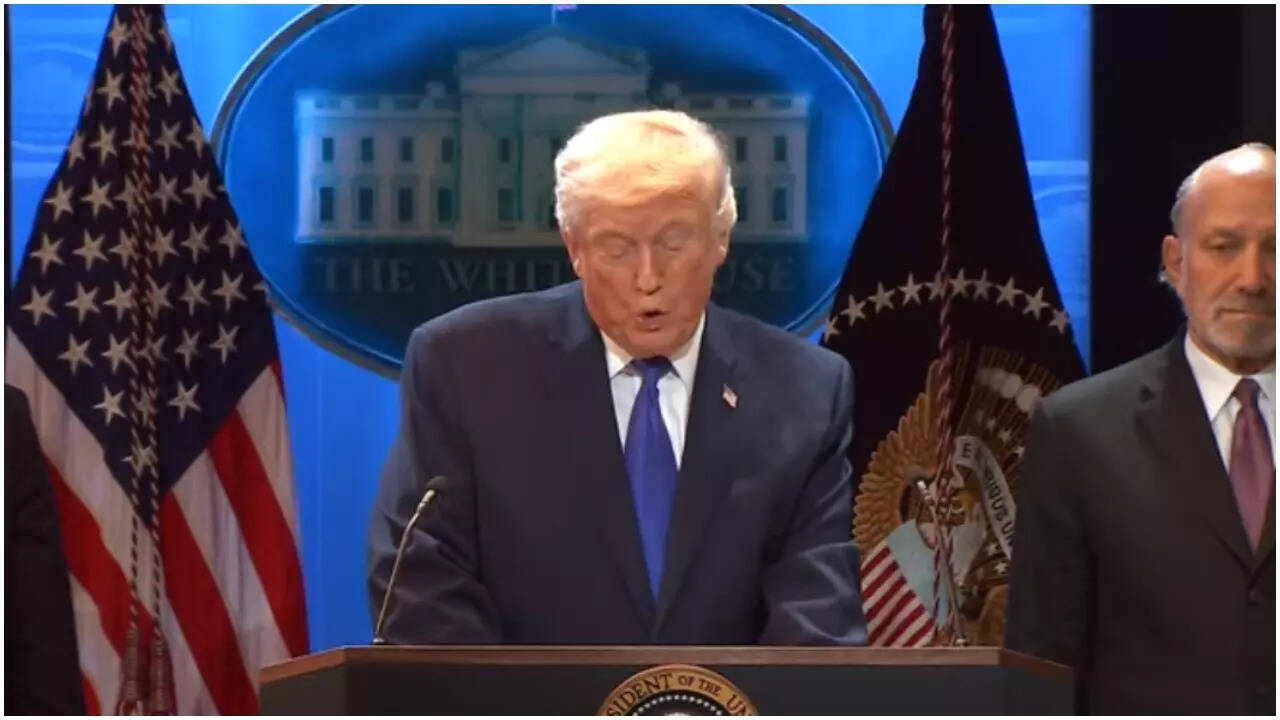
It remains unclear exactly what Prince Mohammed told Trump during his visit to the White House in November, though it appears he did ask the president to help forge peace in Sudan. At a Saudi-US business forum held during the visit, Trump gave a speech in which he said that he would look into resolving the conflict, at Prince Mohammed’s behest.

“His Majesty would like me to do something very powerful having to do with Sudan,” Trump said. “We’re going to start working on it.”

The potential involvement of the Trump administration, whatever shape it took, threatened to compound international pressure on the Emirates over its role in the war. Since the phone call in November, the Emirati leadership remains convinced that the Saudi leader requested US sanctions on the country, three of the people briefed by senior Emirati officials said. According to two of those people, Trump told Sheikh Mohammed that his friends were out to get him, but that Trump had his back.

In the weeks after the prince’s visit to Washington, friction between Saudi Arabia and the Emirates escalated sharply. The consequences played out most dramatically in Yemen, another country where their interests had long diverged.

In December, an armed Yemeni separatist group backed by the Emirates led a lightning offensive into a region in the south of the country, close to the Saudi border. The Saudis saw those moves as a threat to their national security and bombed an Emirati shipment to Yemen, accusing the Emirates of sending weapons to the group.

The Emirati govt denied that accusation and announced that it would withdraw its own troops from Yemen immediately. That left the separatist group in the lurch as Saudi-backed forces advanced, taking back all the territory they had seized.

The Saudi leadership believes the Emirati govt put the separatist group’s offensive into motion because of their anger over the sanctions call, the Saudi official said. The Emirati foreign ministry did not respond to a request for comment on that allegation. Instead, it pointed to a recent public statement by Anwar Gargash, a senior Emirati official, who had dismissed anti-Emirati rhetoric as “noise.”

The Biden administration, which privately confronted the Emirati leadership over its support for the RSF, tried to smooth over tensions between the two Gulf nations so as to encourage regional cooperation, according to two former American officials. They spoke on the condition of anonymity to discuss sensitive diplomacy.

So far, the Trump administration avoided publicly taking a side between the two countries, both of which have extensive business ties with the president’s family.

An investment firm tied to the Emirati govt quietly purchased nearly half of the Trump family’s cryptocurrency company last year, The Wall Street Journal reported in January. In Saudi Arabia, the kingdom’s sovereign wealth fund recently teamed up with a private equity firm run by Jared Kushner, the president’s son-in-law, to carry out a $55 billion buyout of a video game publisher.

Asked by a journalist on February 16 if he was involved in the rift between Saudi Arabia and the Emirates, Trump said he was not, but he could be.

“We can get it settled very easily,” he said. “That’s an easy one to settle.”

Sign up to read this article
Read news from 100’s of titles, curated specifically for you.
Already a member? Sign in here
Related Stories
Top stories on inkl right now
Our Picks
Fourteen days free
Download the app
One app. One membership.
100+ trusted global sources.