When the dust settled at 6 p.m. ET on Monday, there was all sorts of transactional carnage to sift through. It was a fittingly chaotic trade deadline day of dealing given how bunched up the standings have been all season long, but the biggest swing took place over the weekend when the two-time defending champion Dodgers landed the biggest fish out there in Tarik Skubal.
Given the timing of that move, it gave the subsequent flurry of activity the sense that the rest of the pack was scrambling to catch up with baseball’s undisputed kings. Hindsight will tell us which trades actually made the biggest impact in crowning 2026’s champion. In the meantime, let’s hand out some kneejerk reaction grades for each club’s course of action at this year’s trade deadline in our latest batch of power rankings.

1. Los Angeles Dodgers
Trade deadline grade: A
No need to overthink this one. The Dodgers, the team with the fewest weaknesses in the sport, had the most obvious move to make, and they made it, much to the rest of the league’s chagrin. The reigning champs were already the clear-cut World Series favorites, and trading for Tarik Skubal didn’t change that. It did, however, make it even more difficult for another contender to deny the Dodgers their three-peat.
2. Milwaukee Brewers
Trade deadline grade: B-
Relative to expectations, Milwaukee’s trade deadline was disappointing. But if you look past missing out on Skubal, Clay Holmes and an impact bat, this is actually a sneaky haul for the Brewers. Milwaukee needed a lefty reliever and got one in JoJo Romero, nabbed a starter in Dustin May who could take another leap in the Brewers’ pitching factory and snagged Antonio Senzatela, who has pitched much better away from Coors Field.
3. Atlanta Braves
Trade deadline grade: D+
It was a rather disappointing deadline for the Braves, who made a handful of minor moves to acquire the likes of Tyler Mahle, Lane Thomas, Bailey Falter and Brent Suter. They added depth, but ultimately failed to address their two biggest needs––playoff-caliber reinforcements for the starting rotation and a proven, starting-caliber shortstop. For a team looking to compete for a World Series, it feels like the Braves moved a bit too passively at the deadline.
4. Chicago Cubs
Trade deadline grade: A
The Cubs needed pitching help from the bullpen to the starting rotation and got it in spades. While they had to part ways with multiple top 30 prospects, the end result was two playoff-caliber starters in Kevin Gausman and Clay Holmes, rotation and outfield depth in Braxton Garrett and Tyrone Taylor, and a nasty swing-and-miss reliever in Ryan Zeferjahn. Chicago’s pitching now measures up to its potent lineup as it looks to chase down the Brewers in the NL Central.
5. Tampa Bay Rays
Trade deadline grade: A-
The Rays got plenty done at the trade deadline, addressing its need for a new catcher by acquiring Liam Hicks from the Marlins, while also adding a reliever in Tyler Wells and a starter in Freddy Peralta. All of that without sacrificing a single top five prospect is a job well done by Tampa’s front office as the Rays look to stay hot and maintain their lead in the American League East.
6. Boston Red Sox
Trade deadline grade: C+
The Red Sox cut ties with Marcelo Mayer and paid an extremely high price to land both Adley Rutschman and Curtis Mead at the trade deadline. In terms of winning now, they’ve certainly made some big improvements, but it comes at the cost of their farm system, which lost three of its top five prospects, as well as 23-year-old starting pitcher Connelly Early.
7. New York Yankees
Trade deadline grade: B-
The Yankees didn’t make a move for a catcher, which was their most glaring need. Nor did New York acquire any relievers despite trading Camilo Doval and Jake Bird ahead of Monday’s deadline. They did, however, pick up a pair of impact bats in Luis Garcia Jr. and Heliot Ramos, who the team will be hoping can help turn the offense around with key players like Aaron Judge and Cody Bellinger on the shelf.
8. Chicago White Sox
Trade deadline grade: B
White Sox president of baseball operations landed one of the trade deadline’s biggest upgrades in starting pitcher Luis Castillo, added some much-needed velocity to an already capable bullpen with Huascar Brazoban, landed a two-time Gold Glover in Brenton Doyle who was a near 30-30 guy just two years ago, and brought in some much-needed catcher depth in Joey Bart with Kyle Teel sidelined. The best part? Chicago surrendered just two top 30 prospects.
9. Philadelphia Phillies
Trade deadline grade: C+
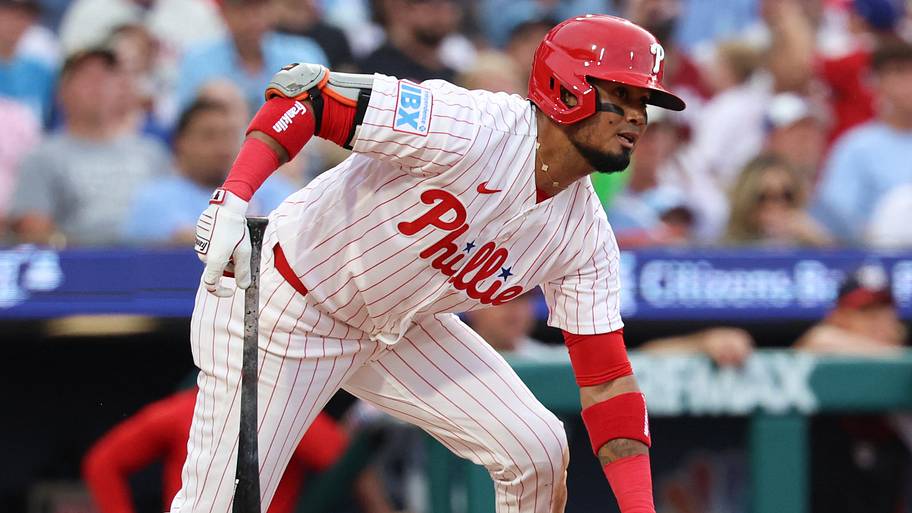
Luis Arraez is a nice addition for the Phillies, but they weren’t able to acquire a much-needed starting pitcher or outfielder. Keeping Arraez at second base resulted in a ripple effect to their defensive alignment, with Bryce Harper, Bryson Stott and Alec Bohm all changing positions as a result of the acquisition. Adding a starter should’ve been a priority for the Phillies, who need a reliable arm at the back end of their rotation as they look to fight for a wild-card spot.
10. San Diego Padres
Trade deadline grade: A-
A.J. Preller has established a reputation for himself as a riverboat gambler, but he restrained himself from anything approaching last year’s blockbuster trade for closer Mason Miller. Instead, San Diego picked its spots wisely, adding a pair of starting pitchers in Robbie Ray and Casey Mize to address a huge roster need. Fortifying the rotation was priority No. 1 for the Padres to be in a position to reach the playoffs, and they addressed that without doing something brash like trading away top prospect Ethan Salas.
11. Arizona Diamondbacks
Trade deadline grade: D+
Arizona is in the thick of the hunt for a wild-card spot, yet its lone move at the deadline was acquiring Lars Nootbaar from the Cardinals in exchange for a pair of pitching prospects. The Diamondbacks could have desperately used pitching upgrades of any kind, so not addressing the rotation or bullpen was a failure by the front office. Nootbaar is a fine addition, though, especially considering Arizona left fielders have hit a collective .236/.294/.359 on the season.
12. Pittsburgh Pirates
Trade deadline grade: A-
The Pirates were fortunate to have one need and one need only at the deadline: bullpen arms. General manager Ben Cherington attacked the necessity with gusto, transforming Pittsburgh’s ’pen into a suddenly competent unit with the additions of Camilo Doval, Lake Bachar, Kirby Yates and Luke Weaver. Now, if the Pirates lineup could just get healthy and Paul Skenes just get right.
13. Cleveland Guardians
Trade deadline grade: B+
Cleveland made a strength—its starting rotation—that much stronger by dealing away four unranked prospects for breakout starter Foster Griffin, then landed two platoon bats in Nathaniel Lowe and Jo Adell to help jumpstart a scuffling lineup that has scored the second-fewest runs in MLB. The Guardians are now better equipped to attempt to chase down the first-place White Sox.
14. Detroit Tigers
Trade deadline grade: A-
The Tigers ripped the Band-Aid off and dealt away ace Tarik Skubal to the Dodgers. Detroit loses some points for its handling of the Skubal situation to this juncture but made up for that with the returns it got in the Skubal and Casey Mize deals. Two top-10 prospects in Zyhir Hope and River Ryan who are nearing MLB, as well as two high-upside pitchers in Kash Mayfield and Brady Smith. Detroit got better for 2027 and beyond.
15. Houston Astros
Trade deadline grade: D+
Houston surged into first place in the weeks leading up to the deadline and could have used the momentum to justify buying more aggressively (à la the Red Sox). Instead, the Astros mostly stood pat. Daulton Varsho isn’t having his best season after posting a 123 wRC+ with 20 homers for the Blue Jays last year, but he should still be a clear upgrade in center field, which has been a real weak spot in Joe Espada’s lineup. Still, this team clearly could have used another starting pitcher or two, and with so many available arms that eventually changed teams, Houston ended up with none.
16. Miami Marlins
Trade deadline grade: B-
Miami sold off some players at the deadline, offloading Liam Hicks to the Rays and Braxton Garrett to the Cubs to fortify their farm system. On the heels of a 12-game losing streak, which was immediately followed by six wins in their next seven games, the Marlins opted to look toward the future. It wasn’t a full fire sale, however, so Miami could reasonably remain in the hunt for a wild-card spot while also improving their future outlook.
17. St. Louis Cardinals
Trade deadline grade: B+
Ahead of schedule in their rebuild thanks to a roster oozing with young talent, the Cardinals saw no reason to start a fire sale, but also were able to take advantage of the robust pitcher and outfielder markets. Turning Dustin May, JoJo Romero and Lars Nootbar into four top 30 prospects is really savvy work from president of baseball operations Chaim Bloom. St. Louis is positioned to stick around in the wild-card race in 2026 and be competitive next season.
18. Seattle Mariners
Trade deadline grade: B
Seattle addressed both its lineup and bullpen, adding Seranthony Dominguez from the White Sox and Taylor Ward from the Orioles. The former move rid the Mariners of Luis Castillo and the remaining $30 million or so left on his contract, while also clearing up the logjam in the team’s rotation (and possibly clearing a more immediate path to the majors for top pitching prospect Kade Anderson). Bolder moves—like dealing George Kirby or Emerson Hancock—could have really brought in significant improvements to Seattle’s lineup, but as it stands the Mariners remain firmly in the hunt in baseball’s most gettable division.
19. Minnesota Twins
Trade deadline grade: B-
Given its standing in the weak AL, Minnesota really had no choice but to buy. The Twins didn’t make any splash moves but added an experienced high-leverage arm in Jeff Hoffman and a much-needed lefty stopper in A.J. Minter. It would have been nice to see the Twins aim higher than Dean Kremer for a starter addition, but perhaps he’ll start to pitch more like his underlying numbers.
20. Texas Rangers
Trade deadline grade: F
Six days before the deadline, the Rangers were 55–52 with a two-game lead on the rest of the AL West. An ensuing six-game losing streak apparently broke Chris Young’s brain, because rather than buy to make a playoff push or sell to focus on 2027, the Rangers did nothing. Talks about trading away Jacob deGrom went nowhere due to the 38-year-old’s no-trade clause, and Texas found no takers for Corey Seager’s mammoth contract. With an aging and expensive core, selling would have been understandable. So, too, would a more aggressive approach for one last postseason ride. Instead, the Rangers sat idly by while other teams took advantage of a hectic day.
21. Washington Nationals
Trade deadline grade: B+
The Nationals capitalized on strong seasons from Foster Griffin, Luis Garcia and Curtis Mead at the trade deadline, shipping all three off in the midst of career-best campaigns to bolster their farm system. They acquired a handful of young arms, most notably Connelly Early from the Red Sox, though it can be argued that they didn’t get enough for the talent they surrendered. Still, it was a solid deadline for the Nationals, who held onto CJ Abrams while some young talent.
22. Baltimore Orioles
Trade deadline grade: A
One of the bigger sellers at this year’s deadline, the Orioles made massive improvements to their farm system with the additions of Anthony Eyanson (No. 1), Michael Forret (No. 6), Kyson Witherspoon (No. 7) and Enddy Azocar (No. 8), among others. Baltimore wisely decided to wave the white flag on this season while strengthening its future with a haul of young talent.
23. Cincinnati Reds
Trade deadline grade: D
The Reds did okay with dealing first baseman Nathaniel Lowe for a top 30 pitching prospect and snagged $250,000 in international bonus money for Caleb Ferguson. But not dealing pending free agents Brady Singer and Tyler Stephenson, given the high demand for pitchers and catchers, was a big misstep. Barring a run, Cincinnati now seems stuck in no-man’s land in the NL wild card race.
24. Toronto Blue Jays
Trade deadline grade: B
The Blue Jays re-tooled at the trade deadline as they aim to return to contention in 2027 after a disappointing showing in ‘26. They shipped off veterans like Kevin Gausman, Daulton Varsho and Jeff Hoffman for a mix of prospects and MLB talent, including some players who figure to play important roles for them next season, like Jose Soriano, Spencer Arrighetti and Josh Smith.
25. San Francisco Giants
Trade deadline grade: A-
They didn’t move off of any of their albatross contracts, but in the midst of a dismal season, the Giants had a strong showing as sellers. Getting a top-100 prospect in Ramon Marquez for two months of Luis Arraez was a shrewd deal, though the highlight might have been snagging former top prospect Marcelo Mayer from the Red Sox for relief pitcher Erik Miller and minor league outfielder Carlos Gutierrez. Getting a pair of promising minor leaguers (pitcher Miguel Mendez and shortstop Joniel Hernandez) for rental arm Robbie Ray was also a deft move.
26. New York Mets
Trade deadline grade: B
In what’s been a massively disappointing season in Queens, the Mets were among the league’s biggest deadline sellers. New York moved on from Freddy Peralta, A.J. Minter, Clay Holmes and Luke Weaver, and added a haul of young talent including the organization’s new No. 1 prospect, Jefferson Rojas. The farm system overhaul saw the Mets add seven new faces to their top 30 prospects.
27. Kansas City Royals
Trade deadline grade: C
The Royals shipped away pending free agents in Kris Bubic and Lane Thomas, as well as the club-controlled Bailey Falter, bringing back a pair of top 30 prospects. Yet, it’s fair to wonder if Kansas City, with two controllable starters in Michael Wacha and Seth Lugo, should have aimed higher as a seller in light of the exorbitant prices of starting pitching, especially with the club staring down their third last-place AL Central finish in the last five years.
28. Colorado Rockies
Trade deadline grade: C+
Credit to Colorado’s new front office: the Rockies of the past have often (inexplicably) messed up this situation. The team is once again mired in last place, but without a huge cache of obvious players to sell. Paul DePodesta and Co. did what they could, trading away Antonio Senzatela, Victor Vodnik, Seth Halvorsen and Brenton Doyle for prospects, but resisted doing anything drastic like trading away Hunter Goodman. While this doesn’t have the immediate look of a transformational deadline, it was nonetheless a productive one.
29. Athletics
Trade deadline grade: F
Barreling towards a fifth straight losing season and with one of the league’s worst pitching staffs, the A’s did a whole lot of nothing at the deadline. The impending move to Las Vegas in 2028 is likely an obstacle standing in the way of a more aggressive sellers’ strategy. But given the organization’s inactivity, the chances of fielding a contending team by then look even more remote than a Mojave Desert snowstorm.
30. Los Angeles Angels
Trade deadline grade: B+
Lo and behold, the Angels acted like true-blue sellers. After a decade of fooling themselves into thinking they were just a year away from playoff contention, interim GM John Mozeliak started the process of steering the organization into a new direction by trading away players with multiple years of team control. The biggest deal was sending Jose Soriano to the Blue Jays for a package highlighted by shortstop Arjun Nimmala, a consensus top-50 prospect. Trades that sent Ryan Zeferjahn and Jo Adell to new teams also yielded an influx of young talent. It’s a long road back to relevancy, but it feels like the first meaningful steps down that path were taken Monday.
MORE MLB FROM SPORTS ILLUSTRATED
- George Lombard Jr. Has What It Takes to Succeed Where Anthony Volpe Faltered
- Meet Jefry Yan, the Mets’ Rookie Pitcher Whose Strikeout Celebrations Are Already the Talk of MLB
- Why Cal Raleigh Can’t Catch Up to Fastballs This Season
- How the Brewers Could've Prevented the Dodgers From Acquiring Tarik Skubal