Get all your news in one place.
100's of premium titles.
One app.
Start reading
Medical Daily
Medical Daily
Cole Mercer

Missouri Kindergarten Vaccine Exemptions Have Doubled Since 2021, and Some Counties Are Now Near 18 Percent

Nonmedical vaccine exemptions among Missouri kindergartners have more than doubled in five years, rising from under 3% in 2021 to 5.7% statewide in the 2025-26 school year, according to Missouri Department of Health and Senior Services data reported by St. Louis Public Radio. Medical exemptions, which cover children who are immunocompromised or otherwise cannot be vaccinated, stayed relatively stable over the same period.

The statewide figure conceals a much wider spread. In the city of St. Louis, the religious exemption rate for the measles vaccine is 2.3%, and in St. Louis County it is 3.4%. St. Charles County sits at roughly 5.1%. In some Missouri counties the rate reaches 18%, with the highest concentrations in the southern and western parts of the state.

That distribution is the part that matters epidemiologically. A statewide average of 5.7% does not describe the risk in any particular classroom. Protection against measles operates locally, and a county at 18% is in a different position than one at 2%.


The Threshold That Makes Local Averages Misleading

Measles requires an unusually high level of population immunity to stop circulating, because it is among the most transmissible viruses known. The coverage threshold generally cited is between 90% and 95%, meaning that once coverage drops below that band in a community, an introduced case can move rather than fizzle. The CDC's measles data and research page tracks how far current coverage sits from that line.

Exemption rates and coverage rates are not the same number. A child with a religious exemption may have received some required vaccines, and not others, and coverage can also fall for reasons unrelated to exemptions, including missed appointments and gaps in records. But a rising exemption rate reliably pushes coverage in one direction.

What exemption data cannot do is predict an outbreak. An outbreak also requires an introduced case, and introduction depends on travel and chance rather than on local policy. A county with high exemption rates may go years without a case and then see rapid spread when one arrives. The rates describe vulnerability, not timing.

Missouri has recorded six measles cases this year, according to federal data. Greene County has logged more pertussis cases than in past years, which Dr. Kayce Morton, vice president of the Missouri chapter of the American Academy of Pediatrics and a pediatric hospitalist near Springfield, described as an early visible effect.

Morton attributed the exemption trend to eroded confidence rather than to any single policy. "I definitely think it's an indication of mistrust. I think it's been increasing since COVID," she said, adding that questioning of medical and health systems has increased the number of families seeking exemptions.


The Sedalia Exposure Shows What the Numbers Describe

The abstraction became concrete this month. State health officials warned of a potential measles exposure at the train station in Sedalia, in Pettis County, where the nonmedical exemption rate for MMR is about 15%. Missouri's warning about the Sedalia train station described a resident with confirmed measles boarding a Chicago-bound Amtrak train, and Chicago officials later issued their own exposure notice for Union Station.

That sequence illustrates why exemption geography matters beyond county lines. A case introduced into a community with lower coverage has more opportunity to spread before it is identified, and modern travel means the consequences do not stay local.

Missouri's exemption process itself is straightforward. Families must complete a form approved by the state health department and return it to a school administrator. To obtain the form, they first click through a state webpage advocating for the safety and effectiveness of the required vaccines, which states that unimmunized children could be excluded from school during disease outbreaks. County-level figures are published through the state's school immunizations dashboard, which is where a parent can look up their own district rather than working from the statewide average.

Jennifer Layden, an infectious disease physician and epidemiologist at Washington University School of Medicine, said process friction is part of the picture. "I think people are looking for ways to potentially not be vaccinated, and if it's easy to get an exemption, then it creates a lower barrier for them to do so," she said. But she added that tightening the process would not address the underlying mistrust, and that the more durable approach is conversation, starting by asking parents what questions they have.

Retired pediatrician Jesse Hackell, who has written vaccine policy reports for the American Academy of Pediatrics, noted that most major faiths do not oppose immunization. "None of the mainstream religions, Christianity, Catholicism, Judaism, Islam, Buddhism, object to vaccination," he said. Some specific traditions, including Christian Science and certain naturopathic frameworks, do object, and other families raise concerns about particular vaccine ingredients.


Practical Steps for Missouri Families This Fall

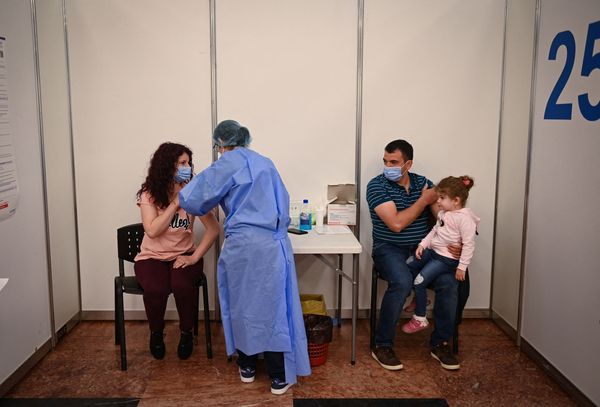
Missouri kindergartners are required to show they are up to date on DTaP, polio, MMR, chickenpox and hepatitis B. Parents unsure of their child's status can request the record from a pediatrician or through the school nurse rather than assuming the file is complete.

Families in counties with higher exemption rates have a specific reason to confirm two MMR doses rather than one. Two doses give about 97% protection compared with 93% after a single dose, and that difference matters most where community coverage is lower.

Adults are the overlooked group. Anyone born in 1957 or later without documentation should ask about a dose, particularly parents of infants too young for their first shot, which is normally given at 12 to 15 months.

Cost is addressable. The federal Vaccines for Children program covers vaccine costs for eligible children, and local health departments across Missouri administer immunizations. Insured families should check whether their plan covers vaccines at a pharmacy as well as a clinic.

The exclusion clause is worth knowing before an outbreak rather than during one. Missouri's own exemption materials state that unimmunized children could be kept out of school while a disease is circulating locally, which means a religious exemption is not a guarantee of uninterrupted attendance. Pediatric policy groups have made the same point nationally, treating school exclusion as the practical consequence attached to the choice.

What remains unknown is whether the exemption trend continues, whether it translates into further pertussis or measles activity, and how much of it reflects genuine religious conviction versus a low-friction opt-out. State data are updated through the public school immunization dashboard, which is the reliable place to check a specific county rather than relying on the statewide figure.


Key Questions Answered

How much have exemptions risen? Nonmedical exemptions among Missouri kindergartners went from under 3% in 2021 to 5.7% in the 2025-26 school year. Medical exemptions stayed relatively stable.

Are all counties the same? No. St. Louis City is at 2.3% for MMR religious exemptions and St. Louis County at 3.4%, while some counties reach 18%.

Does this mean an outbreak is coming? No. Exemption rates describe vulnerability, not timing. An outbreak also requires a case to be introduced, which depends on travel and chance.

What coverage level stops measles spreading? Generally 90% to 95% in a given community, because measles is among the most transmissible viruses known.

How do Missouri families claim a religious exemption? By completing a state-approved form after clicking through a health department page on vaccine safety, then returning it to a school administrator.

Do major religions oppose vaccination? Most do not. Pediatric policy experts note that mainstream faiths generally do not object, though some specific traditions do.

Where can families get vaccines affordably? Through the federal Vaccines for Children program for eligible children, and through local health departments statewide.

Sign up to read this article
Read news from 100's of titles, curated specifically for you.
Already a member? Sign in here
Related Stories
Top stories on inkl right now
One subscription that gives you access to news from hundreds of sites
Already a member? Sign in here
Our Picks
Fourteen days free
Download the app
One app. One membership.
100+ trusted global sources.