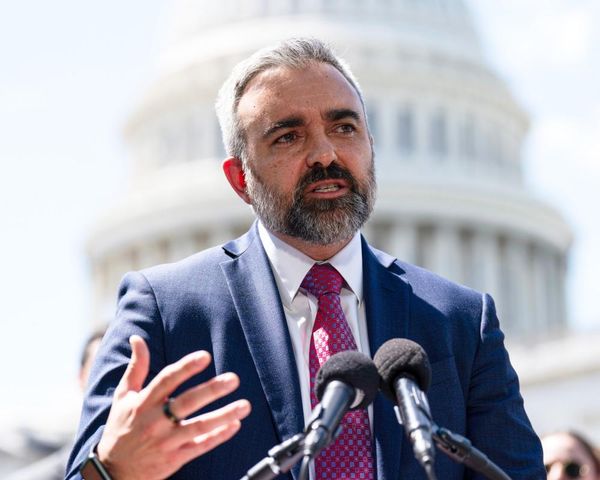
Thomas Christopher Ross, the Joplin Republican accused of scheming to plant cocaine and a prescription stimulant on his own primary opponent, is no longer running for the Missouri House seat he narrowly won in August. Ross put his name on a withdrawal petition this week, and within forty-eight hours Jasper County Republicans had already replaced him on the ballot with the very rival prosecutors say he tried to frame.

Key Takeaways
- Ross, 37, has formally exited the House District 161 race after a federal conspiracy charge accusing him of trying to hide drugs among the belongings of his primary rival, Louise Secker.
- A Jasper County judge approved the withdrawal on Friday without holding a hearing, and a day later the district's Republican committee voted unanimously to hand Secker the nomination instead.
- Investigators say the scheme traces back to coded text messages from late May and only came apart after Ross's own campaign manager tipped off police and then wore a hidden FBI microphone.
- A newly reported certified tally puts Ross's original primary win at 33 votes, tightening a gap that several earlier reports had rounded down to 32.
A Narrow Win Turns Into a Federal Case
Ross claimed the Republican nomination for House District 161 over Secker on August 4, edging out a rival who had raised significantly more campaign money and who carried the backing of outgoing Rep. Lane Roberts, the term-limited incumbent Ross had unsuccessfully tried to unseat twice before. Freshly reported figures from the Joplin Globe show Ross topped Secker by a 1,589-to-1,556 count, a 33-vote spread that runs slightly ahead of the 32-vote margin cited by several other outlets in the days after the primary.
How the Alleged Scheme Fell Apart
Court filings show Ross began discussing the plan with his campaign manager by text messages dating to the final day of May, referring to the drugs only in vague terms such as "the substance of the matter." Prosecutors allege the scheme called for hiding the drugs in either Secker's purse or her car while Ross himself was away on a coastal vacation. That plan stalled until July 30, when the manager instead walked into the Joplin Police Department and turned over a black nylon glove containing a small bag of white powder and a single capsule. Lab tests identified the powder as cocaine and the capsule as Adderall. Federal agents then wired the manager with a hidden recorder before a late-July sit-down at Ross's residence, where the aide floated phoning in a false lead claiming narcotics had turned up inside Secker's vehicle. Ross's answer, captured on the recording, left little room for interpretation: "If you can pull it off … pull it off."
Federal Officials Frame It as an Attack on the Ballot Box
The Justice Department filed a single conspiracy count against Ross on September 2, and officials used the announcement to send a message well beyond the Joplin race. U.S. Attorney R. Matthew Price argued that candidates owe voters campaigns built on honesty and fair play rather than schemes aimed at opponents. Chris Ormerod, the FBI's special agent in charge in Kansas City, was blunter still, calling the conduct described in the charge "substantial and serious."
Republican Leaders Moved Fast to Cut Ties
Party officials did not wait for a courtroom outcome before distancing themselves from their own nominee. Missouri GOP Chairman Peter Kinder publicly urged Ross to step aside almost immediately, and the Jasper County Republican Central Committee backed him within hours, arguing that voters in the district deserved a candidate who could campaign without the shadow of a federal case hanging over him.
Ross Steps Aside
Joplin police first took Ross into custody on September 2 under a local warrant, holding him without bond, and he was moved into federal custody the next day once the criminal complaint became public. By Friday, September 4, Ross had reversed course, filing a petition that morning in Jasper County Circuit Court asking to be removed from the November ballot. Judge Dean Dankelson signed off the same day, and no hearing was required to finalize it. The Jasper County Republican Central Committee announced the news on social media, with chair Lynn Ragsdale crediting Ross for making what he called "the difficult decision to step away from the campaign" and adding that the party's thoughts remained with his family.
Secker Steps Into the Race She Was Accused of Being Targeted In
The turnaround came fast. On Saturday, the committee overseeing the 161st Legislative District met and unanimously chose Secker to carry the Republican banner into November, a decision party officials said had already been vetted against Missouri's so-called "sore loser rule" governing candidates who lose a primary. With that hurdle cleared, Secker still needs to file paperwork with the Missouri Secretary of State's office to make her spot on the ballot official. Once that is complete, she is on track to face Democratic nominee Aaron Metzger, the only Democrat on the primary ballot, who collected 1,212 votes without a rival to beat.
Not the First Time Missouri Republicans Have Faced This Choice
Party leaders here are working from a familiar script. Republican Rick Roeber refused to leave a 2020 race despite abuse allegations from his own adult children, won anyway, and took his seat, only to be expelled by a lopsided 153-to-0 House vote the following year once an ethics investigation found the allegations credible. Former Rep. Tricia Derges followed a similar arc, staying in office for roughly a year after her 2021 indictment on 20 federal counts before a jury convicted her on 22 counts in 2022 and a judge later sent her to prison for more than six years. Both cases are reminders that a refusal to step down, had Ross chosen that path, would not necessarily have ended his political career or his legal exposure.
Where the Case Stands Now
The criminal case against Ross continues to move through federal court in the Western District of Missouri, and he remains presumed innocent unless proven guilty. He has not commented publicly on the allegations, and it is not yet clear how he intends to plead. For Missouri Republicans, though, the more urgent problem — an open seat with barely a week to fill it — has already been resolved, with Secker now positioned to face Metzger in a race that looked nothing like this a month ago.