Brandon Sigüenza saw his first federal immigration agent just one minute before he was arrested by one.
He and his friend, Patty O’Keefe, were following ICE officers in their vehicle after receiving an alert that agents were nearby. Soon after arriving to observe the scene, an agent approached their car and sprayed chemicals into the front vents, then began shouting.
An agent yelled at Sigüenza that he was under arrest, so he said he put his hands in the air and waited for instructions. The agent didn’t say to leave the car. Instead, they smashed the two front windows, pulled Sigüenza out of an unlocked door and slammed him against the car.
“I told him, ‘Sir, my passport is in my pocket.’ He said, ‘Shut the fuck up,’” Sigüenza, a US citizen, told the Guardian.
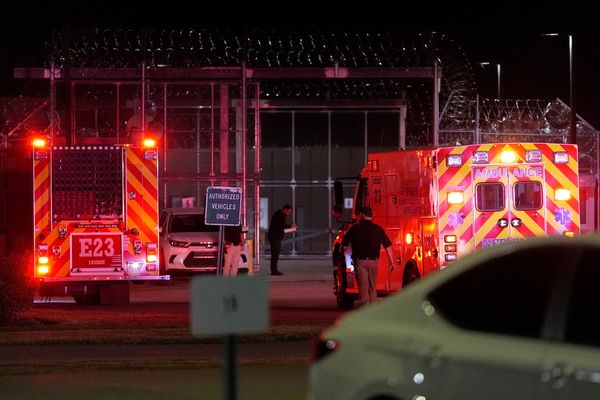
Sigüenza and O’Keefe were put into separate vehicles and taken to the BH Whipple federal building, a facility just south of the Twin Cities where agents take people they have arrested – both US citizens and immigrants they intend to deport. They were held there for hours before eventually being released.
The killing of Alex Pretti by a federal officer on Saturday, less than three weeks after the killing of Renee Good, brought heightened attention to the brutality observers and bystanders are facing in Minneapolis as they witness and document immigration enforcement. Volunteer observers told the Guardian they have been subjected to violence since the beginning of Operation Metro Surge in early December.
Observers who had been detained by federal agents and released, many without charges, told the Guardian they were denied access to medical care, phone calls and lawyers.
Still, even after federal agents killed two bystanders in Minneapolis, Sigüenza said he was determined to keep observing and recording the federal agents’ actions.
“If we don’t document and film federal agents, then they can shoot you 10 times and then say that you’re brandishing a firearm and it ends there,” he said. The fact that bystanders and community members were able to capture the agents who shot Good and Pretti, and present evidence to refute the Trump administration’s claims about those incidents, he said, speaks to the power of bearing witness.
“There will be absolutely no accountability unless people are documenting,” he said.
***
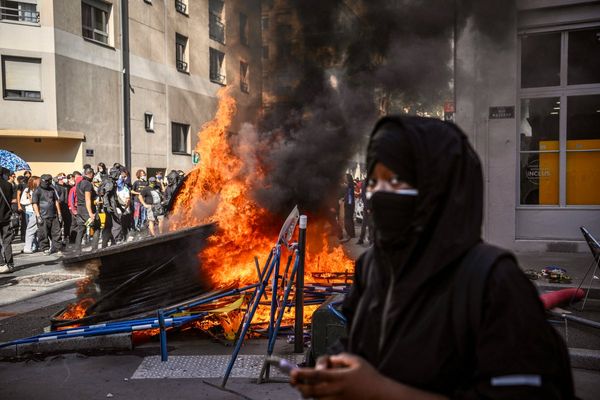
Federal agents have been taking an increasingly aggressive approach against observers – using so-called “less lethal” weapons such as chemical irritants and projectiles against onlookers at the scene of immigration raids.
RM, an observer who asked that their name remain anonymous because they feared further retaliation from federal agents while patrolling, said that they were at the scene of a raid – on the same day that Good was killed – when agents smashed their car window and sprayed chemical irritants directly into their car.
Then an agent cuffed RM and used a pain-inducing restrain to drag them out, crushing their wrist in the process. Afterwards, agents drove RM to the Whipple building. When RM told one of the agents he looked rather young, they pushed them down and held their face into the ground. The agents yelled at RM, who is trans, saying, “Do you like the dirt, queer?”, they recalled to the Guardian.
They were not offered water to clear the irritant out of their eyes for more than an hour. Eventually, they were left to wash their face at a broken, low-pressure sink inside the cell where they were held.
“The whole incident was painful and humiliating,” said RM. When they were released about three hours later, without any charges, they were finally able to wash in a shower. It took almost an hour to fully rinse off – and the irritant spread and burned their skin even as they tried to wash it off. “That, I would say, is the most painful experience of my life.”
These escalating tactics, observers told the Guardian, seem to be designed to intimidate and deter them from monitoring the activity of federal agents, warning their communities and bearing witness to immigration arrests.
In a statement to the Guardian, the Department of Homeland Security (DHS) said that “rioters and terrorists have assaulted law enforcement”. The agency said that “despite these grave threats and dangerous situations our law enforcement as followed their training and used the minimum amount of force necessary to protect themselves, the public, and federal property.” The statement did not give a spokesperson’s name and did not address multiple questions about the use of force against RM and other observers, nor did it address questions about why agents have been smashing the car windows of observers.
Jac Kovarik, who has been volunteering as an observer for nearly two months now, said that agents had tried a number of times to intimidate them, including by taking photos of their former house and car.
In December, Kovarik was arrested by agents and taken to Whipple. They were patted down, told to remove all their jewelry and put all personal belongings into a bag, cuffed at the ankles, and taken to a cell. They were denied a request to make a phone call.
Other observers found Kovarik’s information in their car, and informed neighbors that they had been detained. An attorney eventually came to Whipple, and Kovarik was released after about seven hours in detention. They, too, were never charged with a crime.
On another occasion, after Good was killed, Kovarik was on patrol with a friend when agents routed them from the friend’s home and drew guns on them.
“That was a huge escalation,” Kovarik said.
***
Attorneys told the Guardian that the DHS had been regularly denying them access to clients held at the Whipple building – which has become a home base for the thousands of immigration officers who have swarmed the Twin Cities. The building is also the first stop for immigrants detained in the recent enforcement surge, and the spot where dozens of bystanders and observers have been held after arrest.
On Wednesday, the Advocates for Human Rights and a detained individual filed a class-action lawsuit challenging detention practices, alleging a pattern of denying lawyers confidential communication with their clients at Minnesota facilities including Whipple.
In a statement to the Guardian, the DHS categorically denied that people detained at Whipple were unable to access attorneys.
Sigüenza was eventually able to meet with a lawyer, but the door to the room where they met would not close, and agents were able to listen in, he said.
Observers who were detained at Whipple provided corroborating accounts that agents appeared disorganized and unclear about who, exactly, they were holding at the facility.
Wes Powers, who was arrested and detained there on 8 January, told the Guardian he witnessed agents accessing Facebook and personal social media accounts on the same cellphones they were using to photograph detainees and their identification cards.
Sigüenza said that at one point during his detention he was brought into a cell with three men who identified themselves as from Homeland Security Investigations. They seemed to insinuate he was in a lot of trouble and they could help him if he would give them the names of protest organizers or undocumented neighbors. They said if he had family members outside the US who wanted to enter the country, they could help with that as well (Sigüenza is of Mexican descent).
“I told him, ‘I’m just trying to protect my neighbors.’ And he said, ‘Oh, where are your neighbors from?’” Sigüenza said. “He thought I meant my nextdoor neighbors. I just meant my community generally.”
Meanwhile, Tippy Amundson and Heather Zemien, neighbors in the Brooklyn Park suburb of Minneapolis, had a different experience than most while being detained.
They saw federal agents at an apartment building and were alerting people to their presence by honking their horns on 22 January. Agents told them to leave, but as they were leaving, they saw a police officer and stopped to ask some questions.
Then a federal agents’ vehicle blocked their car and the agents accused them of calling the cops. The agents pulled them out of the car and arrested them. An agent put Amundson’s phone on a console in the vehicle, but she was able to use Siri to call her husband.
A few blocks into the drive, an agent in the front passenger seat started having a seizure, and the women told the other agents what to do and how to help. Amundson moved his weapon so she could put him on his hip and held his head up so he wouldn’t choke on his own tongue.
After emergency services arrived, and after helping the agent through multiple seizures, they were again handcuffed and brought to the Whipple building.
Amundson’s husband alerted her state representative, who quickly worked to get them released. Between the aid rendered to the agent and the knowledge of a representative on the way, Amundson and Zemien said “they pretty much rolled out the red carpet for us” at the Whipple building – they got water and a bathroom and a heater.
They were out within three hours and were cited for impeding federal officers.
“I’m not well,” Amundson said in the aftermath of the experience, noting she had not been eating. “But I’m well supported and I’m well cared for.”