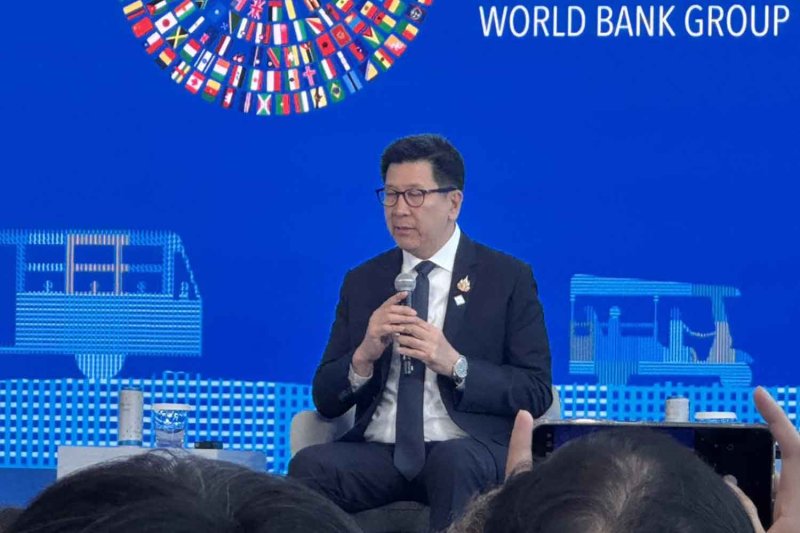
Thailand will champion its role as a "connected economy", helping to bridge a fragmented world at this October's International Monetary Fund-World Bank Annual Meetings, says Finance Minister Ekniti Nitithanprapas.
Announcing Thailand's readiness to host the meetings on Tuesday, Mr Ekniti said the ministry plans to leverage the event as a platform to present four strategies to steer Thailand's economy.

These strategies aim to showcase Thailand's vision for navigating a polarised global landscape by positioning the country as a bridge between divided economies while promoting sustainable growth.
The first strategy concerns the government's "Thai Chuay Thai Plus" co-payment scheme that supports the domestic economy, expanding public access to financial innovation while enabling the government to deliver fiscal policy measures directly to citizens more effectively, he noted.
The second prong positions Thailand as a connected economy that bridges an increasingly fragmented world amid geopolitical rivalries.
"Thailand will declare that it aspires to be more than a middle power, but rather a connected economy that helps reconnect a divided world. Thailand aims to serve as a bridge between competing blocs by establishing itself as a regional investment hub and linking next-generation global supply chains within Southeast Asia," said Mr Ekniti.
The third strategy addresses the challenges of an ageing society with a wellness model, treating this demographic reality as an economic opportunity.
The model highlights the country's strengths in cuisine, given its long tradition of using herbs for their medicinal properties; Muay Thai as a form of exercise suitable for people of all ages; and meditation to enhance the quality of life for older adults.
These elements represent soft power and traditional wisdom that the country is ready to showcase to the international community, he noted.
The final effort involves accelerating the energy transition. Amid volatile and elevated global energy prices, Thailand has adopted policies to speed the shift towards clean energy to reduce dependence on expensive conventional energy sources.
This strategy focuses on restructuring the country's energy infrastructure to make it more sustainable and environmentally friendly, while strengthening Thailand's long-term competitiveness.
"Presenting these four policies at the meetings demonstrates Thailand's capabilities as host of a major global gathering and sends a clear message that the nation is ready to play a pivotal role in fostering a more connected, healthier, and more sustainable global economy," Mr Ekniti said.