Get all your news in one place.
100's of premium titles.
One app.
Start reading
Bangkok Post
Bangkok Post
National

Ministry says Law of Sea findings not binding

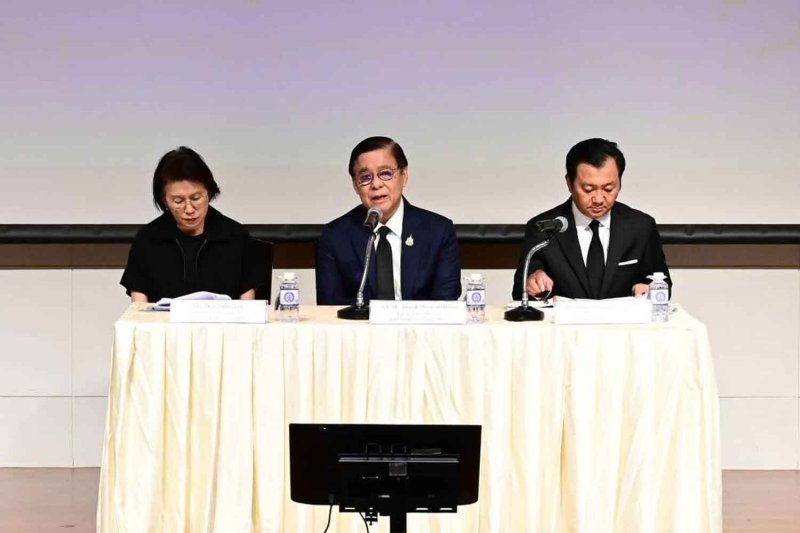
Sihasak Phuangketkeow, Deputy Prime Minister and Minister of Foreign Affairs, briefed the diplomatic corps and representatives of international organizations in Thailand on recent developments concerning Thailand-Cambodia relations and the situation in Myanmar on Friday. (Photo: Ministry of Foreign Affairs)

The Ministry of Foreign Affairs says that the compulsory conciliation mechanism under the UN Convention on the Law of the Sea (Unclos) carries no binding legal force on disputed parties, though it can exert considerable political pressure and influence international perceptions in disputes such as the Thai-Cambodian maritime boundary issue.

On Facebook on Saturday, the ministry published an infographic explaining the "compulsory conciliation" process under the 1982 UN Convention on the Law of the Sea, seeking to provide the public with a clearer understanding of the dispute-resolution mechanism after Cambodia initiated proceedings involving Thailand.

The ministry said compulsory conciliation is one of several dispute-settlement mechanisms available to state parties under Unclos.

It said findings issued by a conciliation commission differ from judgments handed down by international courts or arbitral tribunals because they are not legally binding on the parties involved.

However, the ministry said that while the commission's recommendations cannot be enforced as a matter of law, they often carry substantial political weight and may affect a country's standing and credibility in the international arena.

Under the process, once a conciliation commission completes its work, it prepares a report containing findings and recommendations.

The disputing parties are then expected to use the report as a basis for further negotiations aimed at reaching a mutually acceptable solution.

The process typically takes about one year after the commission is fully constituted before a final report is submitted to the parties.

The ministry said the information campaign was intended to enhance public understanding of Unclos, which serves as the principal legal framework governing maritime affairs and the peaceful settlement of disputes between states.

On Friday, Prime Minister Anutin Charnvirakul met Deputy Prime Minister and Foreign Minister Sihasak Phuangketkeow, Defence Minister Adul Boonthumjaroen and Army commander Pana Claewplodtook to discuss Thailand's stance.

This comes after Cambodian Prime Minister Hun Manet formally Thailand and the UN secretary-general of Cambodia's intention to begin compulsory conciliation proceedings.

Following the meeting, Mr Anutin said Thailand would appoint representatives to participate in the process, with Mr Sihasak leading the Thai side.

He dismissed concerns Cambodia was gaining an advantage by taking the dispute to the international stage, insisting Thailand had acted properly and remained confident in the legitimacy of its position.

"We have done nothing wrong, so there is no reason to be worried," he said, adding that Thailand's priority was to safeguard its interests throughout the proceedings.

Sign up to read this article
Read news from 100's of titles, curated specifically for you.
Already a member? Sign in here
Related Stories
Top stories on inkl right now
One subscription that gives you access to news from hundreds of sites
Already a member? Sign in here
Our Picks
Fourteen days free
Download the app
One app. One membership.
100+ trusted global sources.