
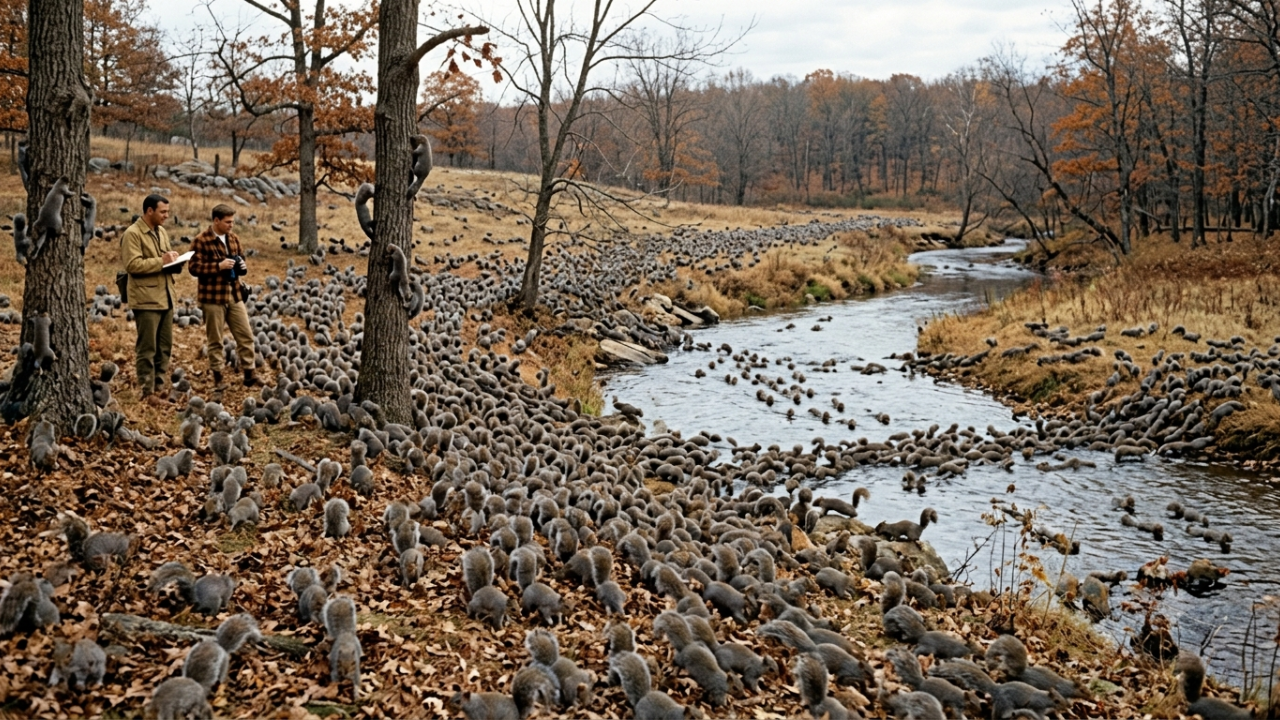
In the autumn of 1968, reports of eastern grey squirrels moving in unusual numbers across parts of the northeastern United States drew attention to a puzzling wildlife event. The scale of the movement was striking, but the animals had not necessarily begun travelling without reason. Their behaviour may have reflected changes in the food supply that had taken place over several seasons. Acorns, a major source of food for squirrels, vary considerably in abundance from one year to the next. When a good harvest is followed by a poor one, animals that have benefited from plentiful food can suddenly face a very different landscape. The weather in the preceding year may help explain how that imbalance developed. Understanding the 1968 squirrel irruption offers insight into how weather, tree reproduction and food shortages interact, helping scientists investigate how changing environmental conditions can influence wildlife movements and ecosystem dynamics.
Get breaking news anytime, anywhere. Download the TOI app now!