This blog is closed. Thanks for following along. Our live coverage of the war continues here:
Returning to the International Energy Agency chief’s address in Australia, Fatih Birol also said dozens of energy assets in the Middle East had been damaged in the war.
At least 40 ... energy assets in the region are severely or very severely damaged across nine countries.
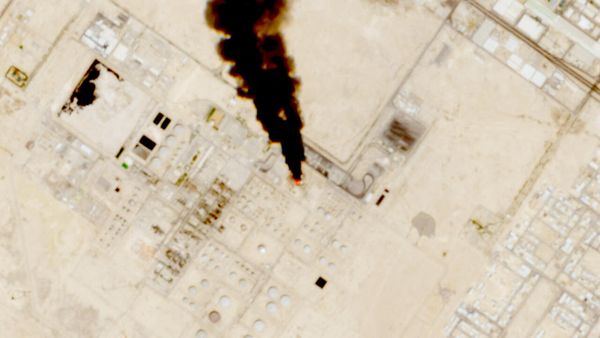
Israel launches new wave of strikes on Tehran
The Israeli military is saying it has launched a wave of “extensive strikes” on Tehran targeting infrastructure of the Iranian regime.
The announcement came in a social media post early on Monday.
Updated
Blasts have just been heard in Tehran, according to Iranian media reports.
Separately, Saudi Arabia’s defence ministry said it had detected two ballistic missiles fired towards the Riyadh area.
One was intercepted and the other fell in to an uninhabited area, it said on X, quoting a ministry spokesperson.
It also said that it had intercepted and destroyed a drone in the country’s eastern region.
Updated
The International Energy Agency chief says the energy crisis might require energy reduction measures such as working from home for some time.
Fatih Birol says a list of recommendations including encouraging more people to work from home, reduce speed limits and reduce air travel to save fuel are based on “years of experience”, my colleague Krishani Dhanji reports from the Australian capital.
Birol tells the national press club in Canberra that since the IEA released its report with the measures on Friday, a number of countries – including in the Asia-Pacific region – have adopted some of the ideas, but that “governments have their own priorities”.
These measures we have announced last Friday are based on our years of experience. We look at what works, what doesn’t work and there are real life tests for that, such as after Russia’s invasion of Ukraine, European countries adopted these measures … it helped them a lot to go through these difficult times.
As soon as I announced them on Friday we heard from many governments in Europe but also in this part of the world, they have already adopted some.
Updated
World losing more barrels of oil a day than in two 1970s crises combined, says IEA chief
The head of the International Energy Agency is addressing Australia’s national press club now and says the public needs to understand the “depth of the problem” facing the globe.
Fatih Birol starts by saying the situation is now “very serious”, more so than the two oil crises in 1973 and 1979, and more serious than the gas crisis sparked by Russia’s invasion of Ukraine.
At that time, in each [oil] crisis, the world has lost about 5 million barrels per day, both of them together 10 million barrels per day. And after that we all know that there were major economic problems around the world. And today we lost 11 million barrels – so more than two major oil shocks put together.
Plus after Russia’s invasion of Ukraine, the gas markets – especially in Europe – we lost about 75 billion cubic metres, 75BCM. And as of now, as a result of this crisis, we lost about 140BCM, almost twice. So the situation is, if we want to put in a context, this crisis as it stands now, two oil crises and one gas crash put all together.
Birol adds that the crisis is also having a severe impact on other “vital arteries of the global economy”, including petrochemicals and fertilisers, which will have lasting impacts.
Updated
Iran’s warning that it will strike energy and water infrastructure across the Persian Gulf if Donald Trump follows through on his threat to destroy its power plants has raised fears of mass disruption in a region heavily dependent on desalination for drinking water.
Such an attack on Iran’s electricity could hurt Iran but would be potentially catastrophic for its Gulf neighbours, which consume around five times as much power per capita.
Reuters describes how electricity makes their gleaming desert cities habitable, in part by powering the desalination plants that produce 100% of the water consumed in Bahrain and Qatar.
Such plants use seawater to meet more than 80% of drinking water needs in the United Arab Emirates, and 50% of the water supply in Saudi Arabia.
Donald Trump on Sunday gave Iran 48 hours to fully reopen the vital strait of Hormuz to shipping or face the destruction of its energy infrastructure.
Iran’s parliamentary speaker, Mohammad Baqer Qalibaf, has doubled down on the country’s warning of retaliation, saying on X that critical infrastructure and energy facilities in the Middle East could be “irreversibly destroyed” should Iranian power plants be attacked.
Iran’s Revolutionary Guards said it would also mean the shipping lane where a fifth of global oil and liquefied natural gas normally transits along Iran’s southern coast would remain shut.
“The strait of Hormuz will be completely closed and will not be opened until our destroyed power plants are rebuilt,” the Guards said in a statement.
Updated
In Gaza, four Palestinians were killed in Israeli strikes on Sunday, hospital authorities said.
One strike hit a vehicle in the central Nuseirat refugee camp and killed three police officers, according to the Awda hospital, which received the casualties. Ten others were wounded, it said.
Another Palestinian was killed in Gaza City, according to Shifa hospital.
A report from the Associated Press went on to say while the heaviest fighting between Israel and Hamas has subsided after the October ceasefire deal in the war on Gaza, the truce has still seen almost daily Israeli fire.
Israeli forces have carried out repeated airstrikes and frequently fire on Palestinians near military-held zones, killing more than 670 Palestinians, according to Gaza health officials.
The Israeli military did not immediately comment on Sunday’s strikes but has previously said Israel will respond to violations of the ceasefire or threats to its soldiers.
Starmer calls emergency meeting on UK economy amid mounting risks from war
British prime minister Keir Starmer is set to chair an emergency meeting on the economic fallout from the war in Iran on Monday, with chancellor of the exchequer Rachel Reeves and Bank of England governor Andrew Bailey also attending, the UK government has said.
Financial markets face another turbulent week after Iran said it would strike its Gulf neighbours’ energy and water systems if Donald Trump followed through on his threat to “obliterate” Iran’s power plants if it doesn’t fully open up the crucial strait of Hormuz.
The UK is watching with particular unease, Reuters reports. The country’s heavy dependence on imported natural gas, persistently high inflation and stretched public finances have pushed its government bonds into a far steeper decline than those of international peers.
Britain’s finance ministry said before the so-called “Cobra” meeting:
Topics expected to be covered are the economic impact of the crisis on families and businesses, energy security and the resilience of industry and supply chains alongside the international response.
Foreign secretary Yvette Cooper and energy secretary Ed Miliband will also attend.
Reeves has said it is too soon to say what the impact of the war will be for Britain’s economy and has resisted calls for sweeping cost-of-living measures for households, saying instead that more targeted support is under consideration.
Updated
Israeli settlers have carried out a series of attacks across the occupied West Bank, setting homes and vehicles on fire and wounding several Palestinians in what witnesses described as coordinated raids on communities.
The violence, reported across at least half a dozen locations overnight from Saturday into Sunday, comes amid a wider surge in tensions in the territory.
The official Palestinian news agency, Wafa, cited local sources as saying settlers had entered al-Fandaqumiya and the nearby town of Seilat al-Dahr, south of Jenin, late on Saturday.
In al-Fandaqumiya, settlers set fire to houses and cars and smashed windows of other homes as residents “attempted to confront them and put out the fires”, according to Wafa. In Seilat al-Dahr, several homes were targeted and a resident was beaten, leaving him injured.
In the villages of Qaryout and Jaloud, south of Nablus, about 100 masked settlers carried out successive waves of raids. Witnesses described scenes of chaos as vehicles were set ablaze and homes attacked.
Israeli troops and police were present on the outskirts of the villages by 2am but did not stop the attacks, which continued into the night, or prevent settlers moving between villages, witnesses told the Guardian.
The attacks unfolded during Eid al-Fitr, which marks the end of Ramadan, and form part of a broader escalation in settler violence.
The full report is here:
At least one person has been killed in an airstrike on a radio station in the Iranian gulf port of Bandar Abbas, the semi-official Mehr news agency is reportedly saying.
The port city is on Iran’s southern coast on the strait of Hormuz.
US warns Americans worldwide to show 'increased caution'
The US state department has issued a message urging American citizens around the globe to be more cautious amid the Iran war.
The department posted on X:
Worldwide Caution: The Department of State advises Americans worldwide, and especially in the Middle East, to exercise increased caution.
It also said:
U.S. diplomatic facilities, including outside the Middle East, have been targeted.
Groups supportive of Iran may target other U.S. interests overseas or locations associated with the United States and/or Americans throughout the world.
The state department added that periodic airspace closures might cause travel disruptions and that Americans abroad should follow the guidance in security alerts issued by the nearest US embassy or consulate.
Updated
Australian shares plunge as investors weigh Trump ultimatum
The Australian share market plunged this morning, wiping almost $60bn in value from equities in early trading after the US and Iran traded threats to destroy energy infrastructure.
Australia’s benchmark S&P/ASX 200 fell 1.8% shortly after the market opened.
The index is now down 10% since the Middle East conflict erupted, representing a market correction.
The steep losses come part-way through Donald Trump’s 48-hour ultimatum to Tehran to open the strait of Hormuz, a vital pathway for the world’s oil flows.
The head of research at Pepperstone, Chris Weston, said Trump’s ultimatum would define trading conditions.
If we move past the deadline, focus will quickly shift to the scale of any action against Iran and the nature of Iran’s response, particularly toward US bases and its allies.
While investors largely ignored the initial strikes against Iran, sentiment has soured due to concerns the US does not have a clean exit strategy that can guarantee a stable resumption of the oil trade, and other freight, through the crucial strait.
The ASX has been pulled around by sharp moves in the oil price, with rising energy prices fuelling global inflation, which drags down equity markets.
An influential pro-Iran Iraqi armed group has announced it will extend a pause on its attacks on the US embassy in Baghdad by five days.
“The deadline given to the embassy of American evil will be extended by an additional five days,” the Kataeb Hezbollah group said in a statement on Monday.
The group warned that it would respond if it came under attack and denied involvement in a drone strike that hit an Iraqi intelligence building on Saturday, killing an officer, reports Agence France-Presse.
Updated
Oil prices rise after Trump ultimatum on Hormuz strait
The price of oil increased early on Monday after Donald Trump’s 48-hour ultimatum for Iran to open the strait of Hormuz or face decimation of its energy infrastructure – and Israel warned the war would continue for several more weeks.
Shortly after the 2200 GMT open, the price of West Texas Intermediate – the US benchmark crude – for May delivery was up 1.8% to just over $100 a barrel, before retreating slightly.
The price of North Sea Brent crude for May delivery rose at a similar rate, to $113.44 a barrel, before sliding to around $111 about 45 minutes into trading, Agence France-Presse is reporting.
On 27 February, the day before the US-Israeli attacks on Iran started, they were $67.02 and $72.48 a barrel, respectively.
This is Adam Fulton picking up our live coverage – stay with us for the latest developments
Updated
Summary of the day
Iranian president Masoud Pezeshkian said “threats and terror” are strengthening Iranian unity, after Donald Trump yesterday warned he would “obliterate” Iranian power plants if the strait of Hormuz is not opened within 48 hours.
The US treasury secretary, Scott Bessent, gave an interview to NBC News earlier today. When asked if Trump was “winding” down the war or “escalating” it, Bessent said: “They are not mutually exclusive. Sometimes you have to escalate to de-escalate.”
In the same NBC interview, US treasury secretary Scott Bessent said that the US government has “plenty of money” to fund the war against Iran, but is requesting supplemental funding from Congress to ensure the military is well supplied in the future.
Lebanon’s Health Ministry said Sunday that 118 children and 79 women are among those killed, and at least 2,786 others have been wounded, according to the Associated Press. The country’s death toll as of Saturday was 1,024 people.
The director general of the International Atomic Energy Agency (IAEA), Rafael Grossi, said he hopes to “re-establish” talks between Iran and the US about Tehran’s nuclear program despite the escalating nature of the conflict. “I’ve been having important conversations here at the White House, and also with Iran. There are some contacts, and we hope to be able to reestablish that line,” Grossi told CBS News.
UK prime minister Keir Starmer and US president Trump spoke by phone Sunday evening, according to a statement from the UK government. “The leaders discussed the current situation in the Middle East, and in particular, the need to reopen the Strait of Hormuz to resume global shipping.”
Pope Leo on Sunday said death and suffering caused by the war in the Middle East are a “scandal to the whole human family”, as he once again pleaded for an immediate ceasefire. “We cannot remain silent in the face of the suffering of so many people, the defenseless victims of these conflicts. What hurts them hurts the whole of humanity,” Leo said at his weekly Angelus prayer in St. Peter’s Square.
UK prime minister Keir Starmer and US president Donald Trump have spoken by phone this evening, according to a statement from the UK government.
“The leaders discussed the current situation in the Middle East, and in particular, the need to reopen the Strait of Hormuz to resume global shipping,” the statement said. “They agreed that reopening the Strait of Hormuz was essential to ensure stability in the global energy market. They agreed to speak again soon.”
Ongoing demonstrations against the war in Iran have been taking place in London this weekend. Here are some photos from Sunday’s protests:
Saudi Aramco chief executive Amin Nasser has cancelled his planned appearance at the CERAWeek energy conference in Houston to remain in Saudi Arabia because of the Iran conflict, an industry source told Reuters.
Nasser, who has been CEO of the world’s top oil exporter for more than a decade, is usually one of the headline speakers at the conference, one of the energy industry’s biggest events.
CERAWeek, organised by S&P Global, which begins on Monday, draws top executives, government officials, and policymakers from around the world to discuss global energy market outlook.
Nasser’s withdrawal highlights the scale of the challenge he faces in dealing with the Iran crisis.
He will also not provide a recorded video message for the CERAWeek conference, the source said, adding that the event’s organizers had been notified.
The conflict, now in its fourth week, has killed more than 2,000 people, upended global markets and spurred Iranian retaliatory strikes that have effectively shut the strait of Hormuz and targeted Gulf energy infrastructure, including Aramco’s.
Pope Leo renews call for ceasefire, saying harm to victims in Middle East conflict 'hurts the whole of humanity'
Pope Leo on Sunday said death and suffering caused by the war in the Middle East are a “scandal to the whole human family”, as he once again pleaded for an immediate ceasefire.
As the US-Israeli war on Iran enters its fourth week, the first U.S. pope said that he continues to follow with “dismay” the situation in the Middle East and in other regions torn apart by war and violence.
“We cannot remain silent in the face of the suffering of so many people, the defenceless victims of these conflicts. What hurts them hurts the whole of humanity,” Leo said at his weekly Angelus prayer in St. Peter’s Square.
“I strongly renew my appeal for us to persevere in prayer, so that hostilities may cease and the way may finally be paved for peace,” he added.
Updated
French president Emmanuel Macron said in a social media post that he has spoken with Saudi Crown Prince Mohammed bin Salman.
Macron called on all combatants in the war to impose a moratorium on energy and other civilian infrastructure, and urged Iran to let traffic flow freely through the strait of Hormuz.
“I have just met with the Crown Prince of Saudi Arabia, Mohammed bin Salman,” he wrote. “I reiterated to him France’s solidarity and our commitment to contributing to the defense of Saudi airspace, as the country is subjected to repeated and unacceptable strikes by Iranian missiles and drones.”
He continued: “In the face of the risk of an uncontrolled escalation, it is more essential than ever that all belligerents agree to establish a moratorium on energy and civilian infrastructure and that Iran restore freedom of navigation in the Strait of Hormuz.”
Mohammad Bagher Qalibaf, Iran’s parliament speaker, threatened financial entities that fund the US military in a Sunday social media post.
“Alongside military bases, those financial entities that finance the US military budget are legitimate targets,” he wrote. “US treasury bonds are soaked in Iranians’ blood. Purchase them, and you purchase a strike on your HQ and assets.”
He warned: “We monitor your portfolios. This is your final notice.”
European Union foreign policy chief Kaja Kallas held a phone call with Iran’s foreign minister Abbas Araqchi on Sunday, an EU official told Reuters.
Kallas also held separate calls with counterparts from Turkey, Qatar and South Korea “on the war in the Middle East, attacks on energy infrastructure, and the urgent need to reopen the Strait of Hormuz,” the official said.
“These engagements were part of the EU’s ongoing efforts to explore diplomatic avenues forward,” the official said, adding that “fresh threats to attack critical civilian infrastructure risk impacting millions of people across the Middle East and beyond”.
Kallas last spoke to Araqchi on Wednesday, when she said safe passage through the Strait of Hormuz was a priority for Europe, according to an EU official.
Iranian foreign minister Abbas Araghchi said Sunday that maritime traffic isn’t passing through the strait of Hormuz because insurance companies are concerned about the US-initiated war, but asserts that the strait is not closed.
“Strait of Hormuz is not closed. Ships hesitate because insurers fear the war of choice you initiated—not Iran,” he wrote. “No insurer—and no Iranian—will be swayed by more threats. Try respect.”
He added: “Freedom of Navigation cannot exist without Freedom of Trade. Respect both—or expect neither.”
It is approaching a month since the US and Israel launched their attacks on Iran, arguing they were acting to remove the country’s nuclear threat, destroy its ballistic missile capability and free the Iranian people of a tyrannical theocratic regime. Yet it is Iranian civilians who are increasingly bearing the brunt of Israel and US’s campaign.
Here is the Guardian’s timeline of the war so far and what we know about the impact it is having on the Iranian public.
Read more:
An Israeli airstrike on a police vehicle on Sunday killed three people in the middle of the Nuseirat camp in the central Gaza Strip hours after another person was killed in a strike on northern Gaza, Reuters reported, citing health officials.
Medics and police sources said the three men killed in Nuseirat were members of the Hamas-led police force. Ten people were also wounded in the attack, medics said.
Earlier on Sunday a separate airstrike killed one person, identified as a leader of one of Fatah’s armed groups, and injured an unknown number of others in the Sheikh Radwan neighborhood in northern Gaza.
The Israeli military said it was checking on the two incidents.
While Israeli attacks in Gaza declined in the days after the US and Israel launched attacks on Iran on February 28, according to residents, medics and analysts, they have since begun to rise again. Israeli fire has killed dozens of Palestinians since the outbreak of the Iran war, Gaza health officials say.
Spanish prime minister Pedro Sánchez on Sunday demanded the strait of Hormuz be opened.
“The Government of Spain demands the opening of Hormuz and the preservation of all the energy sites of the Middle East,” he wrote in a social media post. “We stand at a global tipping point. Further escalation could trigger a long-term energy crisis for all humanity. The world should not pay the consequences of this war.”
Sánchez did not specify Iran or the US, but the call for “preservation of all the energy sites” follows escalating attacks on key oil and gas projects in the Middle East. The destruction of key energy infrastructure will likely have profound and lasting consequences for the world’s energy supplies and the global economy.
On Saturday, Trump issued a threat to Iran, giving the country 48 hours (until shortly before midnight GMT on Monday) to open the strait of Hormuz, a vital pathway for the world’s oil flows, or the US would “hit and obliterate” Iranian power plants “starting with the biggest one first”.
Tehran responded by saying it will “irreversibly destroy” essential infrastructure across the Middle East, including vital water systems, if the US follows through on Trump’s threat.
The New York Times reported on Friday that at least 39 energy oil refineries, natural gas fields and other energy sites in nine countries have been damaged since the start of the war.
Lebanon’s Health Ministry said Sunday that 118 children and 79 women are among those killed, and at least 2,786 others have been wounded, according to the Associated Press.
The country’s death toll as of Saturday was 1,024 people.
Updated
Over three weeks of war, Iranian missiles have killed at least 15 people inside Israel, and injured many more, including about 200 in overnight strikes near a nuclear facility in the country’s south, but they have not touched public support for the war.
An overwhelming majority of Jewish Israelis back the decision to start a new conflict, with the Israel Democracy Institute putting support at more than 90% in two wartime polls.
Undaunted by the regular wail of air raid sirens, shuttered schools, cancelled flights or warnings the campaign could last weeks, more than half also wanted the US and Israel to keep bombing Iran until its government falls.
Opposition politicians set aside campaigning for parliamentary elections due this autumn, backing the decision to attack Iran in an almost unanimous display of national unity.
Enthusiasm for the war sparked speculation inside Israel that prime minister Benjamin Netanyahu might dissolve parliament early in a move to capitalise on securing US backing for the conflict, and the assassination of Iran’s supreme leader Ayatollah Ali Khamenei.
This year’s vote will be the first chance for Israelis to have a direct say on their government since the Hamas-led attacks on 7 October 2023.
Read more:
Israeli prime minister Benjamin Netanyahu visited sites in Arad and Dimona today, hours after missiles from Iran struck residential neighborhoods in these cities in southern Israel.
In a video posted to social media, Netanyahu again echoed Trump’s call for other world leaders to join into the war against Iran. “I ask the leaders of the world, the leaders of the free world, the leaders of the moderate states, what more are you waiting for,” he said.
Netanyahu added: “President Trump has correctly said that Israel, the United States and Israel, in this great partnership, we’re fighting the battle not only for ourselves, but for all of you. And he asked a simple question, where are you? And it’s time to heed president Trump’s call, his leadership and his vision, not merely for our sake, but for your sake.”
In the same NBC interview, US treasury secretary Scott Bessent said that the US government has “plenty of money” to fund the war against Iran, but is requesting supplemental funding from Congress to ensure the military is well supplied in the future.
The US military’s request for $200 billion in additional funding for the Iran war faces stiff opposition in Congress, with Democrats and even some Republicans questioning the need after large defense appropriations last year.
Bessent defended the request without confirming the amount.
Donald Trump has not yet sent a request for the Senate and House of Representatives to approve the sum and his administration has made clear that the number could change.
“We have plenty of money to fund this war,” Bessent said. “This is supplemental. President Trump has built up the military, as he did in his first term, as he is now doing in his second term, and he wants to make sure that the military is well supplied going forward.”
Sometimes you have to 'escalate to de-escalate', US treasury secretary says
The US treasury secretary, Scott Bessent, gave an interview to NBC News earlier today. He was asked if Donald Trump was “winding” down the war, which the president said he was considering doing on Friday, or “escalating” it, which is what he seems to be doing in reality (the US is reportedly sending three more amphibious assault ships and roughly 2,500 additional marines to the region and could occupy or blockade Iran’s strategically crucial Kharg Island to pressure Tehran to reopen the strait of Hormuz). Bessent said:
They are not mutually exclusive. Sometimes you have to escalate to de-escalate.
Pressed if the US will use troops to secure the strait of Hormuz or for any other reason, Bessent declined to give away the administration’s military plans.
“As President Trump always does, he is leaving all options on the table,” Bessent said. “We had a very successful bombing campaign against the military installations at Kharg Island, the nexus for all the Iranian oil supply. What could happen with Kharg Island, we’ll see.”
Kharg, a five-mile-long coral island in the Persian Gulf about 16 miles from the mainland, is a key processing hub for Iran, through which 90% of the country’s oil exports typically flow. The island was largely left untouched by the US-Israeli attacks during the first two weeks of the war.
But it was reported on 13 March that the US had bombed the island’s military installations, although it left the oil export facilities untouched. Trump warned he would reconsider the decision not to target oil facilities if Iran or other countries “do anything to interfere” with the safe passage of ships through the strait of Hormuz, which is effectively being blocked by Iran as it uses the vital waterway as leverage.
Updated
'Threats and terror' only strengthen our unity, Iranian president says following Trump threats
Iranian President Masoud Pezeshkian said “threats and terror” are strengthening Iranian unity, after Donald Trump yesterday warned he would “obliterate” Iranian power plants if the strait of Hormuz is not opened within 48 hours. Pezeshkian said:
The illusion of erasing Iran from the map shows desperation against the will of a history-making nation. Threats and terror only strengthen our unity. The Strait of Hormuz is open to all except those who violate our soil. We firmly confront delirious threats on the battlefield.
German chancellor Friedrich Merz said he had a phone call with Donald Trump earlier today. In a social media post, he wrote: “This afternoon, I discussed the situation in Iran, Israel, and Ukraine with US President Donald Trump. We agreed to remain in close contact. Our exchange will be continued soon.”
Merz stuck close to Washington in the early days of the war, but has since shifted his stance, pointing to its destabilising impact on energy costs and “potential to trigger large-scale migration”.
He told German lawmakers last week he agreed Iran must not be allowed to pose a threat to its neighbours but expressed doubts about the rationale behind the US-Israeli war.
“To this day, there is no convincing plan for how this operation could succeed. Washington has not consulted us and did not say European assistance was necessary,” he told lawmakers.
“We would have advised against pursuing this course of action as it has been pursued. Therefore, we have declared that as long as the war continues, we will not participate in ensuring freedom of navigation in the Strait of Hormuz, for example, by military means.”
The US-Israeli onslaught against Iran is intended to resolve a 24-year standoff over Tehran’s nuclear programme, but it runs the risk of backfiring and driving the regime towards making a secret bomb, proliferation experts have warned.
The regime in Tehran has long insisted that the programme is for civilian purposes and it has no intention of making a nuclear weapon. However, since two undeclared sites, for uranium enrichment and heavy water plutonium production, were discovered in 2002, the programme has been treated with intense suspicion.
A nuclear deal in 2015 imposed severe limits and thorough inspections on Iran but when Donald Trump walked out of the agreement in 2018, triggering its collapse, Iran ramped up its work on enrichment and other aspects of the programme.
Most worryingly for the international community, Iran had by last summer produced a stockpile of just over 440kg of highly enriched uranium (HEU), of 60% purity. In terms of technical difficulty, once at 60%, it is a relatively easy step to reach 90% – weapons-grade uranium that can be used to make a compact warhead.
With further enrichment and conversion of the uranium from gas to metal form, Iran’s 440kg stockpile would be enough to make more than 10 warheads.
The anxiety over this stockpile, accumulated since the torpedoing of the 2015 nuclear deal, was the motive for last June’s US-Israeli strikes on Iran. The US role, Operation Midnight Hammer, was focused on dropping bunker-busting bombs on Iran’s nuclear sites.
Trump claimed the bombardment had “obliterated” the nuclear programme, but it soon became apparent this was not true. The bombs had wreaked extensive damage, but deep underground sites, burrowed beneath mountains in two sites in particular, Isfahan and Natanz, could not be destroyed.
IAEA chief says he hopes to 're-establish' US-Iran nuclear talks
The director general of the International Atomic Energy Agency (IAEA), Rafael Grossi, said he hopes to “re-establish” talks between Iran and the US about Tehran’s nuclear programme despite the escalating nature of the conflict.
“I’ve been having important conversations here at the White House, and also with Iran. There are some contacts, and we hope to be able to reestablish that line,” Grossi told CBS News while cautioning that “nothing can happen while bombs are falling”.
“While there’s a negotiation, there’s always a possibility of an agreement. We cannot deny that,” he said when asked by CBS Face the Nation host Margaret Brennan if there was a possibility of a deal. Grossi said he hasn’t had the “honor” of speaking to Donald Trump directly but ended the interview by saying “in the bleakest hour, we should never lose hope”.
On 28 February, the US and Israel launched their war on Iran – widely seen as illegally – in the midst of negotiations, raising questions about whether Washington was ever serious about striking a deal with Tehran over its nuclear programme. The next round of talks was due to take place in Vienna on 2 March, but never happened.
Updated
Summary of the day so far...
It has just gone past 18:10pm in Tehran, and 16:40pm in Tel Aviv and Beirut. Here is a quick recap of events:
Iran’s Islamic Revolutionary Guard Corps (IRGC) said it would “completely close” the strait of Hormuz, one of the world’s busiest oil shipping channels, if the US targets Iranian energy infrastructure.
Iran warned earlier today that critical infrastructure and energy facilities in the Middle East could be “irreversibly destroyed” if Iranian power plants are attacked.
The warnings were issued after the US president, Donald Trump, said the US would “obliterate” Iranian power plants if the strait of Hormuz is not open before a 48-hour deadline, marking another dangerous escalation in the US-Israeli war on Iran that has spiralled across the region.
An Iranian official reportedly said that, with the right security and safety arrangements, the strait of Hormuz is open to all vessels except the ships of “enemy” countries, in an apparent reference to the US, Israel and its allies.
Iran has permitted some friendly countries, including China, India, Pakistan, to secure safe passage of their ships through the waterway, but has effectively closed it down for others by attacking ships and reportedly laying mines.
Israel launched airstrikes on the Iranian capital of Tehran overnight and Iran has retaliated with missile attacks.
Iranian missile strikes have injured about 200 people in southern Israel, after air defence systems failed to intercept projectiles that hit two cities close to a nuclear facility.
Iranian attacks on Gulf nations continued on Sunday morning.
The Israeli military has been told to accelerate the demolition of Lebanese homes in frontline villages close to the border and to destroy bridges over the Litani River.
Iran will completely close strait of Hormuz if Trump acts on threats to target power plants - statement
The Reuters news agency is carrying a statement from Iran’s Islamic Revolutionary Guard Corps (IRGC) in response to the US president, Donald Trump, giving Iran 48 hours to reopen the strait of Hormuz to shipping or face the destruction of its energy infrastructure.
In a new statement, the IRGC said Iran will completely shut the strait if Trump proceeds with his threats to target Iranian energy facilities.
The IRGC were quoted as saying that companies with US shares would be “completely destroyed” if Iranian energy facilities were targeted by Washington, and said energy facilities in countries that host American bases would be “lawful” targets.
“We did not start the war and we will not start it now, but if the enemy harms our power plants, we will do everything to defend the country and the interests of our people,” the statement reads.
Iran has already effectively closed the vital waterway, but a relatively small number of vessels from friendly countries have been able to transit it.
The effective closure of the strait, which carries one-fifth of global seaborne crude oil, one-fifth of LNG shipments and one-third of the most widely used fertiliser, has led to a spike in global energy prices, including in the US where consumers are being hit hard.
Updated
Hezbollah has reported missile attacks on Israeli positions near border.
In separate statements, the group said it targeted gatherings of Israeli troops at the Marj site opposite the town of Markaba, as well as in Jal al-Hammar, south of Odaisseh. It also said it carried out a third missile barrage targeting Israeli soldiers in the Taybeh project area.
The claims have not yet been independently verified.
Kuwait has filed a complaint before the International Civil Aviation Organization (ICAO) regarding dangerous airspace disruptions caused by Iranian attacks, the country’s Civil Aviation says.
It said:
Iran’s attacks are a blatant violation of international conventions, as they exposed passenger safety to serious risks.
Extensive damage to critical infrastructure in Iran, officials say
Iran’s critical water and energy infrastructure have suffered extensive damage due to US and Israeli strikes on tens of thousands of civilian sites, officials said on Sunday.
ISNA news agency reported that energy minister Abbas Aliabadi said:
The country’s vital water and electricity infrastructure has suffered heavy damage following terrorist and cyber attacks by the United States and the Zionist regime.
The attacks targeted dozens of water transmission and treatment facilities and destroyed parts of critical water supply networks.
Iran’s Red Crescent chief Pirhossein Kolivand said the total number of damaged civilian sites “has reached 81,365 based on the latest field assessments”. He said the figure includes residential and commercial units, schools, medical centres and vehicles.
He added:
Behind every damaged unit stands a family, a life, a memory, a livelihood, and a future that has collapsed beneath the rubble of war and violence.
Journalists in Tehran have reported damage to multiple residential buildings and other civilian infrastructure.
On Sunday, ISNA news agency reported that strikes had damaged a hospital in the southern city of Ahvaz, in Khuzestan province.
Other media, including Fars news agency, showed images of rescuers pulling bodies from the rubble of destroyed buildings in the northern city of Tabriz.
It was not immediately clear when those strikes took place.
Updated
Israel's military reports wave of Iranian missiles
Israel’s military says it has detected a wave of Iranian missiles heading towards the country, a Telegram update from the Israel Defense Force says.
It said that people in affected areas would receive mobile alerts and urged them to follow the standard procedure of taking shelter.
The Israeli military says it is working to intercept the threat, and that a precautionary alert has been sent to mobile phones in the relevant areas.
The Iranian state broadcaster, IRIB, also reported that a new wave of missile attacks has begun.
Separately, the UAE’s defence ministry says it has intercepted four ballistic missiles and 25 drones launched from Iran on Sunday.
In total, the UAE’s air defences have now intercepted 345 ballistic missiles, 15 cruise missiles, and 1,773 drone since “the start of Iran’s blatant aggression”, it said in a post on X.
Israeli media are reporting multiple “impacts” in central Israel after the latest Iranian missile barrage.
Israel’s Kann broadcaster shared a photo of what appeared to be a crater near a parking lot, without noting the exact location.
The Times of Israel cited Israel’s emergency medical service as saying it has not received reports of injuries.
Updated
Turkish foreign minister Hakan Fidan discussed steps to end the war between Iran, the United States and Israel with counterparts from Iran and Egypt, as well as US officials and the European Union, a Turkish diplomatic source told Reuters on Sunday.
The source said Fidan had held separate calls with Iranian foreign minister Abbas Araqchi, Egyptian foreign minister Badr Abdelatty, European Union foreign policy chief Kaja Kallas, and US officials, without elaborating further.
Updated
Lebanon reports deadly air attacks
The Israel Defense Forces says it has launched fresh strikes on southern Lebanon. In a statement shared on Telegram, it said ground and air forces were involved in the attacks.
Lebanon’s national news agency, citing the health ministry, is reporting that Israeli has waged deadly air attacks in the southern Lebanese towns of al-Sultaniyah and as-Sawana.
The attack on Al-Sultaniyah killed three people and wounded three others, while the attack on as-Sawana killed one person and injured four, according to the report.
Israeli defence minister Israel Katz has told forces to destroy bridges over the Litani River – which Israel says is used by Hezbollah – saying he wants troops to escalate the destruction of homes in targeted villages.
Airstrikes destroyed two bridges over the river linking southern Lebanon with the rest of the country earlier this week, the IDF said.
Lebanon’s national news agency has reported that an Israeli attack has targeted southern Lebanon’s Qasmiyeh Bridge. Footage shared by Israel’s Kann broadcaster appears to show a series of explosion simultaneously on and near the bridge, with a cloud of smoke rising up.
Qasmiyeh Bridge is a key route along the coastal highway, and its destruction would effectively cut off parts of southern Lebanon from the rest of the country.
An AFP correspondent saw smoke rising from the site north of the city of Tyre after the bombardment of the Qasmiyeh bridge, located on a main highway linking villages in the Tyre district with others further north.
Al Jazeera Arabic reported that there has been Israeli artillery shelling and airstrikes in several towns in southern Lebanon. Shelling was reported in Arnoun, Zawtar al-Sharqiyah and Yahmar al-Shaqif. An airstrike was also reported on the outskirts of Yahmar al-Shaqif.
Updated
Iranian ballistic missile barrages wounded more than 100 people in southern Israel on Saturday – here drone footage shows widespread damage to two Israeli cities.
Updated
In a visit to Arad in southern Israel, where more than 80 people were injured by Iranian missile strikes on Saturday, prime minister Benjamin Netanyahu said it was a “miracle” no one was killed.
Speaking on Sunday, he urged the Israeli public not to be “complacent”, saying they need to go into shelters during missile alerts.
He said:
There was a full 10 minutes from the alert until the missile fell.
The missile fell here, between the buildings. And if everyone had gone during those minutes into the protected spaces, into the shelters beneath every building here, no one would have been harmed.
Do not be complacent, do not be indifferent.
When you hear the first alert, go immediately to the protected space.
Updated
About 200 people injured in Iranian missile strikes near nuclear facility in Israel
Iranian missile strikes have wounded about 200 people in southern Israel, after air defence systems failed to intercept projectiles that hit two cities close to a nuclear facility.
Among the injured in the attacks on Arad and Dimona were a 12-year-old boy and a five-year-old girl, both reported to be in serious condition. The Israeli broadcaster Channel 13 reported early indications of possible deaths, though there was no official confirmation.
In Tel Aviv, 15 more people were injured on Sunday in a separate attack involving a cluster bomb. The attacks are adding to mounting pressure on Israel’s air defence systems, with Iranian strikes increasingly testing their limits.
A mass-casualty incident was declared at Soroka hospital in Beersheba, as emergency teams responded to multiple impact sites.
Eli Bin, the chief executive of Magen David Adom, Israel’s ambulance service, said some people were believed to be trapped in damaged buildings in Arad. He described the scene as “an event of enormous magnitude”, adding that there were concerns for individuals who remained unaccounted for. You can read the full story here:
Middle East war has reached 'perilous stage' after attacks on nuclear facilities, WHO warns
The head of the World Health Organization, Tedros Adhanom Ghebreyesus, has warned that strikes around nuclear sites in Iran and Israel had pushed the war to a “perilous stage”.
“The war in the Middle East has reached a perilous stage with strikes reportedly hitting the Natanz Enrichment Complex in Iran, and the Israeli city of Dimona, where a nuclear facility is located,” he wrote in a post on X. “No indications of abnormal or increased off-site radiation levels have been reported.”
“Attacks targeting nuclear sites create an escalating threat to public health and environmental safety.”
“I urgently call on all parties to exercise maximum military restraint and avoid any actions that could trigger nuclear incidents.”
The WHO chief’s comments come after an Iranian missile hit the Israeli town of Dimona, near the site of a nuclear facility, in what Iran said was retaliation for strikes on its own nuclear site at Natanz.
Dimona hosts a facility just outside the main town widely believed to possess the Middle East’s sole nuclear arsenal, although Israel has never admitted to possessing nuclear weapons.
Iran said on Tuesday that an unspecified projectile had hit an area near the Bushehr nuclear power plant. No damage to the plant or injuries to staff were reported.
Updated
Israel has repeatedly launched deadly strikes on Beirut’s densely populated southern suburbs since its renewed offensive of Lebanon that began on 2 March – killing over 1,000 people, including at least 118 children, injuring over 2,500 others, and displacing over a million.
IDF instructed to accelerate demolition of Lebanese houses close to the border, defence minister says
The Israeli defence minister, Israel Katz, said the military has been told to accelerate the demolition of Lebanese homes in frontline villages close to the border, “in line with the model applied in Gaza’s Rafah and Beit Hanoun,” which have mostly been flattened in Israeli attacks during the ongoing Israeli war on Gaza.
Katz said the military was instructed to “accelerate the demolition of Lebanese houses in the contact villages in order to thwart threats to Israeli communities”.
He also claimed the IDF was ordered to destroy bridges over the Litani River – located 30km from Israel’s border with Lebanon – to prevent Hezbollah – the Lebanese militant group – “moving south” with weapons. Earlier this week, Israeli airstrikes destroyed two bridges over the river connecting southern Lebanon with the rest of the country.
The renewed Israeli assault on Lebanon began on 2 March after Hezbollah launched rockets into northern Israel in response to the killing of the former Iranian supreme leader, Ali Khamenei, in joint US-Israeli airstrikes.
The IDF ordered civilians in southern Lebanon to “move immediately to areas north of the Litani River”, in a sweeping order reportedly affecting hundreds of thousands of people.
Israel has since sent ground troops into southern Lebanon in what many fear could lead to an occupation in the south of the country. The International Commission of Jurists said in a statement on the renewed Israeli war on Lebanon:
The forcible transfer of civilians, when not justified by imperative military necessity and the security of the civilians involved, is prohibited and, in certain circumstances, may amount to a war crime.
In light of Israeli finance minister Bezalel Smotrich’s statement threatening to turn Beirut’s southern suburbs into “another Khan Younis”, a city in the Gaza Strip, as well as of statements by Israeli defence minister Israel Katz on 16 March that displaced civilians in southern Lebanon “will not return home until northern Israel is safe”, and of the announced establishment of a buffer zone in the south of the country, the ICJ is gravely concerned that the IDF displacement orders, combined with ground incursions and the destruction of civilian infrastructure, such as the Litani bridge and residential buildings, may evidence a deliberate policy of forcibly removing the civilian population from territory the IDF is about to gain control of, including by making civilian life untenable in the affected areas.
This is consistent with an IDF’s pattern already documented in the Gaza Strip of forcible transfers of the civilian population.
Updated
Seven people were killed in a helicopter crash in Qatar’s territorial waters, Qatar and Turkey said earlier today.
The Qatari and Turkish defence ministries said the helicopter crashed after suffering a technical malfunction, which the Qatari ministry said was during “routine duty”.
Four of those killed were Qatari armed forces personnel, one was from the Qatar-Turkey joint forces and two were technicians, the Turkish and Qatari defence ministries said.
Iran warns of 'irreversible damage' to regional infrastructure if power plants attacked
In a post on X, Iran’s parliament speaker Mohammad Baqer Qalibaf warned that critical infrastructure and energy facilities in the Middle East could be “irreversibly destroyed” if Iranian power plants are attacked. He wrote:
Immediately after the power plants and infrastructure in our country are targeted, the critical infrastructure, energy infrastructure, and oil facilities throughout the region will be considered legitimate targets and will be destroyed in an irreversible manner, and the price of oil will remain high for a long time.
The comments come after Donald Trump gave Iran 48 hours to reopen the strait of Hormuz to shipping or face the destruction of its energy infrastructure.
On Saturday evening, the US president wrote on Truth Social that the US would “hit and obliterate” Iranian power plants – “starting with the biggest one first” – if Tehran did not fully reopen the strait within 48 hours, or 23:44 GMT on Monday according to the time of his post.
Updated
The internet blackout in Iran has entered its 23rd day, according to internet monitoring group NetBlocks. It said:
After 528 hours, Iran is entering a 23rd day isolated from the world as the regime-imposed internet blackout continues in its fourth week.
The measure adds to the wartime distress of millions of civilians who lack independent sources of information and alerts.
Those without access to Starlink or alternative ways to communicate – which are often expensive – are cut off, not only from the outside world but the blackout also severely curtails Iranian’s ability to communicate with each other, making mobilisation, for example, much more difficult.
Key event
Russia has emerged as a key beneficiary of the US-Israeli war on Iran, with the Trump administration having issued a 30-day waiver for countries to buy sanctioned Russian oil and petroleum products stranded at sea to ease surging oil prices driven by the escalating conflict.
Russia has been under US and European sanctions since it launched its full-scale invasion of Ukraine in February 2022. Analysts warned the easing of sanctions would grant Moscow a significant financial windfall to be used to continue to wage its war.
Asked if Russian President Vladimir Putin is gaining from the easing of sanctions, a move condemned by many European countries, Zelenskyy told the BBC:
Putin will want a long war. For Putin, a long war in Iran is a plus. In addition to energy prices, it means the depletion of US reserves and the depletion of air defence manufacturers – so we have a depletion of resources.
So, it is beneficial for Putin that the resources do not go to Ukraine against whom he has directed his army and is fighting with. He needs to weaken us and this is a long process. The Middle East is one of the ways to do that.
Updated
Zelenskyy has a 'very bad feeling' about impact of Iran war on Ukraine's fight against Russia
In an interview with the BBC recorded during a visit to London in the week, the Ukrainian president Volodymyr Zelenskyy talked about the impact of Donald Trump’s attention being diverted from Russia’s war on Ukraine to the US-Israeli war with Iran. He said:
I have a very bad feeling about the impact of this war on the situation in Ukraine and the focus of America is more on the Middle East than on Ukraine, unfortunately.
Therefore, you see that our diplomatic meetings, trilateral meetings are constantly postponed. There is one reason: war in Iran.
Zelenskyy said that although trilateral meetings have been postponed, Kyiv and Washington officials are still talking daily, and that Washington and Moscow are speaking daily. He continued:
The American side, because of this war in Iran, said that it was ready to host both sides in America. We confirmed our participation but the Russians are against meeting in the United States of America.
That’s why for the time being we try to focus on America proposing a date and place. Ukraine will support any date and any place but certainly not in Russia.
Updated
The IDF said yesterday that the Iranian regime posed “a global threat”, claiming the country’s missiles “can reach London, Paris or Berlin”, without offering any evidence to back up its claim.
The statement was issued following a reported attempted Iranian strike on the joint UK-US base on Diego Garcia – in the Chagos Islands – on Thursday night into Friday morning.
Tehran fired two intermediate-range ballistic missiles at the Chagos island but neither hit, the Iranian news agency Mehr reported. One of the missiles was shot down by a US warship, while the other failed in flight, according to the Wall Street Journal, citing multiple officials.
There are doubts Iran even has missiles capable of reaching Diego Garcia, which is about 4,000km from Iran.
Speaking to the BBC’s Sunday with Laura Kuenssberg programme this morning, the UK’s housing secretary, Steve Reed, refused to say how close Iran’s long-range missiles came to reaching Diego Garcia.
He suggested Israel’s warning that Iran has developed long-range missiles capable of reaching Europe is exaggerated. Reed said:
There is no specific assessment that the Iranians are targeting the UK or even could, if they wanted to. We have the finest military in the world. We are perfectly capable of protecting this country.
Reed said the IDF’s statement was “conditional”, adding “there is no assessment to substantiate what’s being said”.
Bahrain’s defence force says in an update on social media that it has intercepted and destroyed 246 drones and 145 missiles from Iran since the war started.
Bahrain, a close American ally, hosts the US Navy’s fifth fleet along with the regional US naval command, making it a strategically significant target.
In an earlier post, we mentioned a report of a drone attack targeting a military base near Baghdad International Airport on Sunday.
The AFP news agency is now reporting that at least six overnight attacks targeted a US diplomatic and logistics centre at the airport.
“Eight separate attacks, carried out until dawn with rockets and drones targeted the US centre,” a senior security official told AFP, while a second official said there had been six strikes, not saying who was behind them. We have not yet been able to independently verify these reports.
Iranian official warns strait of Hormuz open to all but enemy-linked ships
An Iranian official has said that with the right security and safety arrangements the strait of Hormuz is open to all vessels except the ships of “enemy” countries, according to Iran’s Mehr news agency.
Iran’s representative to the UN’s International Maritime Organization, Ali Mousavi, was quoted as having said that US-Israeli “aggression” was the “root” of the key oil passage remaining effectively closed.
“Diplomacy remains Iran’s priority, however, a complete cessation of aggression and mutual trust and confidence are more essential,” Mousavi said.
Iran has permitted some friendly countries, including China, India, Pakistan, to secure safe passage of their ships through the strait, but has effectively closed it down for others by attacking ships and reportedly laying mines in the waterway, causing a major crisis in global energy markets. Iran has listed its enemies as the US, Israel and its “allies”.
The US is reportedly considering plans to occupy or blockade Iran’s strategically crucial Kharg Island to pressure Tehran to reopen the vital waterway, in what would mark a huge escalation in the US-Israeli war on Iran.
As we have been reporting, the US president, Donald Trump, who is facing domestic pressure as oil prices soar, has warned the US will “obliterate” Iranian power plants if the strait is not open before a 48-hour deadline.
Summary
In case you’re just catching up, here’s today’s most significant developments:
President Donald Trump has threatened to “obliterate” Iran’s power plants if Tehran does not fully reopen the strait of Hormuz within 48 hours – threatening a new escalation, just a day after the president spoke of “winding down” the war.
Trump’s warning triggered a response from Iran’s military that it will target all US “energy, information technology and desalination infrastructure” if its own facilities are attacked.
More than 100 people were wounded on Saturday when Iranian missiles struck the cities of Arad and Dimona in southern Israel. Officials said 84 wounded were taken to hospitals in Arad, including 10 in serious condition, according to Agence France-Presse, while 30 people were wounded in Dimona. The Israeli Air Force is investigating its failure to prevent the attacks.
The International Atomic Energy Agency said it had received no indication of damage to the Negev nuclear research centre, which is near to Dimona.
Several blasts could be heard from Jerusalem on Sunday, after the Israeli military warned of incoming Iranian missiles. It also announced in a brief statement that it was conducting strikes in Tehran.
Iranian attacks on Gulf nations continued on Sunday morning, with Saudi Arabia’s ministry of defence saying it had detected three missiles launched towards Riyadh. One of the missiles was intercepted, while two fell in an uninhabited area, it said.
A drone attack also targeted a military base near Baghdad International Airport on Sunday, according to Iran’s official IRNA news agency.
Sri Lanka raised fuel prices by 25%, the second increase in two weeks, as the economic shockwaves triggered by the war and the effective closure of the strait of Hormuz continued to ripple across the world.
Japan said it could consider deploying its military for minesweeping in the strait if a ceasefire is reachedthe foreign minister, Toshimitsu Motegi, said on Sunday. Iran has been accused of laying mines in the waterway.
The death toll has risen to more than 1,500 people in Iran, more than 1,000 people in Lebanon, 16 in Israel and 13 US military members, and a number of civilians on land and sea in the Gulf region, according to Associated Press. Millions of people in Lebanon and Iran have been displaced by the Israeli war on the country.
Updated
Trump’s threat to “obliterate” Iran’s energy facilities if it doesn’t open Strait of Hormuz within 48 hours risks again roiling global energy and financial markets, reports Reuters.
“President Trump’s threat has now placed a 48-hour ticking time bomb of elevated uncertainty over markets. If the ultimatum is not walked back, we will likely see a Black Monday reopening of global equity markets in free fall and oil prices spiking significantly higher,” said IG market analyst Tony Sycamore.
Tehran would likely target Gulf energy facilities in Saudi Arabia, the United Arab Emirates and Qatar, which “would deepen and prolong the pain of higher energy prices and drag the conflict into a broader regional crisis,” Sycamore said.
Oil prices jumped on Friday and settled at their highest in nearly four years, after Iraq declared force majeure on all oilfields developed by foreign firms, Israel attacked a major gas field in Iran and Tehran responded with strikes on neighbours, Saudi Arabia, Qatar and Kuwait.
Iranian attacks have effectively closed the Strait of Hormuz, a narrow choke point that carries around a fifth of global oil and liquefied natural gas supplies. Its near-closure sent European gas prices surging as much as 35% last week, and has prompted countries across Asia to search for ways to conserve energy, urging employees to work from home and introducing four-day weeks.
Rocket fire from Lebanon kills one person in north Israel: officials
Israeli first responders said rocket fire from Lebanon killed one person on Sunday close to Israel’s northern border, according to a report from AFP.
The individual was pronounced dead after a strike on their vehicle. Local firefighters said flames had engulfed two vehicles after a “direct hit”.
Updated
Iran has radically overhauled its social media strategy in an all-out information war launched by the country’s Islamic rulers in response to US and Israeli military attacks.
Cyber experts say Iranian foreign influence operations have gone into overdrive as part of an “asymmetric” campaign designed to complement its military retaliation and intensify moral pressure on the US and Israel into curtailing their war efforts.
It has meant flooding platforms such as X, Instagram and Bluesky with targeted postings calculated to exploit the war’s unpopularity in the US, including among supporters of Donald Trump.
Previous multi-pronged communications aimed at fomenting support for causes such as Scottish independence and Irish unification have been jettisoned in favour of a single-issue message that has included AI-generated videos and memes mocking Trump and Benjamin Netanyahu, Israel’s prime minister.
Some AI generated footage has faked successful strikes on the USS Abraham Lincoln aircraft carrier, bomb damage supposedly inflicted on buildings in Tel Aviv, and Israeli soldiers supposedly crying in fear over Iranian retaliation.
In the days after the US and Israel first bombed Iran, financial markets bet the economic fallout from Donald Trump’s “little excursion” in the Middle East would be short-lived.
“There are risks from higher oil prices longer term. But this is a tail risk,” one US-based fund manger said after the airstrike killing Iran’s supreme leader, Ayatollah Ali Khamenei. “History has shown time and time again that geopolitical flare-ups like this tend to be short-lived. This one should prove to be no exception.’’
Three weeks later, the prospect of a drawn-out war is causing mounting economic problems. Oil prices have soared above $100 a barrel, European gas prices have doubled, volatility stalks financial markets, and consumers worldwide are bracing for a surge in living costs. Central banks, including the US Federal Reserve, Bank of England and European Central Bank, warn the war could have a material impact on inflation and dent global growth.
With each day, more problems are emerging. From the soaring price of petrol and diesel for motorists, to cancelled flights and the worst travel disruption since the Covid pandemic.
Israel’s health ministry has said 4,564 people have been taken to hospital since the start of the US-Israeli war on Iran on 28 February, with 124 currently hospitalised, 13 of whom are reported to be in a serious condition and one in critical condition.
Updated
Mojtaba Khamenei absent from Eid al-Fitr prayers
Tehran has marked the end of Ramadan and the Persian New Year, Nowruz – but the country’s supreme leader Mojtaba Khamenei has remained absent from public events.
Iran’s supreme leader traditionally leads Eid al-Fitr prayers, but Mojtaba Khamenei, who came to power earlier this month after his father Ali Khamenei was killed, has remained out of the public eye, reports Agence France-Presse.
Instead, the head of the judiciary, Gholam Hossein Mohseni Ejei, attended prayers at central Tehran’s overflowing Imam Khomeini grand mosque.
“The atmosphere of the New Year was spreading through the city,” said Farid, an advertising executive reached by AFP through an online message.
But he added: “The thought that some people could be dying right at the New Year dinner table was painful.”
Updated
Blasts heard in central Israel following warnings of incoming Iranian missiles
Several blasts could be heard from Jerusalem on Sunday, AFP journalists said, after the Israeli military warned of incoming missile fire from Iran towards central Israel.
Israel’s Magen David Adom emergency medical service said there were no immediate reports of casualties.
Drone strikes target military base near Baghdad airport, reports Iranian state media
A drone attack targeted a military base near Baghdad International Airport on Sunday, according to Iran’s official IRNA news agency.
The “military base, located near Baghdad International Airport, has again been the target of drone strikes,” IRNA wrote, referring to a compound that was used in the past by the US military.
Six oil ships bound for Australia have been cancelled
Six oil ships bound for Australia have been cancelled in recent days but the federal government is not yet considering any drastic measures, the energy minister, Chris Bowen, says.
Bowen said on Sunday that six ships from Malaysia, Singapore and South Korea, that had been expected to arrive next month, were cancelled or deferred. The federal government was working to replace the ships, with some already substituted, the minister told ABC TV.
Australia receives about 80 shipments of oil each month, on average, predominantly from Asia. On Friday, Reuters reported record amounts of US fuel were being exported to Australia amid supply chain disruptions.
“The flow of oil to Asian refineries has slowed, and that has downward impacts on us,” Bowen said.
“We’re in an uncertain environment, so that’s why we’re doing … all the preparatory work.
“People think ‘Well, all the ships are coming now, and one day they’ll all stop in one go’. [But] that is highly unlikely to be the case. It’s much more likely that there’ll be bumps in supply, but that governments will work with the refiners and the importers to manage those and minimise impacts.”
Bowen said fuel supplies within Australia were slightly higher than before the crisis began, with 38 days of petrol. There was 30 days supply of diesel and jet fuel.
The weeks ahead could be more challenging with disruptions expected to occur for shipments arriving in late April and May, the minister conceded.
Updated
Sri Lanka raised fuel prices by 25%, the second increase in two weeks
Sri Lanka raised fuel prices by 25% on Sunday, as the economic shockwaves triggered by the war continue to ripple across the world.
Regular petrol was increased to 398 rupees ($1.30) per litre, up from 317 rupees, while diesel, the fuel commonly used for public transport, rose by 79 rupees to 382, according to a report by AFP. This is the second increase in two weeks.
“We hope to achieve a 15 to 20% reduction in fuel consumption with the latest increase,” an official at the Ceylon Petroleum Corporation said.
He said President Anura Kumara Dissanayake told them last week that the country must prepare for a prolonged conflict in the Middle East that could affect the island’s energy supplies.
Sri Lanka’s president ordered a four-day working week from last Wednesday and asked employers to reintroduce work-from-home arrangements where possible.
Updated
Agence France-Presse has spoken to residents in Arad, the southern Israeli town that was hit by an Iranian missile on Saturday night.
Ido Franky, 17, recalled hearing “terrifying” blasts like nothing he had experienced before:
Franky rushed to shelter with his family as air raid sirens sounded, warning of an incoming attack. “There was a ‘boom, boom!’, my mother was screaming,” he said near the impact site, where an AFP correspondent saw three damaged buildings and firefighters reported a blaze.
“This was terrifying... this town had never seen anything like this,” the teenager told AFP.
Israel’s Magen David Adom emergency medical service said 84 wounded people were taken to hospitals from the Arad scene, including 10 in serious condition.
In the early hours of Sunday, dozens of people were still at the site, taking photos or calling friends and family to share details of the destruction, even as police warned residents on loudspeakers not to approach.
Security forces patrolled the streets with flashlights while rescuers searched the rubble to ensure all casualties had been recovered.
A crater around of around five metres (16 feet) was left amid the bombed-out buildings.
Police spokesman Dean Elsdunne told AFP that “the operation will take a few hours” before authorities can clear the scene and ensure all residents are accounted for.
Updated
Trump's strait of Hormuz ultimatum
Here’s a recap of Trump’s remarks on Saturday night, in which he threatened to strike Iranian power plants if Tehran does not “fully open” the strait of Hormuz within 48 hours.
Writing on Truth Social, Trump said:
If Iran doesn’t FULLY OPEN, WITHOUT THREAT, the Strait of Hormuz, within 48 HOURS from this exact point in time, the United States of America will hit and obliterate their various POWER PLANTS, STARTING WITH THE BIGGEST ONE FIRST!”
Iran has effectively closed down the strait by attacking ships and reportedly laying mines in the waterway, causing a major crisis in global energy markets that is now entering its fourth week.
The strait is one of the world’s most important trade routes, through which a fifth of global oil and seaborne gas is shipped.
Several Nato members and other US allies pledged last week to join “appropriate efforts to ensure safe passage” through the strait, though they have no given details of how they would do this. Trump earlier called alliance members “cowards” for not stepping in to help guard the strait.
Trump’s latest ultimatum – which marks a change in tone from remarks on Friday about “winding down” the war – has elicited warnings from Iran’s military.
The Iranian military’s operational command Khatam Al-Anbiya said in a statement carried by Fars news agency:
Following previous warnings, if Iran’s fuel and energy infrastructure is violated by the enemy, all energy, information technology and desalination infrastructure belonging to the US and the regime in the region will be targeted.
Updated
Japan open to mine sweeping strait of Hormuz
Japan could consider deploying its military for minesweeping in the strait of Hormuz if a ceasefire is reached in the US-Israeli war on Iran, the foreign minister, Toshimitsu Motegi, said on Sunday, according to a Reuters report.
“If there were to be a complete ceasefire, hypothetically speaking, then things like minesweeping could come up,” Motegi told Fuji TV. “This is purely hypothetical, but if a ceasefire were established and naval mines were creating an obstacle, then I think that would be something to consider.”
Tokyo has no immediate plans to seek arrangements to allow passage through the strait of Hormuz for stranded Japanese vessels, Motegi said, adding it was “extremely important” to create conditions that allow all ships to navigate through the strait.
Iranian foreign minister Abbas Araqchi told Japan’s Kyodo news agency on Friday that he had spoken to Motegi about potentially letting Japanese-related vessels pass through the waterway.
Japan gets around 90% of its oil shipments via the strait, which Tehran has effectively closed during the war.
Updated
The United Arab Emirates says it is responding to incoming aerial attacks from Iran
The United Arab Emirates defence ministry says it is responding to “incoming missile and drone threats from Iran”, adding that sounds heard are the result of air defence systems intercepting attacks.
A ministry spokesperson said three drones had been intercepted and destroyed in the country’s eastern region, Reuters reported.
Updated
More than 100 people were wounded in Iranian missile strikes on two southern Israeli towns on Saturday, after Israeli air defence systems failed to intercept the projectiles.
Images from the scene showed first responders searching the wreckage, including damaged residential buildings.
Opening summary
Hello and welcome to our continuing live coverage of the US-Israel war on Iran and its repercussions for the Middle East, the world and the global economy.
President Donald Trump has threatened to “obliterate” Iran’s power plants if Tehran does not fully reopen the strait of Hormuz within 48 hours – threatening a new escalation, just a day after the president spoke of “winding down” the war.
Trump’s warning on Saturday triggered a response from Iran’s military that it will target all US “energy, information technology and desalination infrastructure” if its own facilities are attacked.
If you are just tuning in, here is a quick recap of the latest:
Iranian ballistic missile barrages wounded about 100 people in southern Israel on Saturday, striking the cities of Arad and Dimona after air defence systems failed to intercept at least two projectiles. The Israeli Air Force is investigating its failure to prevent the attacks. Benjamin Netanyahu called it “a very difficult evening in the campaign for our future”.
The International Atomic Energy Agency said it had received no indication of damage to the Negev nuclear research centre, which is near to Dimona.
In the early hours on Sunday, Israeli military announced in a brief statement that it was conducting strikes in Tehran.
Saudi Arabia’s ministry of defence said it had detected three missiles launched towards Riyadh early in the morning. One of the missiles was intercepted, while two fell in an uninhabited area, it said
Iran on Saturday launched two ballistic missiles with a range of 4,000 km (2,500 miles) at the US-British military base at Diego Garcia in the Indian Ocean, according to the Israeli military, which said it was the first time Iran had used long-range missiles since the conflict began on February 28.
The British foreign secretary condemned the attacks on Diego Garcia, while stressing the UK has “taken a different position from the US and Israel” on the conflict. Yvette Cooper said ministers wanted to see a swift resolution to the war, adding the government was supporting defensive action against the “reckless Iranian threats”.
A projectile struck close to a bulk carrier off the coast of the United Arab Emirates on Sunday, causing an explosion, according to the British military’s United Kingdom Maritime Trade Operations center.
The death toll has risen to more than 1,500 people in Iran, more than 1,000 people in Lebanon, 15 in Israel and 13 US military members, and a number of civilians on land and sea in the Gulf region, according to Associated Press. Millions of people in Lebanon and Iran have been displaced.
Updated