KEY POINTS
- US President Joe Biden meets Jordan's King Abdullah amid dimming ceasefire hopes
- Netanyahu says Israel will not be stopped from defending itself against attackers
- Hamas decries "dangerous escalation" after IDF orders Rafah evacuation

The Israel-Hamas war has now entered its 213th day, and despite international outcry over its looming invasion of Rafah, Israel has started ordering residents of the overcrowded city in southern Gaza to leave the area.
Israeli Prime Minister Benjamin Netanyahu rejected Hamas' demand for the war to end in exchange for a ceasefire-hostage deal, saying Israel will not yield to a situation where its people are threatened by the Palestinian terror group again.
- US reportedly asks Israel for 'more details' following Rafah evacuation orders
- EU's Borrell decries 'unacceptable' evacuation orders on eastern Rafah civilians
- UNRWA says it will stay in Rafah as long as possible
- Hamas' Kerem Shalom attack led to ceasefire talks standstill: Egyptian TV
- Israel's Gallant says Rafah ground invasion necessary to pressure Hamas into accepting truce deal
- An estimated 100,000 Palestinian civilians were asked to leave eastern Rafah: Local media
- Biden, Netanyahu to hold phone conversation to discuss Rafah
Witnesses said the Israeli army's evacuation orders on some parts of eastern Rafah were announced as heavy rain poured into the war-torn enclave and residents scrambled to depart the area without a clear destination.
Some residents said areas where the Israel Defense Forces (IDF) want Rafah's people to move into were already packed with other displaced civilian Palestinians. The evacuation orders were made after Hamas' armed wing, the Al-Qassam Brigades, launched a rocket barrage toward Kerem Shalom that killed several Israeli soldiers.
Over in the Israel-Lebanon border, a kamikaze drone launched by Iranian-backed Hezbollah, a staunch Hamas ally, reportedly injured two people seriously in a northern Israeli town.
In the Houthi-threatened Red Sea, shipping giant Maersk warned that the continuing attacks by the Iran-backed Yemeni rebel militia will cut shipping capacity by up to 20% in the second quarter of the year.
Tensions in the Middle East stem from the Oct. 7 attack by Hamas in Israel. The massacre of more than 1,200 people and the abduction of over 250 hostages was the boiling point of years of violence in the Israel-Palestine conflict that has left civilians from both sides – especially Palestinians – suffering the impact of war.
The live update has ended.
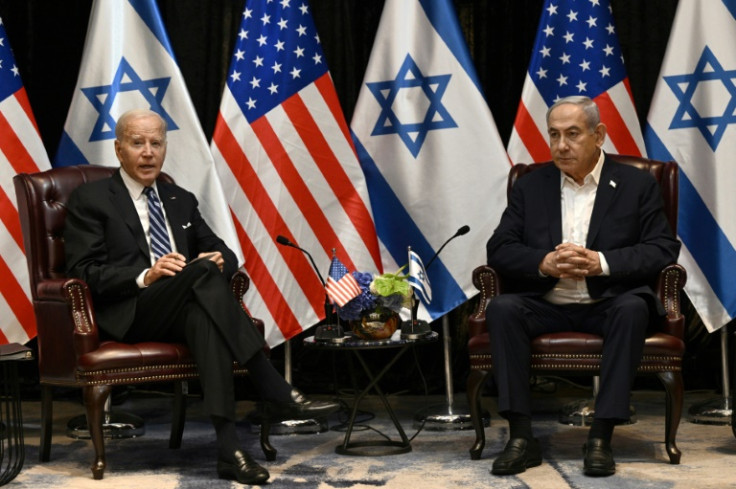
Biden, Netanyahu to discuss Rafah
The two leaders will talk over the phone later Monday to discuss the Israeli army's operations in Rafah, multiple outlets reported.
The reports came after the IDF ordered parts of eastern Rafah to be evacuated. The Biden administration has repeatedly informed Israel that it is opposed to an invasion of the city unless Israel establishes a clear plan to protect civilians.