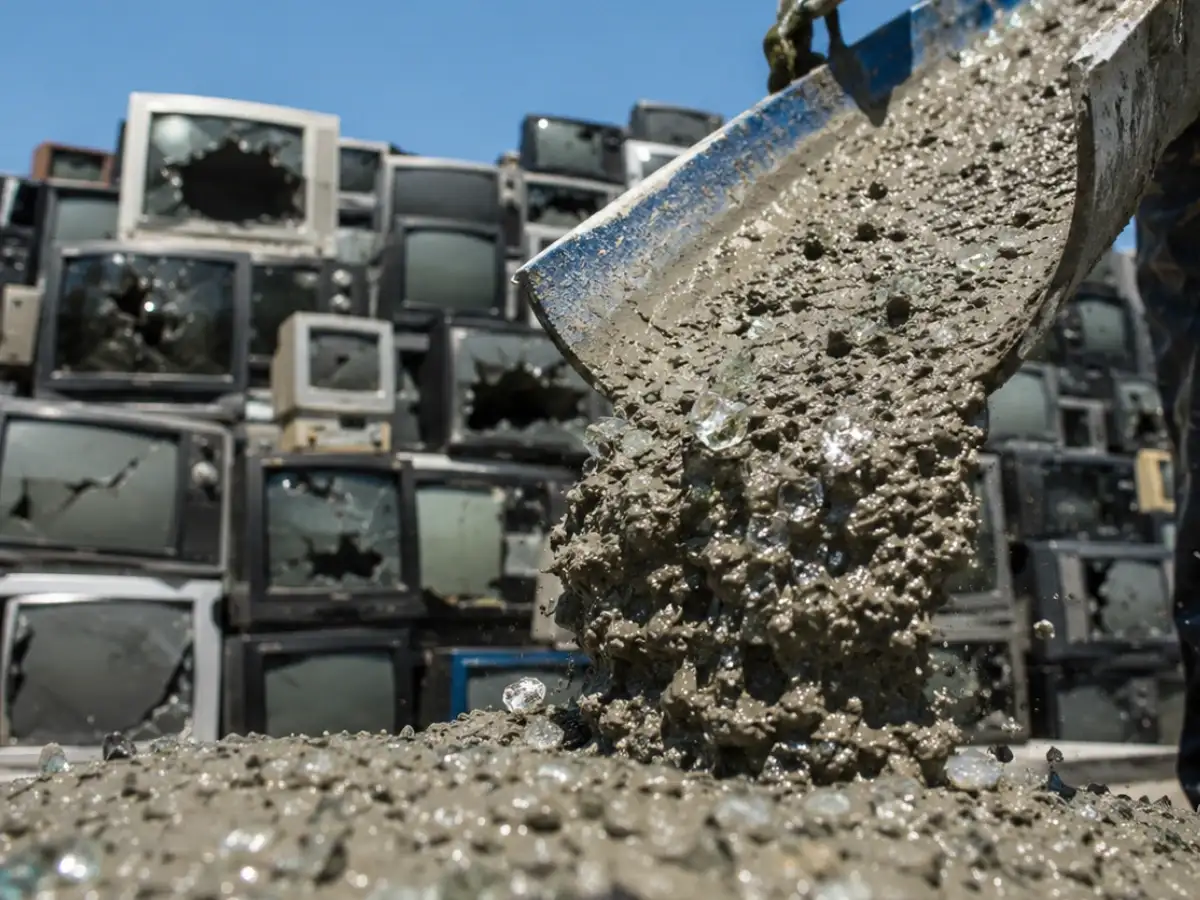
There are millions of old computers and TVs in storage right now. Most of us probably never think about where they end up. These older monitors use CRT technology, and their glass contains lead. A fix for this problem was examined in a 2013 doctoral dissertation from the University of Miami titled ‘Concrete Durability and Environmental Performance of Mixtures Containing Recycled Hazardous Waste Aggregates,’ where Diego F. Romero experimented with mixing this lead glass into concrete.
How scientists turned toxic glass into concrete
Flat screens took over years ago, but the old CRT sets didn’t just go away. The US Environmental Protection Agency says CRT glass usually contains enough lead to be considered hazardous waste. That is when the glass is discarded. EPA records also show an old TV or monitor can hold nearly four pounds of lead. Lead can damage a child’s brain development. That’s why researchers examined concrete as a new use for this glass. Processed CRT glass is similar in size to sand. According to the work done by Romero, CRT glass substituted between 5% and 30% of the sand in a standard concrete mix, which is a very high percentage in a standard mix. The aim was simple: to recycle old electronics rather than dispose of them in landfills. The main concern was whether lead in the glass would leach over time from rain or groundwater.
The ingredient that trapped the lead
Researchers added a special ingredient to prevent the lead from leaching out. The dissertation says the additive was an organic biopolymer made from guar gum and boric acid. Guar gum is a thickening agent from a plant. Household products already have trace amounts of boric acid in them. This mixture, the study explains, bound the lead to the cement. That prevented it from being washed away. The results looked promising. The dissertation reports that, under the initial lab testing conditions, this biopolymer helped keep lead leachate below the U.S. government's drinking-water limits, though later durability tests showed leaching increased once the concrete was damaged by freeze-thaw cycles. The study also mentions that the concrete strength stayed near a normal mix. So the glass did not appear to weaken the concrete.