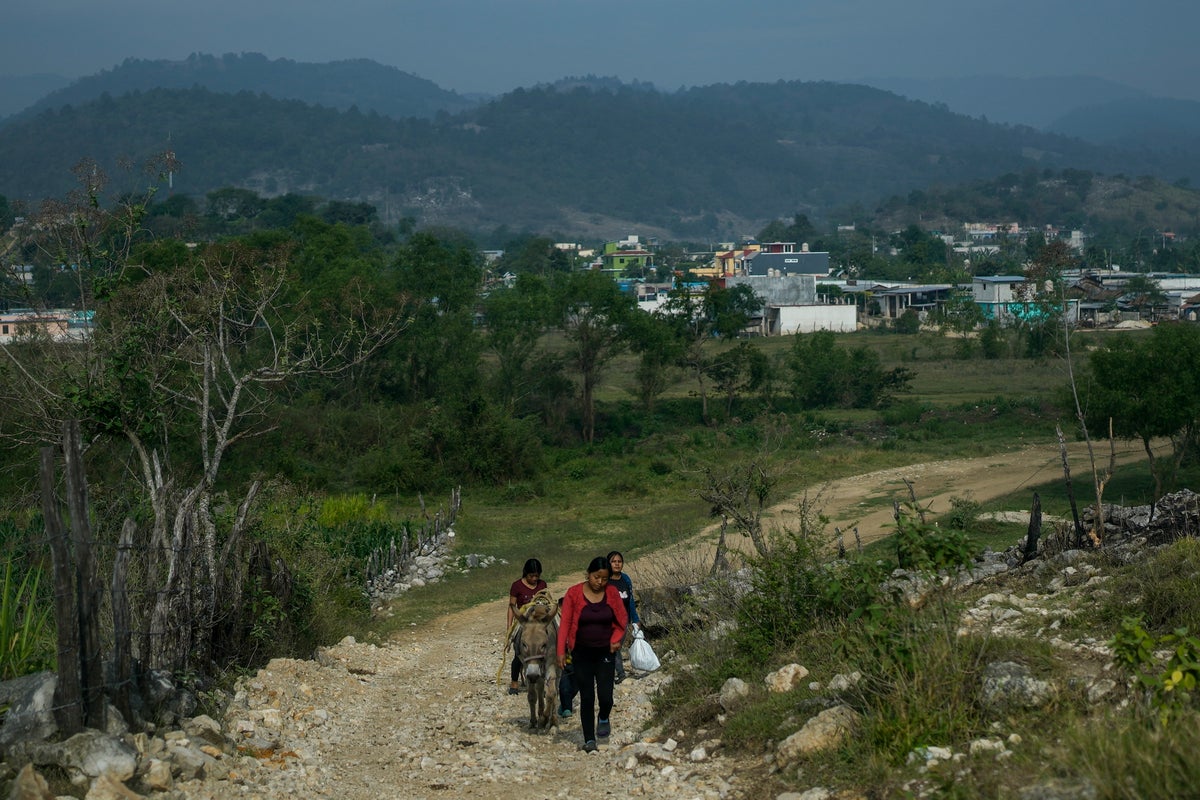
At 4:30 a.m., girls and women begin to appear in the dark streets of this village of Tojolabal people in southern Mexico. They walk in silence. Some head to grind corn to make their family’s tortillas. Others fetch firewood to carry home, on their backs or with the help of a donkey. The youngest hurry to finish chores before running to school.
Hours later, it’s still morning, and it’s time to talk. A group of young women and men gathers in a classroom at the Plan de Ayala high school. They’ve come to discuss gender equality and reflect on the role of women in this remote Indigenous community in Chiapas, Mexico’s poorest state.