Get all your news in one place.
100's of premium titles.
One app.
Start reading
Latin Times
Latin Times
Business

Mexico in the Crosshairs as White House Accuses China of Using It to Evade US Tariffs

The White House is accusing Chinese exporters of using Mexico and more than 40 other countries to disguise the origin of products and avoid paying higher U.S. tariffs.

A 25-page report released Thursday by the White House Office of Trade and Manufacturing Policy describes what it calls a global "shadow transshipment network" that redirects Chinese goods through countries facing lower U.S. import duties.
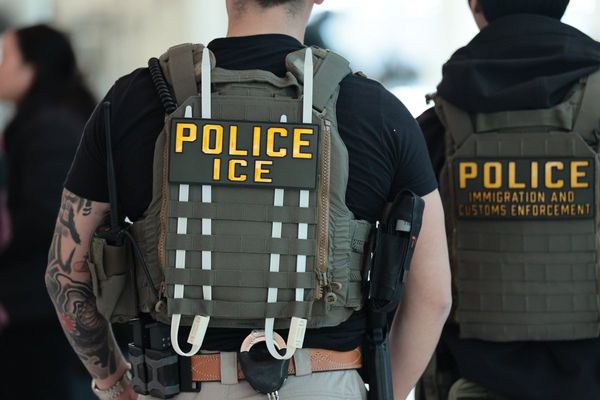
The report, titled The Great Transshipment Scam, places Mexico in its highest-risk category alongside Canada, Japan, South Korea, Taiwan and the European Union.

The designation does not mean every product made with Chinese components in Mexico is illegal or that the Mexican government is participating in customs fraud. It identifies trade routes where the White House believes the volume of China-linked commerce creates a greater risk of tariff evasion.

Illegal transshipment occurs when a product made in one country is routed through another and falsely presented as originating there. The process can involve repackaging, relabeling, new invoices, changes to customs documents or limited assembly that does not legally transform the product into something new.

Under U.S. customs rules, moving a product through another country does not automatically change its origin. The product generally must undergo a "substantial transformation" that gives it a new name, character or use.

The financial incentive can be especially large in Mexico.

Chinese goods entering the United States directly can face average tariffs approaching 50 percent, according to the report. If those same goods are routed through Mexico and improperly classified as Mexican, an importer could attempt to claim duty-free treatment under the United States-Mexico-Canada Agreement.

"Route those same goods through Mexico or Canada and improperly secure USMCA treatment, and the China-specific duty can fall to zero," the White House report said.

The administration claims some operations perform only minor finishing or assembly inside Mexico before exporting the merchandise north. The report refers to some of these facilities as "screwdriver factories," arguing that they exist primarily to change a product's declared origin rather than conduct substantial manufacturing.

However, distinguishing tariff evasion from legitimate nearshoring is not always simple. Mexico has a vast manufacturing sector that legally imports components from multiple countries, transforms them into finished products and exports them to the United States.

Automobiles, appliances, computers and electronic equipment assembled in Mexico routinely contain Chinese parts. That alone does not make the finished product Chinese or constitute an attempt to evade tariffs. Whether it qualifies for USMCA treatment depends on detailed rules of origin and the amount and type of production conducted in North America.

The report itself acknowledges that some estimates may include legitimate logistics routes or products that underwent substantial transformation.

White House trade adviser Peter Navarro nevertheless accused China of building an international system to preserve access to American consumers after President Donald Trump imposed tariffs during his first administration.

"For years, the great transshipment scam has let communist China launder its exports," Navarro told reporters, according to The Associated Press.

The administration estimates that approximately $75 billion in goods may be transshipped annually in its central scenario, resulting in $19 billion to $26 billion in lost federal revenue. Other estimates included in the report range from $34.2 billion to $303 billion in potentially affected trade.

Those figures are models, not confirmed totals of goods proven to have entered the country illegally. The report acknowledges that the estimates use different definitions, data and methodologies.

U.S. Customs and Border Protection is developing an artificial intelligence system called "Detective Border" to identify suspicious shipments. It would analyze shipping routes, ownership relationships, product classifications, factory production capacity and images of merchandise to detect inconsistencies.

Importers found to have falsely declared a product's origin could face retroactive duties, penalties and the exclusion of future shipments. Previous Trump administration orders also instructed CBP not to reduce penalties imposed for deliberate transshipment.

The accusations arrive at a sensitive moment for Mexico. The United States, Mexico and Canada are reviewing the future of the USMCA in 2026, and Chinese investment and components entering North American supply chains have become central points of dispute.

Mexico has already raised tariffs on more than 1,400 products from countries without free-trade agreements, including China. The increases, which took effect in 2026, cover automobiles, auto parts, textiles, steel, plastics, footwear and appliances, with some rates reaching 50 percent.

Those measures were widely interpreted as an attempt to protect Mexican manufacturers while addressing Washington's concern that China could use Mexico as a back door into the U.S. market.

Sign up to read this article
Read news from 100's of titles, curated specifically for you.
Already a member? Sign in here
Related Stories
Top stories on inkl right now
One subscription that gives you access to news from hundreds of sites
Already a member? Sign in here
Our Picks
Fourteen days free
Download the app
One app. One membership.
100+ trusted global sources.