
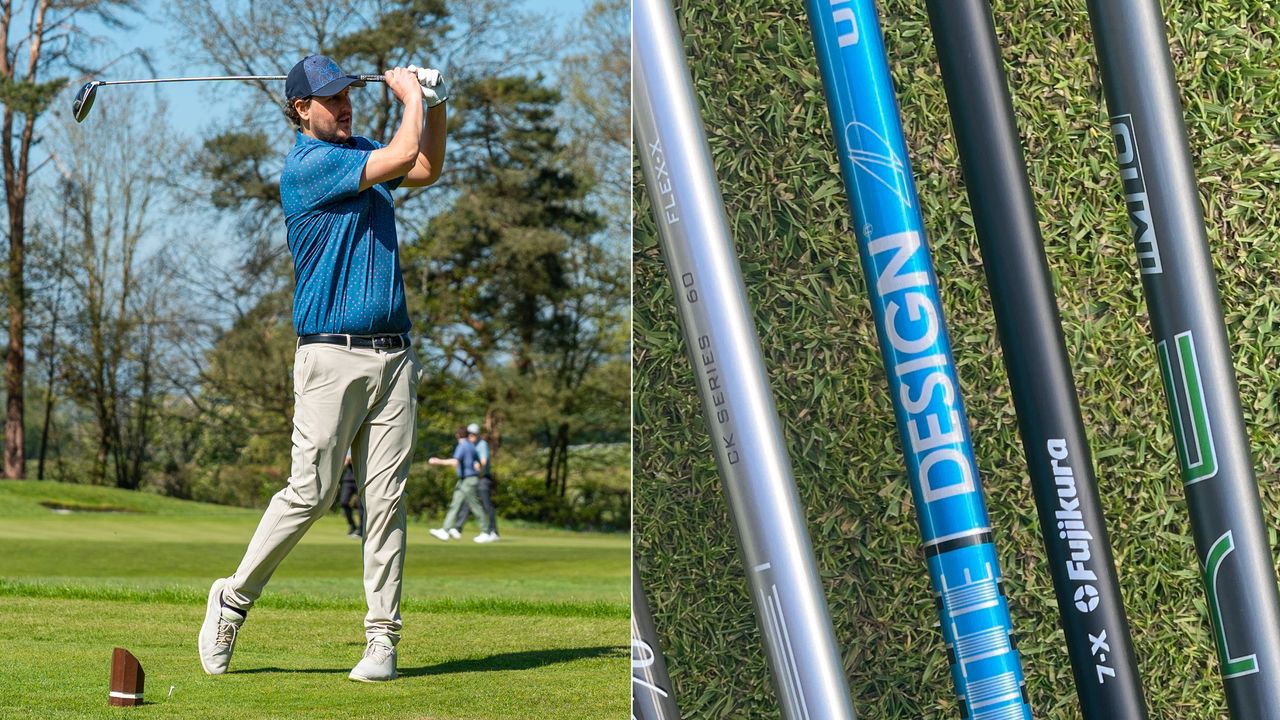
I’m absolutely certain that a large percentage of the men I play golf with are using golf clubs that are too heavy for them. I see the same bad shots, the powerless push fade that boomerangs to the right, the destructive pull straight left. Ball flights that don’t seem to get enough height or flight.
Golfer after golfer that’s fighting against a heavy steel shaft that just doesn’t square up through the hitting area with any real power. It’s those macho male egos getting in the way. The ‘I’m strong enough to hit them’ attitude. What a total nonsense this is!
These golfers are destroying their chances of playing well, or at least consistently well. They are using clubs that are effectively scorecard wreckers. Equipment that they bought because it was stamped with Regular, Stiff, or even worse, Extra Stiff on the shaft.
Some will have bought steel-shafted clubs decades ago when it suited them at the time, some still using them knowingly in denial of any loss of ability, others acquired clubs as second-hand purchases off a mate but never really thought about the suitability to their own, unique swing.
The most common scenario I see are the retired golfers in their sixties or seventies who have been playing with the same equipment for a decade or more. With the greatest respect, your strength and athleticism just isn’t what it used to be with each decade that you age. There’s a natural biological depreciation as you get older.
My dad will probably hate me for saying this, but he’s one of the culprits. He’s eighty next year and still playing with a set of irons more suited to an 18-year-old that he bought well over a decade ago. ‘What’s the point of upgrading at my age, he’ll say ?’ He only plays recreational golf now, rarely enters competitions, and just likes to have a knock with a few regular friends and family.
The point is, he just can’t hit them properly any more. He’s fighting a set of shafts that are way too heavy and stiff. He would be far more suited to lightweight graphite clubs nowadays. If he made the switch I have absolutely no doubt that his shot dispersion would tighten, he’d find more fairways, boost his power and get more enjoyment from the game. Yet he stubbornly refuses to change from using clubs whose place really ought to be in the garage or the garden shed and he’s not alone, I see it all the time.
To be honest, in his mind there’s probably a stigma attached to using graphite-shafted clubs, as when they were first introduced they were highly marketed to women. It was around that time that mum and I both took up the game. The big sell of graphite shafted clubs was how lightweight they were compared to steel, which was a saviour for the stereotypical woman’s slower swing speed.
Of course that’s now all changed and graphite usage is widespread across the board in men’s and women’s clubs because of the advancements in nano-technology within the shaft, nevertheless I’m certain that dad (and many others from his era) still recalls graphite's first widespread introduction predominantly into women’s clubs and undoubtedly feels the association is still there.
In fact, this shift isn't just happening at club level, it has reached the very top of the professional game. PGA Tour stars like Bryson DeChambeau, Brandt Snedeker, Matt Kuchar, Jason Day, and Rickie Fowler have graphite shafts in their irons.
Golf Monthly’s equipment writer, Joe Ferguson, sums up the transition well: “I personally believe steel shafts will be a relic of the past before too long, much like hickory before it. Composite technology has come so far that manufacturers can now replicate the stability and weight of steel while offering far precise profiles. That's before you even touch on the feel and shock-absorption benefits.”
Yet even golfers who embrace new gear often fall into another trap. The golfer who is obsessed with how their equipment can help them play better, even by the smallest margin. The gear nerds like my friend Guy who is a great single-figure golfer and changes his equipment all the time, because the latest driver or putter might just give him the edge. Yet he never goes and gets properly custom-fitted for the right shaft. He buys based on what he reads and what’s recommended on forums and online articles - he goes on trend and assumption.
When it comes to the shaft of the golf club there’s simply no real way of knowing what you should be using unless you get an expert involved. A custom-fit is a must. Anything less and you’re guessing. There’s simply no substitute for this essential advice.
Custom-fitting doesn’t have to cost you the earth, in fact most of the major manufacturers offer the service complimentary (or at low cost) because they know that when the golfers who come through their doors see the remarkable improvement in their shot results, they will want to make a purchase.
There are literally hundreds of specialist shafts on the market, from low budget options right through to premium offerings costing as much as £500 per shaft. They come in a variety of weights, with differing kick points, tip profiles and flexes, along with a rainbow of colours. In many ways, being a custom-fitter is like having a degree in ‘shaft science’ linked to swing mechanics. These fitters really are experts.
So come on guys, isn’t it about time you ditched the ego and adopted the modern approach to helping you play better golf? Don’t be ashamed of making the shaft switch. Ditch those heavy steel shafts and be proud to carry a new set of lightweight clubs, with properly fitted shafts. I promise you’ll hit them so effortlessly that your playing partners will wonder whether you’ve been working out at the gym!