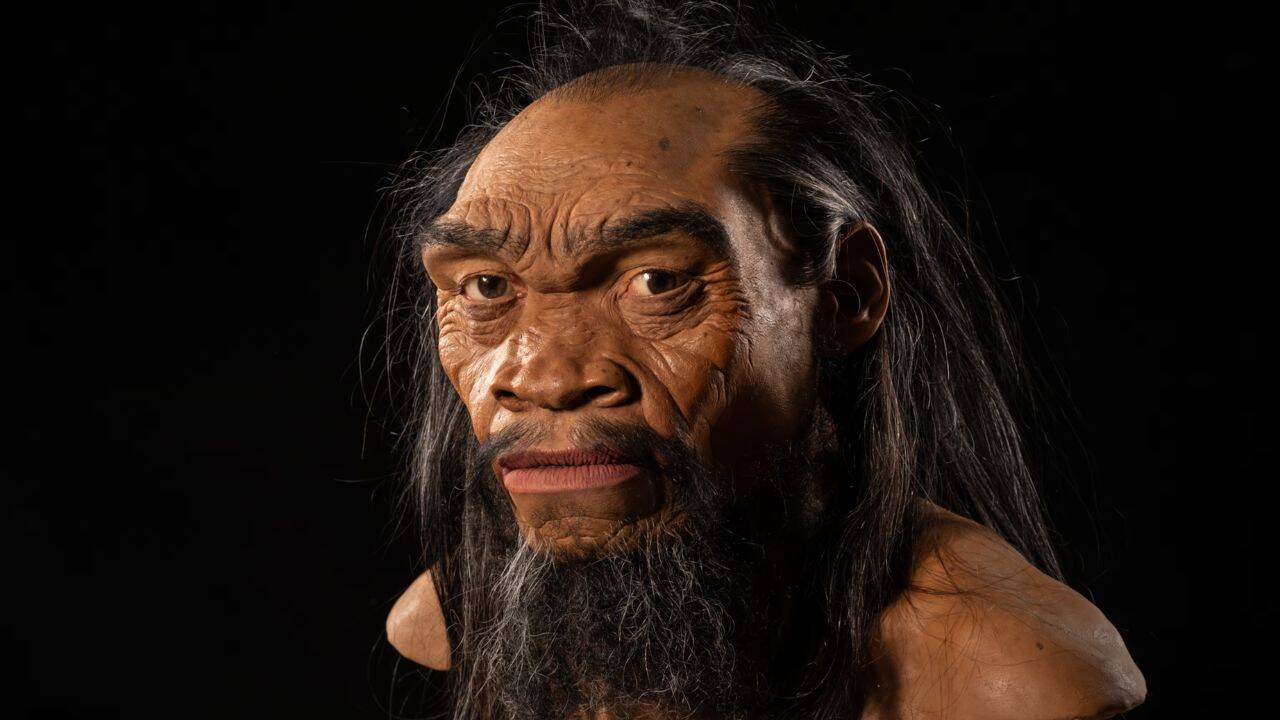
For years, the Denisovans occupied an unusual place in the story of human evolution. They were recognised as one of our closest extinct relatives, yet almost nobody knew what they actually looked like. Unlike Neanderthals, whose skeletons have been uncovered across Europe and western Asia, Denisovans were represented by only a handful of fossil fragments. Their existence emerged through DNA rather than complete bones, leaving scientists with an ancient population that could be identified genetically but remained physically elusive. That picture has begun to change.
Get breaking news anytime, anywhere. Download the TOI app now!

A series of discoveries, combined with advances in extracting ancient genetic material, has linked previously isolated fossils to the Denisovan lineage. Instead of relying on finger bones and teeth alone, researchers can now compare skulls, jaws and other remains, offering the clearest portrait yet of a human group that shared the world with both Neanderthals and our own species.
How Denisovans were first identified
As reported by The National History Museum, the Denisovan story began unexpectedly in 2008 when archaeologists excavating Denisova Cave in southern Siberia uncovered a small finger bone and several unusually large teeth. At first glance, the fossils appeared unremarkable. They were too incomplete to identify with confidence.
Everything changed when genetic material preserved inside the finger bone was analysed. The DNA did not match either modern humans or Neanderthals. Instead, it revealed an unknown group of ancient humans that had never been recognised before. Because the remains came from Denisova Cave, the population became known simply as the Denisovans.
That discovery transformed understanding of human evolution. Rather than a simple progression from one species to another, Eurasia had once been home to several different human groups living at the same time.
The discovery that connected Denisovans to Homo longi
For more than a decade, Denisovans lacked an official scientific species name because their fossil record remained too limited. Researchers suspected that larger skulls and jawbones discovered elsewhere in Asia might belong to the same population, but there was no direct evidence.
NHK reveals the analysis that changed that picture. Genetic material recovered from dental plaque preserved on the Harbin skull in north-eastern China has connected the specimen to Denisovans. The skull had previously been described as Homo longi, often referred to as "Dragon Man". The findings suggest that the two names describe the same ancient human lineage, giving Denisovans a far more complete fossil identity than was previously possible.
The result also allows scientists to revisit other Asian fossils that may belong to the same evolutionary group.
What Denisovans may have looked like
Although a complete Denisovan skeleton has never been found, evidence collected from several fossils points towards a population built for difficult conditions.
Individuals living across northern Asia appear to have possessed broad faces, thick jaws and exceptionally large molar teeth. Their skulls were substantial, with brain sizes that could equal or exceed those of modern humans.
Exactly how tall they stood remains uncertain. Without complete skeletons, estimates of body size and weight are still speculative. Even so, available fossils suggest they were heavily built, perhaps even more robust than Neanderthals in some regions.
That appearance may reflect the environments they occupied, including high mountain landscapes and cold northern climates.
A human lineage that stretched across Asia
In contrast to Neanderthals, which had fossil evidence mainly from Europe and western Asia, the Denisovans had a significantly larger geographic range.
Fossil evidence has been found in Siberia, China, the Tibetan Plateau, Taiwan, and potentially Laos. Fossil DNA evidence and current genetic makeup imply that the range was even wider, encompassing the whole of Southeast Asia.
There is even evidence suggesting that the Denisovans were not a homogeneous group, but consisted of different populations that evolved independently over the course of hundreds of thousands of years in different climatic conditions ranging from frigid uplands to tropical forests.
This difference could account for why the fossils from different parts of Asia are not all alike.
Ancient encounters with modern humans
Denisovans did not exist in complete isolation. Research on modern genetics reveals that Denisovans encountered and bred with the ancestors of many people who exist today.
Several groups in East Asia, Oceania, and certain areas of the Americas harbor small quantities of Denisovan DNA as a result of these encounters. The highest concentrations can be found in the groups inhabiting Papua New Guinea and Island Southeast Asia.
It was not just an occurrence in history that did not leave any traces behind. Some genes, which were passed on, seem to give certain advantages. An example of one such gene is the adaptation of the inhabitants of the Tibetan plateau to thin mountain air, due to more efficient utilization of oxygen.
Other genes might have helped build up immunity in response to the new environment.
Their relationship with Neanderthals
Modern humans were not the only neighbours Denisovans encountered.
One remarkable fossil from Denisova Cave belonged to a teenage girl whose parents came from different human groups. DNA revealed that her mother was a Neanderthal while her father was Denisovan, providing direct evidence that these populations mixed.
The discovery demonstrated that the boundaries between ancient human groups were more flexible than once believed. Different species could meet, have children and leave descendants whose genetic traces still survive.
New fossils continue to reshape the Denisovan story
Several discoveries made beyond Denisova Cave have widened the search for Denisovan remains.
The Xiahe jawbone from the Tibetan Plateau provided the first confirmed Denisovan fossil found outside Siberia. Other specimens, including fossils recovered from Taiwan and Laos, have strengthened the idea that Denisovans occupied a vast geographical range.
The Harbin skull has become especially significant because it offers one of the most complete views yet of their facial anatomy. Additional fossils from China, including the Yunxian crania and the Dali skull, are also being reassessed as scientists compare their features with newly available genetic evidence. Each discovery has the potential to redraw part of the Denisovan family tree.
Why they disappeared remains unanswered
The Denisovan lineage stretches back at least 400,000 years and may have separated from the ancestors of modern humans much earlier.
Working out when they vanished is less straightforward. Fossils indicate they survived until around 40,000 years ago, while genetic evidence suggests some populations may have persisted for several thousand years after that.
No single explanation has emerged for their disappearance. The changing environment, reduction in population, competition for resources, and assimilation into larger bands of humans have been suggested as possible factors. However, none of these can be said to satisfactorily explain the extinction of the Denisovans, among others, while Homo sapiens thrived.