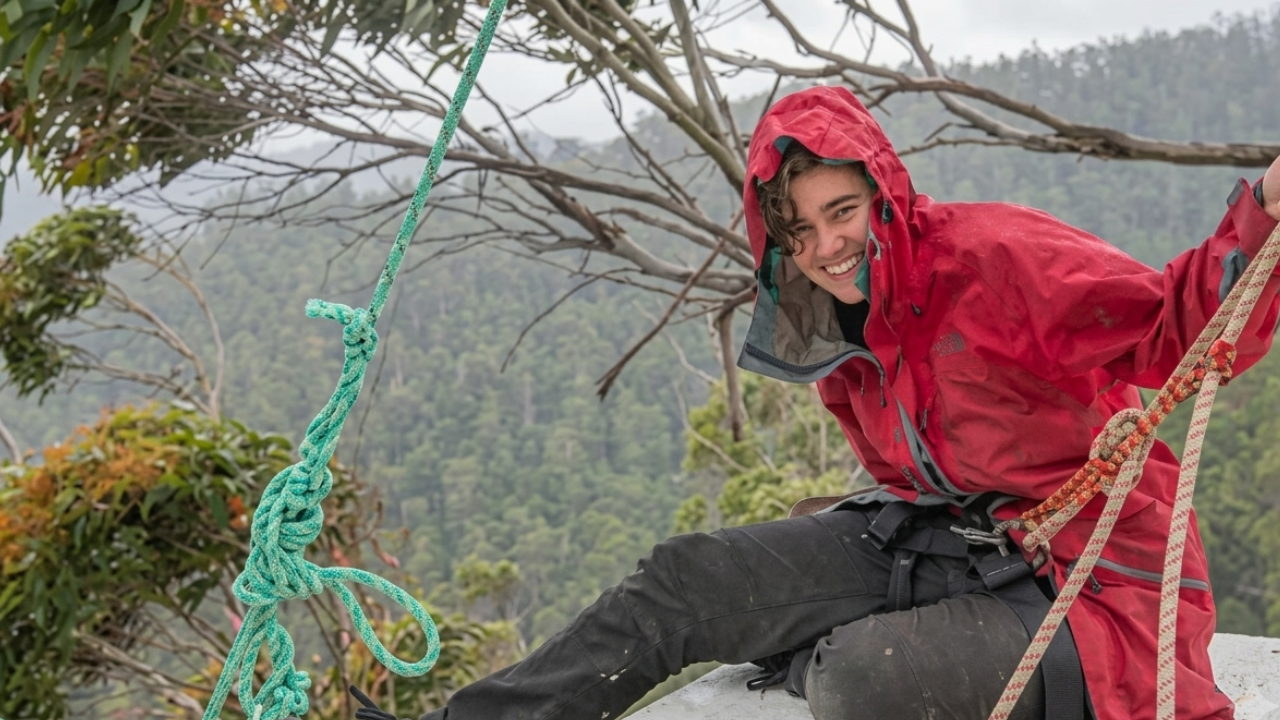
Deep in Tasmania’s forests, one woman turned a single tree into the centre of a global conservation campaign. In 2011, Miranda Gibson climbed high into the canopy of the Tyenna Forest and began a protest that would last 449 days. Living on a small platform above the ground, she faced harsh weather, isolation and uncertainty while drawing attention to the logging of ancient forests. Throughout the campaign, supporters from around the world followed her progress, transforming a solitary protest into an international symbol of environmental resistance. Her unusual tree sit became one of Australia’s longest environmental protests and helped bring international focus to Tasmania’s forest protection efforts, sparking wider conversations about old-growth forests, biodiversity conservation and the future of Tasmania's remaining wilderness. The journey that led her there began far from the wilderness, with a childhood disconnected from forests and a later discovery that changed the direction of her life.
Get breaking news anytime, anywhere. Download the TOI app now!

How Miranda Gibson became a forest conservation activist
Gibson did not grow up surrounded by wilderness. Raised in Ipswich, Queensland, she described herself as a cautious child who was not even comfortable climbing a treehouse. Forests were not a major part of her early life.
Her connection with conservation developed later, during her teenage years and university studies. While studying, she became involved in forest activism and began learning about campaigns against logging in Tasmania. A visit to the state changed the issue from something she had read about into something she could see. During one trip to the Upper Florentine Valley, she encountered a massive tree that had already been reduced to a stump.
For Gibson, the sight represented the scale of what was being lost. She began returning to Tasmania during holidays to join protests and eventually moved there permanently to work with campaigners.
Miranda Gibson’s 449-day tree sit protest brought Tasmania’s forest crisis to the world
By the time Gibson reached her late twenties, she had spent years at the Upper Florentine Valley blockade. But watching forests continue to disappear left her feeling that traditional protests were not creating enough pressure. She began looking for a way to make the destruction visible beyond Tasmania. The idea of a 'tree sit protest' developed after she discovered there was an internet connection available in an area threatened by logging.
The connection meant she could broadcast images from the forest directly to people around the world. As reported by Australian Broadcasting Corporation, on 14 December 2011, Gibson climbed into a tree in the Tyenna Forest and settled onto a small platform about 60 metres above the ground. She announced that she would remain there until the forest received protection.
The platform was basic. It wrapped around the tree but offered limited space, measuring only a few metres in length and around 1.5 metres in width.
Inside Miranda Gibson’s extreme 449-day life in a Tasmania tree canopy
Living in the canopy brought challenges that were difficult to prepare for. A clear tarp provided some shelter, but it offered little protection from Tasmania’s unpredictable weather. Rain, wind, hail and snow all became part of daily life. Gibson used a solar-powered computer to communicate with supporters and share updates. She also tried to maintain some routine, using a small walking machine and practising yoga to stay active.
Food was mostly simple and often uncooked. Water and supplies were delivered by a support team on the ground, who had to make long walks through difficult terrain to reach the base of the tree. Even basic needs required planning. Gibson used a bucket as a toilet, with members of her ground crew responsible for managing supplies and removing waste. The physical demands were only part of the struggle. Isolation became one of the hardest parts of the protest.
The loneliness behind the public campaign
As the months passed, Gibson’s tree sit attracted international attention. People followed her updates and became familiar with her unusual living arrangement. But attention from afar did not remove the reality of being alone in the forest.
She later described moments when she felt disconnected from ordinary life. While thousands of people knew about her protest, they only knew the public side of her experience. The contrast was difficult. There were messages of support and public interest, but day after day she remained on a small platform above the forest floor. Eventually, she said she had to focus entirely on the life she had chosen in the tree and stop thinking about everything happening elsewhere.
A forest campaign reaches a major turning point
The protest continued as pressure grew around Tasmania’s forests. Gibson’s livestreams and media coverage brought wider attention to the areas facing logging. Reportedly, in early 2013, the Australian government announced a nomination to extend Tasmania’s World Heritage-listed forests by around 170,000 hectares. The decision represented a significant development for environmental groups that had spent years campaigning for protection.
Gibson wanted to remain in the tree until the listing was formally confirmed. However, a nearby bushfire threat forced her to leave. A fire had been started close to the tree, and hot, dry conditions made staying dangerous. From her position above the ground, she could see the danger moving closer through the forest.
Leaving was not the ending she had planned. She had promised herself she would stay, and walking away before the official decision was made was emotionally difficult.
Protection arrives, but the debate continues
A few months later, the World Heritage Committee approved the additional protection for the forest areas, including the tree where Gibson had spent more than a year. For Gibson, the decision brought relief. The place that had been her home for 449 days had gained formal recognition and protection.
The campaign, however, did not end there. In 2014, an attempt was made to remove some protected Tasmanian forest areas from the World Heritage listing. The proposal was unsuccessful, but it showed that disputes over Tasmania’s forests remained unresolved. Gibson later moved away from full-time activism and began working as a teacher in Melbourne. Her time in the tree remained a defining chapter in the broader struggle over Tasmania’s forests.