
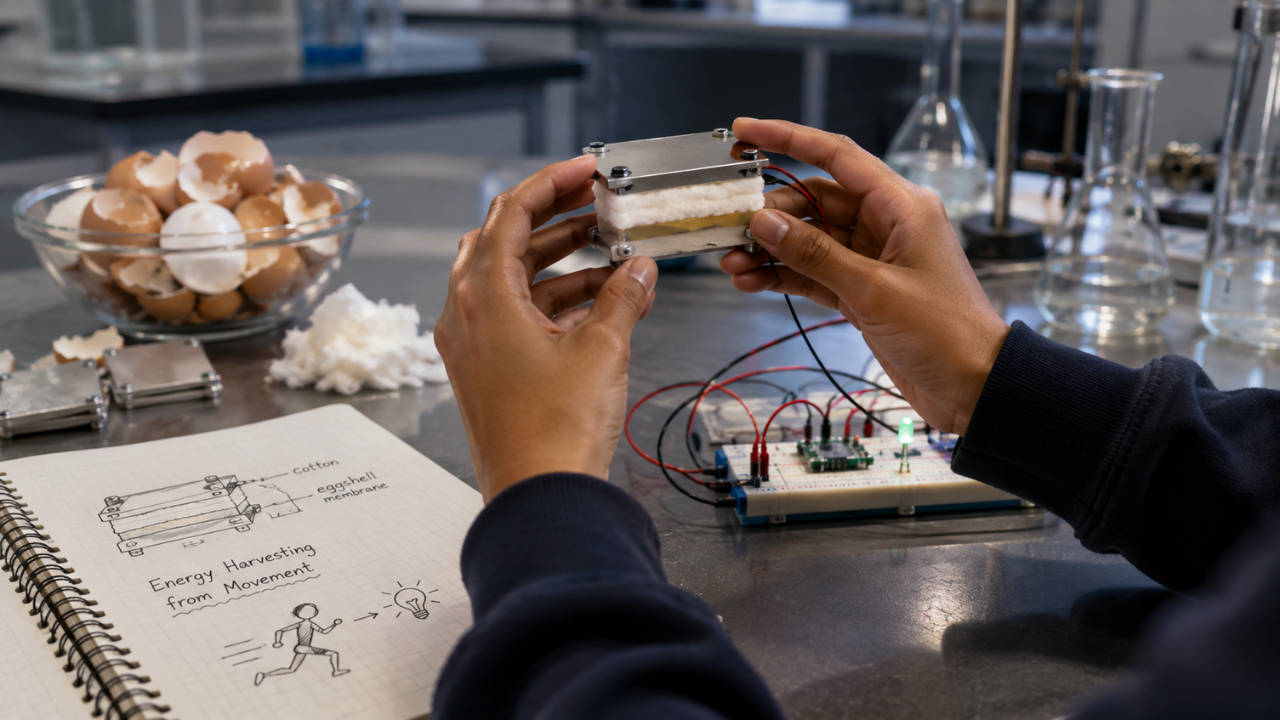
At 17, Meghana Addanki was looking at two materials that would rarely be associated with electricity: eggshell membrane and cotton. The New Jersey high school student used both in an experiment designed to turn ordinary movement into usable electrical energy, developing a small hybrid generator with the help of zinc oxide. Her project brought together piezoelectric and triboelectric effects, allowing the device to respond when it was pressed, tapped or otherwise subjected to mechanical force. The finished generator measured just 5 by 3 centimetres, yet produced considerably higher voltages than the individual material-based components tested during the research. In one test, forceful finger tapping generated a peak of 33.29 volts, while the device reached a power density of 26.4 microwatts per square centimetre. Presented at ISEF 2025, Addanki's work explored whether natural, readily available materials could have a practical role in small-scale energy harvesting. The project also addressed a broader challenge in energy harvesting: finding materials that are inexpensive, flexible and less environmentally problematic than some conventional alternatives. By combining biological materials with zinc oxide, Addanki demonstrated a compact approach that could potentially power low-energy sensors or other small electronic devices.
Get breaking news anytime, anywhere. Download the TOI app now!













