Get all your news in one place.
100's of premium titles.
One app.
Start reading
The Conversation
The Conversation
Artemis Spyrou, Professor of Nuclear Physics, Michigan State University

Meet Irene Curie, the Nobel-winning atomic physicist who changed the course of modern cancer treatment

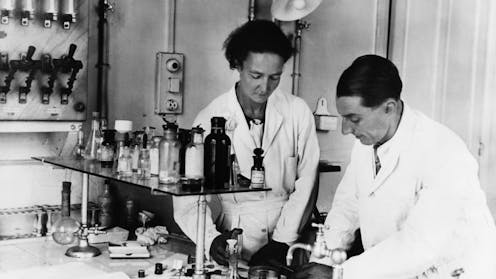
Irene and Frederic Joliot-Curie shared the Nobel Prize in 1935. Bettmann/Contributor via Getty Images

The adage goes “like mother like daughter,” and in the case of Irene Joliot-Curie, truer words were never spoken. She was the daughter of two Nobel Prize laureates, Marie Curie and Pierre Curie, and was herself awarded the Nobel Prize in chemistry in 1935 together with her husband, Frederic Joliot.

While her parents received the prize for the discovery of natural radioactivity, Irene’s prize was for the synthesis of artificial radioactivity. This discovery changed many fields of science and many aspects of our everyday lives. Artificial radioactivity is used today in medicine, agriculture, energy production, food sterilization, industrial quality control and more.

Sign up to read this article
Read news from 100's of titles, curated specifically for you.
Already a member? Sign in here
Related Stories
Top stories on inkl right now
One subscription that gives you access to news from hundreds of sites
Already a member? Sign in here
Our Picks
Fourteen days free
Download the app
One app. One membership.
100+ trusted global sources.