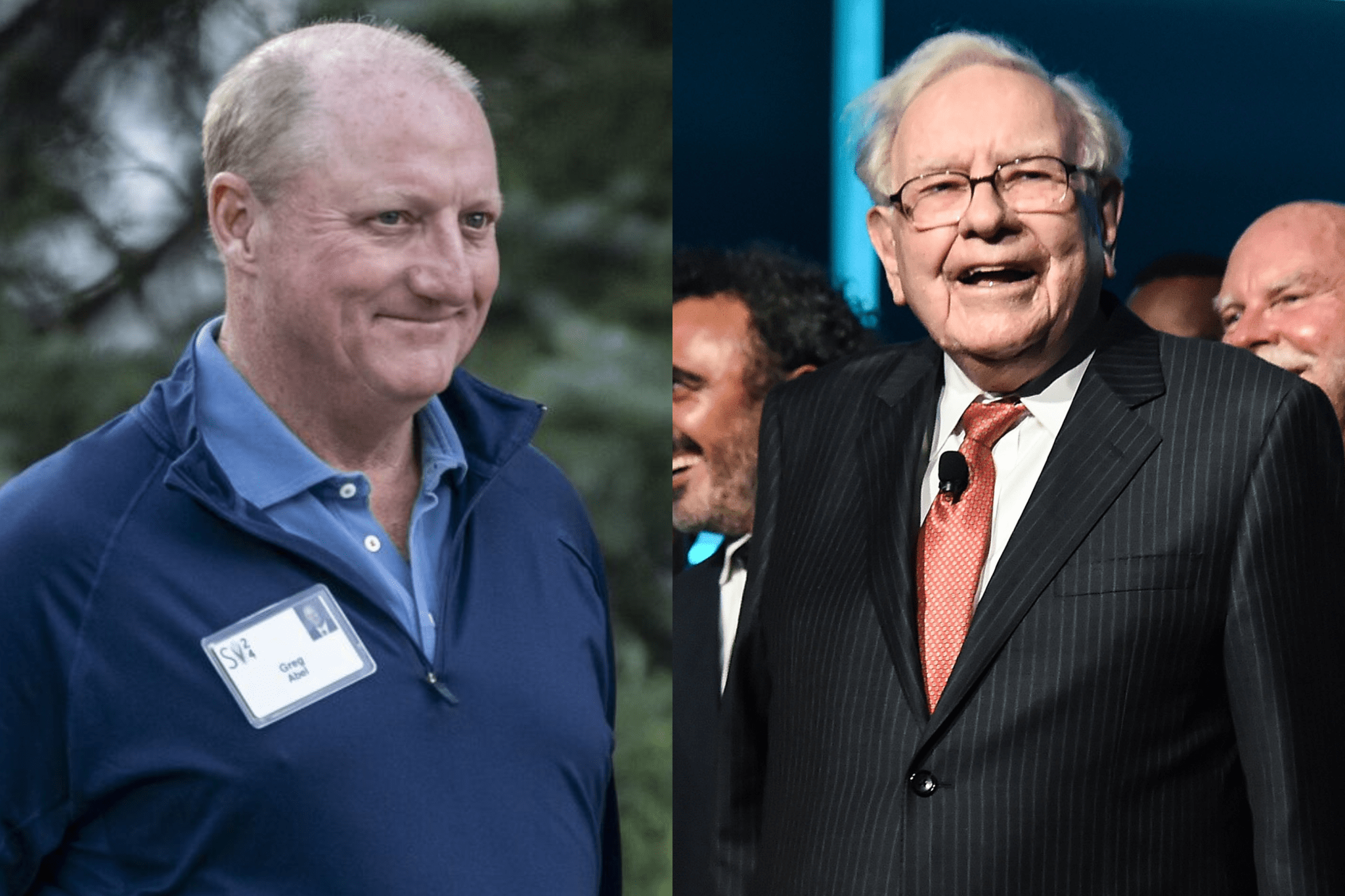
For years, people had pressed hedge fund mogul Warren Buffett on who would take over Berkshire Hathaway as he geared up to step down. Rumors swirled, but 63-year-old veteran businessman Greg Abel was ultimately named his successor in 2025. The boomer billionaire has now assumed the throne of the $1 trillion company—but his journey to one of the most coveted roles in business began with working-class entrepreneurship.
Abel got his first taste of business at a young age, collecting, cleaning, and redeeming empty soda bottles for just 5 cents a piece.
To make the most out of his money-making venture, he would even optimize his bike rides home from school to snatch up as many as possible. According to reporting from fellow Fortune reporter Shawn Tully, a young Abel would collect up to five empty bottles every trip—and when the weekend came, he’d have 20 of them stored up, amounting to a whopping $1.
On the side, Abel also held down a job riding his bike around his hometown of Edmonton, Canada, dispersing advertising fliers around neighborhoods for just a quarter of a cent for every delivery.
His career climb to Berkshire Hathaway CEO may have never happened if his ex-employer didn’t get bought out
Abel continued to do various odd jobs, including filling fire extinguishers for his father’s employer, throughout high school. But his first taste of corporate work came after graduating from University of Alberta in 1984.
Abel took a job at PwC, and after uprooting from his hometown to the company’s San Francisco office, began working with geothermal business CalEnergy as a client. It wasn’t long until Abel made the jump from the consulting giant to CalEnergy as an auditor, building the company to a global holding firm with tens of thousands of employees, according to educational nonprofit Horatio Alger Association. From 1992 to 2008, he served as a senior executive before rising to CEO and chairman. But it was in between then that Abel had a big break, pulling him into the orbit of Berkshire Hathaway.
The career-defining moment happened in October 1999, when Berkshire announced that it was buying a controlling interest in CalEnergy (which was renamed to MidAmerican after an acquisition). The business was transformed into Berkshire Hathaway Energy, and after serving as CEO and executive chairman of the company from 2008 to 2018, Abel was also appointed to the vice chairman of Berkshire Hathaway’s non-insurance operations. In the years since, Abel has proven himself as a worthy successor to Buffett, who has helmed the trillion-dollar giant for six decades.
“Greg Abel has more than met the high expectations I had for him when I first thought he should be Berkshire’s next CEO,” Buffett wrote in his final shareholder letter last year. “He understands many of our businesses and personnel far better than I now do, and he is a very fast learner about matters many CEOs don’t even consider.”
Abel’s billion-dollar success, and why little of his fortune is currently wrapped up in Berkshire stock
Berkshire Hathaway’s new baby boomer CEO is a bonafide billionaire—but unlike the legendary hedge fund mogul he’s succeeding, little of his riches came from stock in the $1 trillion company.
Abel has a net worth of around $1 billion, according to Bloomberg, yet only 18% of his fortune is currently wrapped up in Berkshire Hathaway shares. Abel’s relatively smaller monetary tie to the company pales in comparison to other chief executives like Apple’s Tim Cook, whose stake in the company accounts for 38% of his net worth. And the new CEO’s Berkshire holdings are only one-thousandth as valuable as Buffett’s stake in the business.
That’s because according to Bloomberg most of Abel’s wealth stems from the profits of a 2022 stock buyback, when Berkshire purchased Abel’s $870 million stake in the subsidiary he once ran: Berkshire Hathaway Energy. That left Abel with an estimated $175 million worth of stock in the holding company.
Additionally, Abel earned a $20 million compensation package after being promoted to a vice chairman role at Berkshire in 2018.