
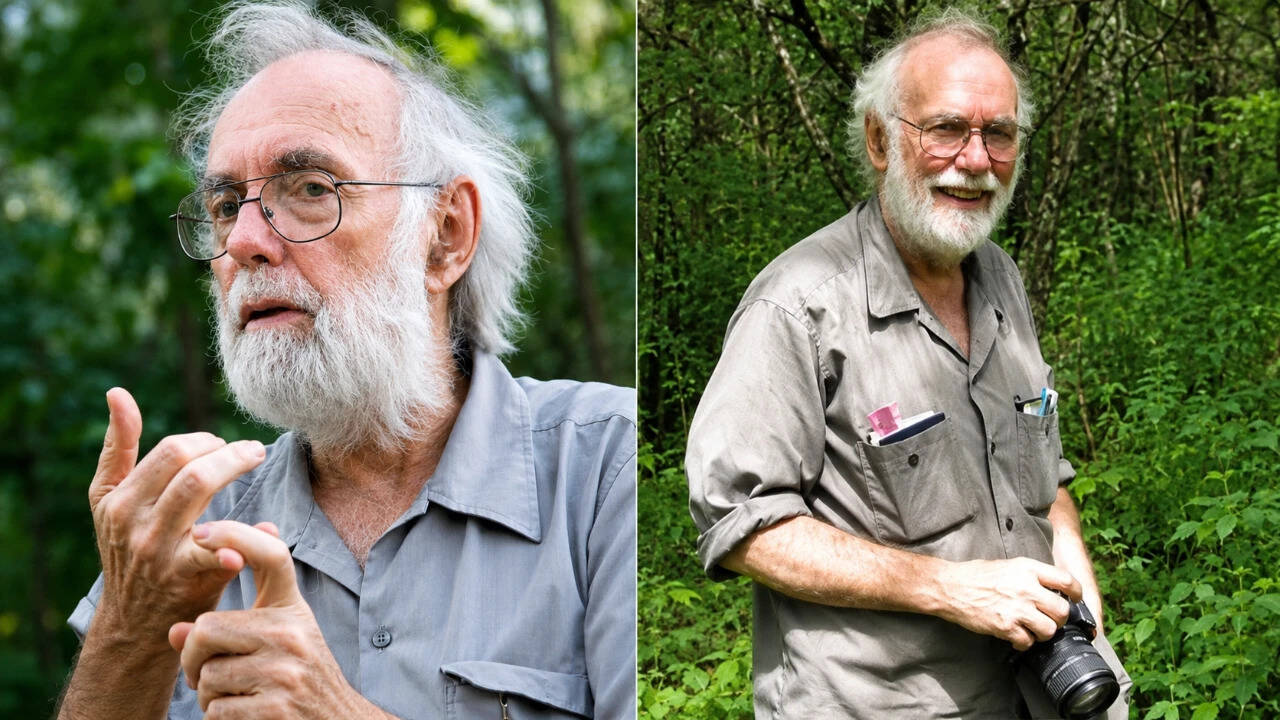
Daniel H. Janzen is a biologist whose career has blurred the traditional boundaries between field ecology, evolutionary science and conservation. For decades, his work has centred on tropical ecosystems, particularly the forests of Costa Rica, where he studied the intricate relationships between plants, insects and other organisms. His research eventually developed into something much larger than documenting species. Alongside biologist Winnie Hallwachs, Janzen helped shape the Área de Conservación Guanacaste (ACG), a vast conservation landscape in north-western Costa Rica that connects forests, volcanic ecosystems and marine environments. His work has also explored how conservation can function alongside local communities rather than treating protected areas as places completely separated from society. The University of Pennsylvania identifies Janzen as a leading figure in conservation biology, while his research has produced hundreds of scientific publications and influenced modern approaches to tropical biodiversity. His career demonstrates how understanding an ecosystem can become the first step towards protecting it for generations. His approach also emphasized the importance of long-term observation, showing how ecosystems change over decades rather than through short-term studies. By combining scientific research, education and conservation, Janzen helped demonstrate that protecting biodiversity requires both detailed ecological knowledge and sustained commitment from people living alongside these environments.
Get breaking news anytime, anywhere. Download the TOI app now!













