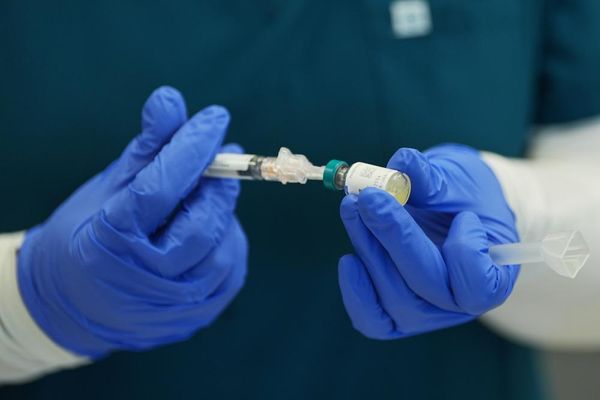
A surgical suture used to close wounds in operations across the country has been recalled because the packaging that keeps it sterile may be torn or perforated, and hospitals are being told to monitor patients who have already been stitched with it.
The recall covers 135,875 units of the V-Loc 90 Absorbable Wound Closure Device, made by Covidien and distributed under Medtronic. The Food and Drug Administration classified the action as Class 2 and posted the record earlier this month.

The instruction that separates this from a routine inventory pull sits in the recall notice itself. Where in-scope products have already been used on patients under a customer's care, the firm instructed clinicians to monitor those patients for signs of infection or vision issues due to the risk of biocontamination.
A Breached Wrapper Undoes the Only Thing That Matters
Sutures are packaged in a sterile barrier system, and that barrier does the entire job. A suture is a foreign object placed directly into tissue. If it carries contamination inward, the wound closure itself becomes the route of infection.
The manufacturer's stated reason for the recall is that the product may contain a perforation or tear in the sterile barrier packaging. The notice states that this may result in biocontamination of the sterile sutures, which could lead to infection, loss of vision if used in ophthalmic applications, or prolonged surgery.
The FDA attributed the cause to equipment maintenance. In a related action reviewed by Health Canada, a quality inspection at a manufacturing site found a unit with a hole in the breather pouch on the Tyvek side, and the investigation identified a plate at the sealing station as the likely source. That notice also states no complaints had been identified for the issue, though affected lots had already reached distribution centers and customers.
The vision language deserves a plain reading. It applies specifically to ophthalmic use, meaning eye surgery, where a contaminated suture placed in or near the eye can produce an infection that threatens sight. It does not describe a risk to patients who received these sutures elsewhere in the body.
V-Loc is a barbed suture, designed to hold a wound closed without tying knots. According to Medtronic, the technology closes wounds without the need to tie knots, and it is used widely in general surgery, gynecologic procedures, and robotic operations. That breadth is part of why a single recall touches so many patients.
The Numbers Are Larger Than the Story Has Been Told
The recall covers 11 product codes across multiple sizes and lengths, each with specific lot numbers. Affected items include 4-0, 3-0, 2-0, and 0 gauge devices in both clear and violet, in lengths from 15 to 45 centimeters.
Distribution extends well past the United States. The FDA record lists US nationwide distribution plus roughly 60 other countries and territories, including Canada, Mexico, Chile, Colombia, Guatemala, the United Kingdom, Germany, France, Japan, India, South Korea, China and much of the Middle East.
That scope matters for how quickly the affected product gets pulled. A lot number circulating through dozens of national health systems moves at dozens of different speeds, and a hospital in one country may still be using stock that another pulled weeks earlier.
Covidien began notifying consignees in early July under notices titled "URGENT: VOLUNTARY MEDICAL DEVICE RECALL." Customers were instructed to immediately identify, cease use and quarantine all unused affected product and return it to Medtronic. The recall remains open, meaning not all product has been corrected or removed.
Surgical Patients Who Should Raise This with a Clinician
Most people who had surgery this year do not need to do anything. The recall covers specific lots, and the vast majority of V-Loc sutures used in that period are unaffected.
The group with reason to ask is narrower. Anyone who had a procedure using barbed sutures in the past several months and has developed symptoms that could indicate a wound infection should mention this recall specifically when they call their surgeon's office.
Signs of a surgical site infection include increasing redness or warmth around an incision, swelling that worsens rather than improves, drainage or pus, an incision that reopens, fever, chills, or pain that intensifies after an initial period of improvement. The CDC's guidance on surgical site infection lists the same warning signs, which typically warrant a prompt call to the surgical team rather than waiting for a scheduled follow-up.
Patients who had eye surgery and notice new vision changes, eye pain, redness or light sensitivity should seek urgent evaluation. Infections inside the eye progress quickly and are treated as emergencies.
Hospitals are the ones positioned to identify which patients received affected lots, since lot numbers are recorded in operative documentation. Patients can ask their surgeon's office directly whether their procedure used a product covered by this recall, and it is reasonable to put that question in writing to a hospital's patient relations office if the answer is slow to come.
A Class 2 Rating Describes Probability, Not Certainty
The FDA's Class 2 designation means the product may cause temporary or medically reversible adverse health effects, with a remote probability of serious harm. It sits below the Class 1 category reserved for defects likely to cause serious injury or death.
That rating is a judgment about likelihood across the whole affected population. It does not mean any individual patient is safe or unsafe, nor does it mean that an infection that does occur will be minor.
The FDA recall record does not report any injuries associated with this action, and Health Canada's notice states that no complaints have been identified. That is meaningful context, though incomplete, since infections following surgery are rarely traced back to a specific suture lot.
What remains unknown is how many affected units were actually used before the recall notice reached operating rooms, and whether the sterile barrier was compromised in a small fraction of packages or a larger share. Neither figure has been disclosed.
The recall stays open until all affected product is accounted for. Hospitals should expect follow-up correspondence from Medtronic, and patients with concerns should route them through their surgical team rather than acting on symptoms alone. Anyone with a fever above 101 degrees, spreading redness, or an incision that has opened should seek care the same day.
Key Questions Answered
What was recalled? The V-Loc 90 Absorbable Wound Closure Device, a barbed surgical suture made by Covidien and distributed under Medtronic. The recall covers 135,875 units across eleven product codes and specific lot numbers.
Why was it recalled? The product may contain a perforation or tear in the sterile barrier packaging, which may result in biocontamination of the sutures, potentially leading to infection, loss of vision in ophthalmic use, or prolonged surgery.
Should patients who already had surgery do anything? The firm instructed clinicians to monitor patients who had already been treated with the affected product for signs of infection or vision problems. Patients with symptoms should contact their surgical team and mention the recall.
What symptoms matter? Increasing redness or warmth at an incision, worsening swelling, drainage, an incision that reopens, fever, chills, or pain that worsens after improving. Eye surgery patients with vision changes or eye pain need urgent evaluation.
How serious is a Class 2 recall? It means the product may cause temporary or medically reversible adverse effects, with a remote probability of serious harm. It ranks below Class 1, which covers defects likely to cause serious injury or death.
Have any injuries been reported? The FDA record does not describe any reported injuries, and Health Canada's notice states that no complaints were identified. Surgical infections are rarely traced to a specific suture lot, so absence of reports is not the same as absence of harm.
Where was the product distributed? Nationwide across the United States and to roughly 60 other countries and territories, including Canada, Mexico, the United Kingdom, Germany, France, Japan, India, and South Korea.