
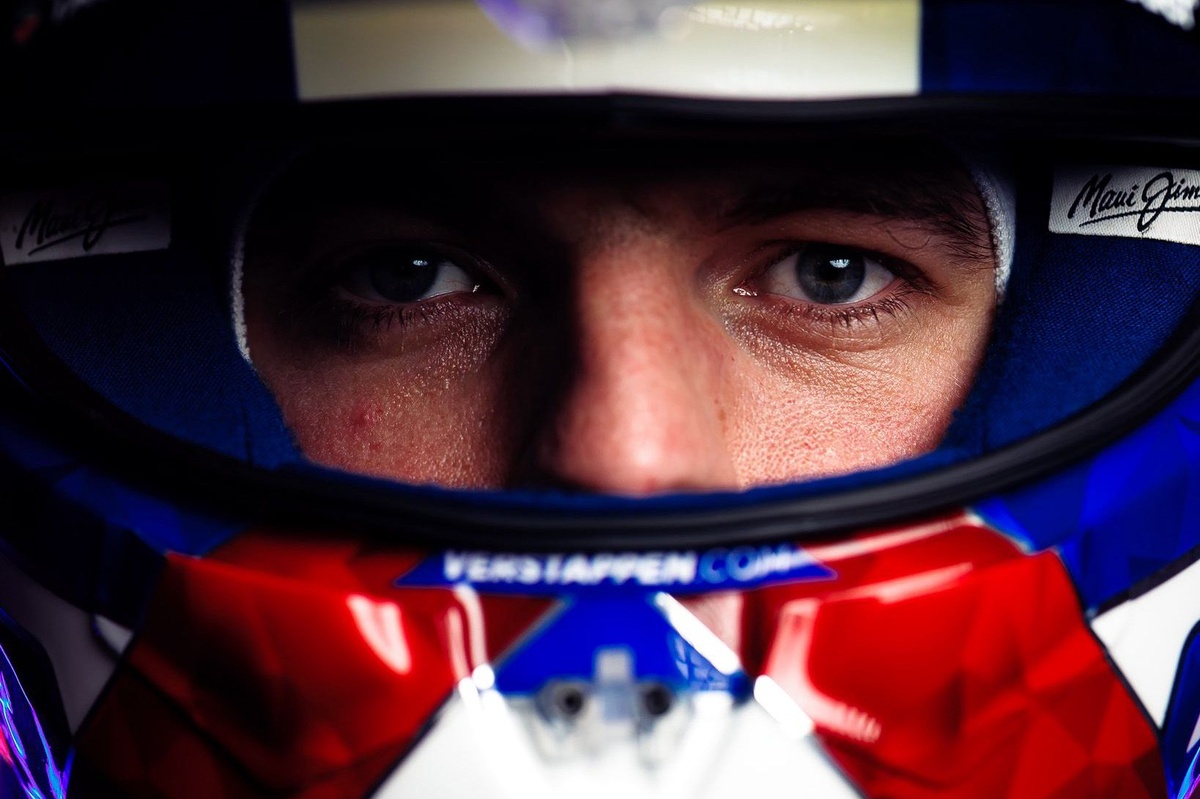
Max Verstappen entered Formula 1 as the youngest driver in history and wasted no time into becoming one of the world championship’s defining drivers. After debuting at 17 with Toro Rosso, he stunned the paddock by winning on his first appearance for Red Bull in 2016.
As F1 approaches a major regulation reset in 2026, Verstappen’s blend of experience, precision and competitive instinct positions him firmly among the sport’s leading contenders once again. Here’s how his record-setting career unfolded.

Born into racing

Year: 1997
Born on 30 September 1997 in Hasselt, Belgium, Max Verstappen grew up immersed in motorsport. Racing shaped his early years and set the foundation for a rapid rise through the ranks. Both his mother Sophie Kumpen and father Jos Verstappen supported his interest in the sport.
World and European karting champion

Years: 2010-2013
Verstappen began karting at just four years old, with his talents recognized early. After progressing through national and international categories, Verstappen went on to win a world and two European karting titles in 2013. This confirmed him as one of the most promising young drivers in the sport.
Junior single-seater breakthrough

Year: 2014
After stepping up to single-seater racing, Verstappen immediately impressed. His performances accelerated conversations about an F1 future. Also in 2014? Third overall in European F3, a Masters of F3 win at Zandvoort, and securing a place with Red Bull’s driver programme.
F1 debut – youngest in history

Year: 2015
At 17 years and 166 days, Verstappen became the youngest driver ever to start an F1 race at the Australian Grand Prix with Toro Rosso. His debut marked a new era of youth in F1.
Superlicence rules revised

Year: 2015
Verstappen’s unprecedented arrival prompted the FIA to tighten its super licence regulations. His entry into F1 directly influenced the sport’s eligibility standards for young drivers – this was recently brought into focus with Kimi Antonelli’s arrival at Mercedes.
Establishing himself at Toro Rosso

Year: 2015
Throughout his rookie season, Verstappen showcased bold overtaking and strong racecraft. His performances quickly elevated him from prospect to headline-maker.
Promotion to Red Bull

Year: 2016
Five races into the 2016 season, Red Bull promoted Verstappen to its senior team. The move signalled long-term belief in his potential as a future world champion.
First grand prix victory

Year: 2016
Verstappen won the Spanish Grand Prix on his Red Bull debut. At 18 years, 226 days, he became the youngest race winner in F1 history.
Brazil wet-weather masterclass

Year: 2016
Starting 16th, Verstappen surged through the field in torrential rain to finish on the podium. His control and bravery stood out even among seasoned champions. It remains one of F1’s great wet-weather drives.
Becoming a frontrunning force

Years: 2016–2018
Across the next few seasons at Red Bull, Verstappen developed into a consistent race winner and podium finisher. His aggressive style evolved into sharper race management.
Austria redemption

Year: 2018
After a difficult first half of 2018, Verstappen delivered a breakthrough win at the Red Bull Ring. Thousands of Dutch fans filled the grandstands in orange. He ended the year fourth in the standings.
First pole position

Year: 2019
Verstappen secured his first career pole position in Hungary. It marked another milestone in his development before he finished the season third overall with three victories.
First Honda win since 2006

Year: 2019
Verstappen delivered Honda’s first F1 victory since 2006. The Spielberg win only strengthened Red Bull’s partnership with Honda.
Emerging title contender

Years: 2019–2020
As Red Bull strengthened, Verstappen increasingly positioned himself as a championship challenger. He regularly fought at the front and delivered key victories against drivers in arguably superior machinery.
Title duel begins

Year: 2021
For the first time, Verstappen fought for the world championship across a full season. He and Lewis Hamilton traded wins and collisions. The battle would go to the final lap of the final race.
Championship breakthrough

Year: 2021
After a season-long battle at the front, Verstappen secured his first F1 world drivers’ championship at 24 years old.
Red Bull’s hybrid-era return

Year: 2021
Verstappen’s championship delivered Red Bull its first drivers’ title of the turbo hybrid era. Verstappen had become the team’s central figure.
Dominant title defence

Year: 2022
Verstappen controlled the 2022 championship with authority, securing his second world title. His consistency separated him decisively from the field that season.
Second F1 world drivers’ championship

Year: 2022
During his second title-winning campaign, Verstappen set new benchmarks for wins in a season, 15, a new F1 record.
Third consecutive F1 world drivers’ championship

Year: 2023
Verstappen claimed his third straight drivers’ championship. His control over race pace and strategy defined the season.
Record-breaking season

Year: 2023
Verstappen won 19 of 22 races in 2023. Race after race, he operated with precision and composure, reinforcing his status as the sport’s benchmark driver. Verstappen also set a new record for consecutive grand prix wins with 10.
Winning without the fastest car

Year: 2024
Despite mid-season challenges and stronger competition from McLaren and Ferrari, Verstappen maintained control of the standings through 2024. He secured his fourth world championship, with adaptability becoming his hallmark.
Qualifying excellence

Years: 2019–present
Verstappen developed into one of F1’s strongest qualifiers. His single-lap performance consistently positioned him at the front of the grid, notably at the 2025 Italian GP with the fastest-ever qualifying lap in F1 history – 264.682km/h or 164.466mph.
Red Bull’s star driver

Years: 2016–present
Across multiple campaigns, Verstappen carried Red Bull’s title ambitions. His performances anchored both drivers’ and constructors’ championship challenges, while staying in the headlines for a revolving door of team-mates, including Pierre Gasly, Liam Lawson, Yuki Tsunoda, Daniel Ricciardo, and Sergio Perez. Heading into 2026, Isack Hadjar will be measured against the four-time world champion.
Sustained consistency

Years: 2021–2024
Four consecutive world titles highlight not just speed, but durability and mental strength. Verstappen sustained peak performance across multiple seasons, something only F1’s very best have done.
Career totals before 30

Years: 2015–2025
Before turning 30, Verstappen has amassed four F1 world drivers' championships and dozens of race victories. His trajectory places him firmly among the modern greats: across 230 grands prix, Verstappen has scored 71 wins, 127 podiums and 48 pole positions.
Entering a new era of F1

Year: 2026
As F1 prepares for major regulation changes, Verstappen enters the next chapter as one of the world championship’s most complete drivers: experienced, disciplined and still evolving.







