
Get all your news in one place.
100's of premium titles.
One app.
Start reading
Motor1
Motor1
Business
Brian Potter

Mate Rimac Has A Bold Prediction For The Future Of Supercars

  • Rimac says mass-market cars will go electric; sports cars and up will stay combustion-powered for a very long time.
  • Bugatti's next generation centers on the Tourbillon's naturally aspirated 8.3-liter V16, producing 1,775 horsepower with hybrid assistance.
  • Bugatti sold all 250 planned Tourbillons at roughly $4.5 million each; buyers typically add $600,000–$700,000 for personalization.

Mate Rimac now runs the same production line with the loudest engine he has ever built, right next to the fastest EV he ever built. That contradiction, by his own admission, sits at the center of Bugatti's next decade.
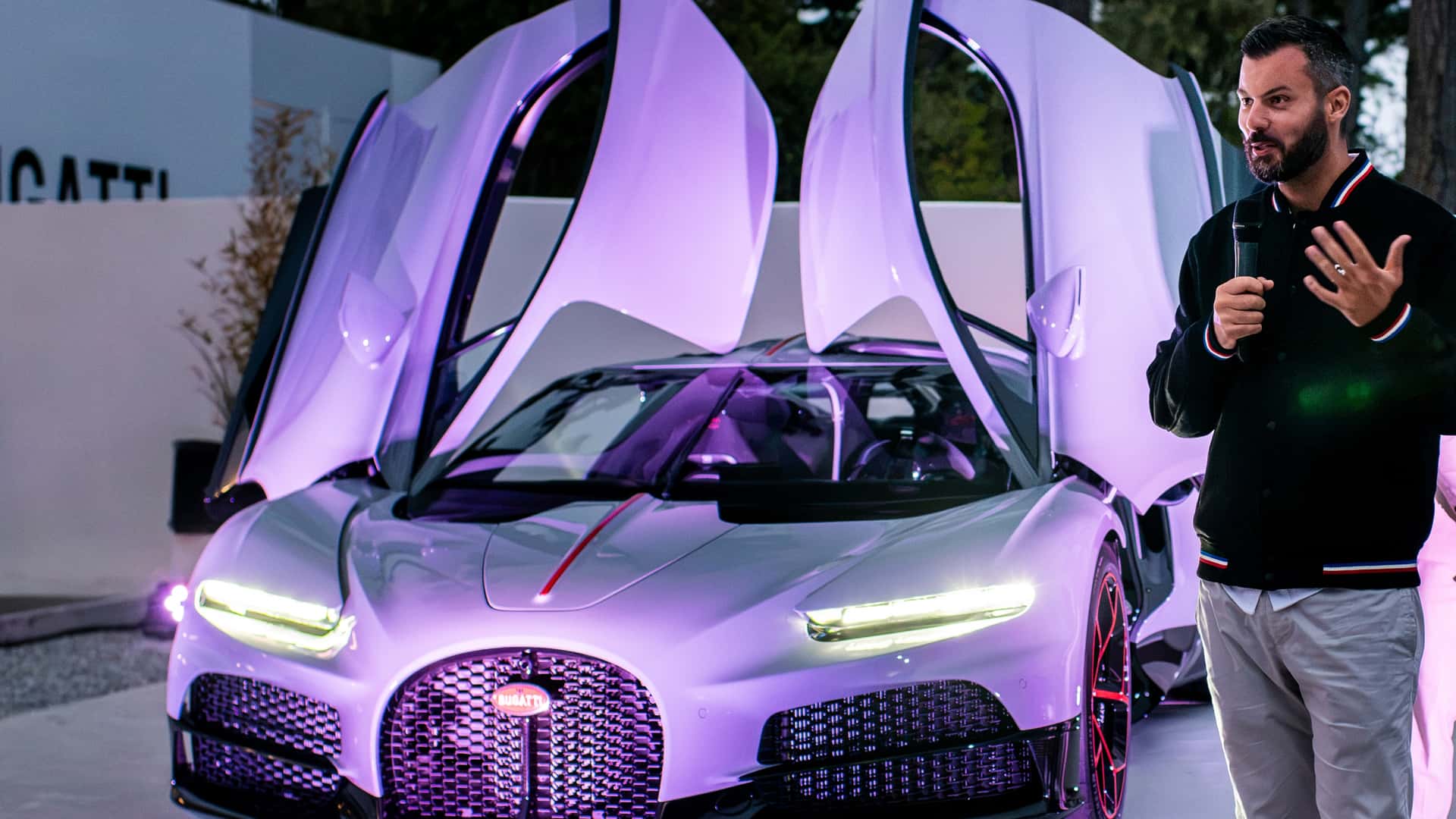
Speaking to CNBC, the Bugatti Rimac CEO laid out a split in the market as cheap, mass-market cars go electric, while sports cars and up stay gas-powered "for a very long time." He calls it the supercar market's Swiss watch phase.

Mate Rimac And The Future Of Supercars

Rimac's argument leans on his own resume. His Nevera, a fully electric hypercar, already beats many combustion-powered machines in a straight line. Yet he insists Bugatti's next generation stays combustion-based, built around the Tourbillon's naturally aspirated 8.3-liter V16.

That hybrid powertrain delivers 1,775 horsepower in total, and Bugatti has sold every one of the 250 planned Tourbillons at a starting price around $4.1 million to $4.5 million depending on exchange rates. Rimac points to customers spending heavily on personalization, including stitching, paint and one-off details.

He frames that spending as identity, not spec-chasing. "Performance is really becoming secondary," Rimac told CNBC, arguing a $50,000 EV from China can already outrun hypercars from a decade ago on paper alone.

Why Combustion Still Matters Up Top

The watch comparison does real work here. Rimac notes that Swiss mechanical watches account for a sliver of global watch sales but capture most of the industry's profit, and he wants Bugatti to mirror that math rather than chase volume.

Rimac's bet is that wealthy buyers are not paying millions for lap times; they are paying for hand-built mechanical drama that a screen cannot replicate. He is hardly alone in that read, as Ferrari has said gas engines have not peaked, and Koenigsegg has made a similar case for combustion alongside EVs and synthetic fuels.

Other rivals are hedging differently. Mercedes-AMG's CEO has talked through the challenge of selling electric performance cars, while Lamborghini's CEO has downplayed Chinese EV makers as a threat rather than a reason to abandon combustion outright. Where does that leave Bugatti a decade from now, still building V16s while everyone else electrifies?


Motor1's Take: Rimac's stance makes Bugatti a maker of museum-quality mechanical theater, cars bought for story and craft rather than raw lap times. That strategy should keep margins healthy and the brand rare, but it also leaves Bugatti exposed if wealthy buyers start valuing electric sensory experience over hand-built drama.

Sign up to read this article
Read news from 100's of titles, curated specifically for you.
Already a member? Sign in here
Related Stories
Top stories on inkl right now
One subscription that gives you access to news from hundreds of sites
Already a member? Sign in here
Our Picks
Fourteen days free
Download the app
One app. One membership.
100+ trusted global sources.