
Get all your news in one place.
100's of premium titles.
One app.
Start reading
GamesRadar
GamesRadar
Technology
Andrew Brown

Masters of Albion lets you play god, but Peter Molyneux proves benevolence is optional: "I want people to realize as they're playing – 'oh s**t, I am a bit evil!'"

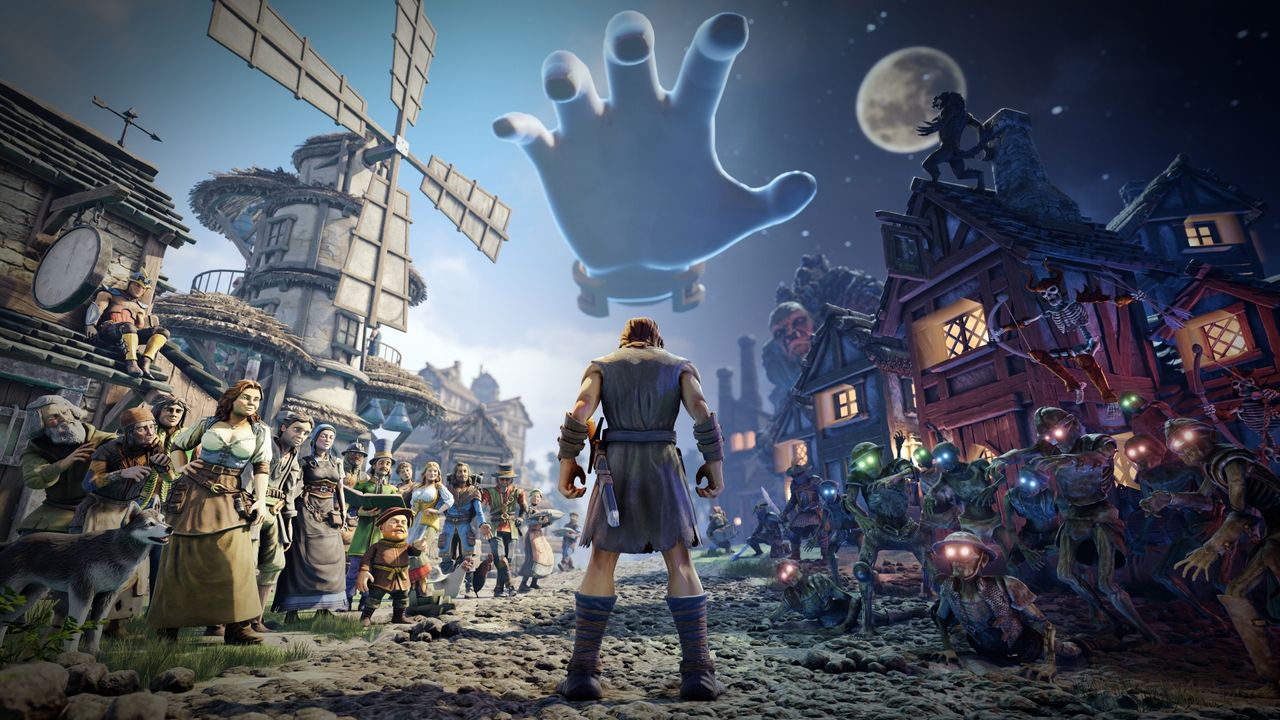
Masters of Albion artwork showing a man stood beneath a giant spectral hand in the sky, with a thriving village on one side and zombies on the other.

A city builder is only as good as its ethical shortcomings. Within 30 minutes of watching Peter Molyneux (Populous, Fable, Dungeon Keeper) play his upcoming god game Masters of Albion, the designer has slipped rat meat into a pie, bemoaned housing inspectors, and "kind of" built a sweatshop for his followers. "It's not intrinsically bad to house someone in the same place as they work", he argues. A pause. "It's a little bit bad."

Masters of Albion sees players step into godhood, your cursor replaced by an all-powerful hand that can drag-and-drop worshippers, raise buildings, possess any living thing, and smite ne'er-do-wells. A remarkable amount of systems turn this game's cogs, from market simulation to anything being viable trebuchet ammunition, but with great depth comes greater potential for irresponsible shortcuts. More rat pie, anyone?

Righteous

(Image credit: 22cans)
Urban planning
(Image credit: Hooded Horse)

We've picked the 15 best city builder games - how many have you played?

The hands-off demonstration begins in a small village, its lush greenery in stark contrast to the muted lands beyond its walls. Color is restored by rebuilding beacons; which means relying on mortals – either entrusting them to battle, or possessing them to fight with fairly simplistic third-person combat – to extend your domain. You can possess anything, says Molyneux, from heroes specially fit for fighting to random villagers and even chickens.

In this instance, a hero is chosen to complete the quest objective – reclaiming the abandoned village of Wyrmscar for its mine, which can, in turn, be worked for a stable supply of metals for the blacksmith. Masters of Albion's life sim systems feel interwoven and complementary, creating a satisfying string of problem-solving and resource management that promises to scratch the same itch as contemporary city builders like Manor Lords.

Yet developer 22cans' godly setting lends itself more to direct interactivity. Besides possessing Albion's denizens, your hand can be used to nudge life along. Ivy can be plucked and peeled from Wyrmscar's neglected buildings to make them functional again, while a Lego-style approach to building lets you click cubes together and even change a building's purpose. Molyneux demonstrates by picking up a smelter and combining it with a nearby factory, minimizing the time it takes for workers to usher materials between the two, but you can just as easily build ramshackle houses atop workplaces or fix a ballista to a farmstead. "My tip of the day is: always think about roofs on houses," Molyneux offers sagely, warning that even a god shouldn't underestimate the game's housing inspectors.

(Image credit: 22cans)

Creating a medieval production line is necessary for completing citizens' orders, which in turn progress your tech tree. One townsfolk requests a batch order of food that's ''all meat, no starch", so Molyneux puts the nearest factory to work assembling pies. This, of all places, is where Masters of Albion's minutiae shines: you can pick each ingredient that goes into a meal, physically plonking them into a prototype for the workers to replicate. The trick – for deities of capital, at least – is to make your customers happy without breaking the bank, which Molyneux demonstrates by checking the live prices of his ingredients while slipping chunks of rat between helpings of broth, pie crust, and chicken.

The same logic applies to smithing. You can choose how big or grandiose to make a sword, but larger weapons take longer to make, and Molyneux adds that smaller weapons are better for confined spaces. Being combat-ready is important for more than just staking new lands: while Masters of Albion is a relatively relaxing build-'em-up sim by day, by night, hordes of monsters come to try and tear down what you've built. There's no time limit – you progress to night only when you're ready – which is good, as being overwhelmed spells defeat.

I adore defending in sims, although the fate of my last town in Manor Lords suggests it's not my forte, and Masters of Albion provides plenty to let you really dig into it. You're shown where baddies will attack from, which lets you commit to planning proper defenses rather than relying entirely on reactivity. Heroes can be assigned custom routes to patrol, pricey fortifications like trebuchets and ballista can be used to create chokepoints, and your powers allow for divine intervention. Molyneux sets up all of the above whilst sporadically flinging chain lightning into crowds of zombies, and at one point, crushes a skeleton by dropping a nearby boulder on its head.

My favorite thing in strategy games – be they city builders, god games, or tactical RPGs – is not only being given the tools to thrive, but feeling like there is a greater purpose to utilizing them. The depth of Masters of Albion looks set to scratch that itch magnificently, while its tongue-in-cheek British humor offers enough of a touchstone to usher curious Fable fans into the genre. So, too, does the return of a fundamental question: can players be trusted with power? "I want people to realize as they're playing… 'Oh shit, I am a bit evil! I'm cramming everyone into a skyscraper,'" says Molyneux. "For me, the definition of a God Game is this word: freedom."


Here are the best strategy games we're playing at the moment

Sign up to read this article
Read news from 100's of titles, curated specifically for you.
Already a member? Sign in here
Related Stories
Top stories on inkl right now
One subscription that gives you access to news from hundreds of sites
Already a member? Sign in here
Our Picks
Fourteen days free
Download the app
One app. One membership.
100+ trusted global sources.