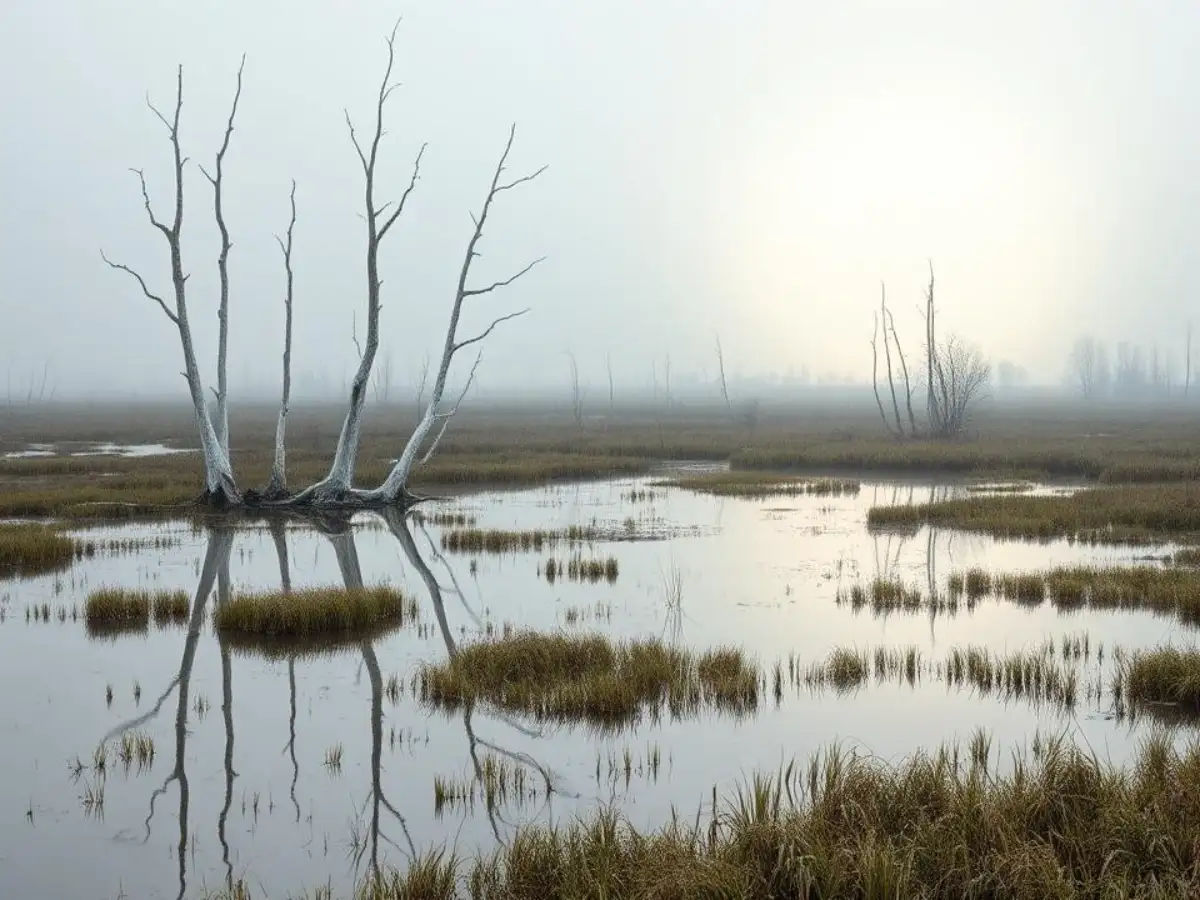
A severe drought in Massachusetts in 2022 allowed seawater to enter a coastal freshwater marsh, causing methane emissions to plunge by nearly 83% almost overnight, a new study has found. However, the marsh also failed to return to its previous state more than a year after normal rainfall resumed, showing how a single extreme weather event can trigger lasting changes in wetland ecosystems.
Researchers studied the Plum Island Estuary in northeastern Massachusetts, where waterlogged soils normally create oxygen-poor conditions that support methane-producing microbes. During the 2022 drought, reduced river flows allowed unusually salty tides to move farther inland than usual.