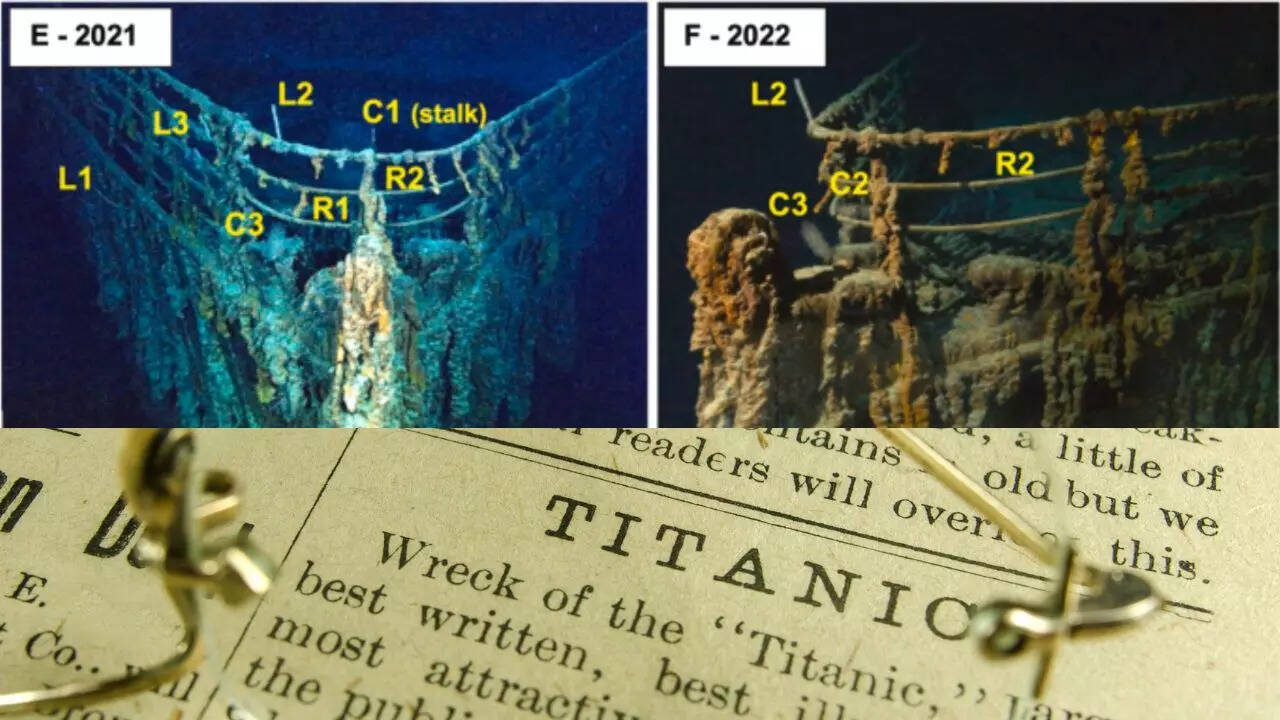
More than a century after it sank, the RMS Titanic continues to change in ways that are not only structural but also biological. A new survey of the wreck and a nearby deep-sea ridge has documented the animals now living across its steel surfaces at a depth of about 3,800 metres in the North Atlantic. The work draws on video collected during a 2022 expedition and compares life on the wreck with that found on a natural rocky ridge around 40 kilometres away. Researchers analysed more than a thousand still images taken from submersible footage. The results show that the Titanic has become an artificial reef, supporting corals, sponges and mobile invertebrates in an environment once dominated by soft mud.