Get all your news in one place.
100's of premium titles.
One app.
Start reading
The Conversation
The Conversation
Mark Smith, Professor of Water Science & Heath, University of Leeds

Mapping malaria in Africa: climate change study predicts where mosquitoes will breed in future

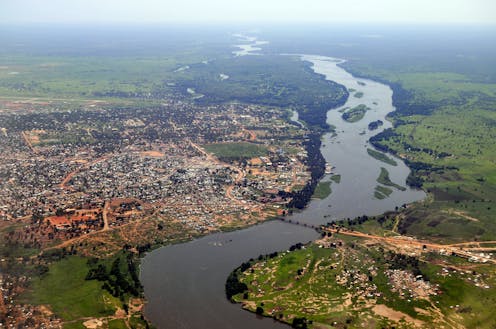
Water bodies such as the Nile River, pictured here running through Juba in South Sudan, are included in the new model. Frontpage

The relationship between climate and malaria transmission is complex and has been the subject of intense study for some three decades.

Mosquito vector populations sufficient to maintain malaria transmission occur within a particular range of temperatures and humidity that are suitable for their survival and breeding. The parasite also needs suitable temperatures to complete its mosquito life stages. And mosquitoes need surface water to breed in. These conditions have to last long enough for mosquito and parasite populations to grow.
Sign up to read this article
Read news from 100's of titles, curated specifically for you.
Already a member? Sign in here
Related Stories
Top stories on inkl right now
One subscription that gives you access to news from hundreds of sites
Already a member? Sign in here
Our Picks
Fourteen days free
Download the app
One app. One membership.
100+ trusted global sources.