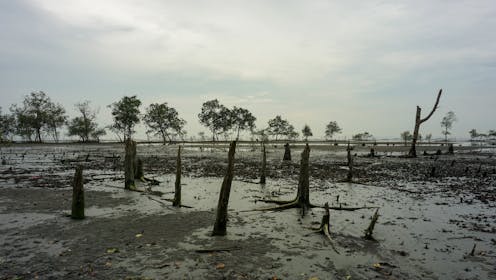
Mangrove forests look much like the coastal cousins of inland forests, but you cannot miss their tangled prop roots that help them thrive in harsh coastal environments where the tide flows in and out and there is little oxygen in the soil. They cover much of the tropical and sub-tropical coastal belts and host a unique set of rich biodiversity. Many endangered species, such as olive ridley turtles, white breasted sea eagles and even tree climbing fish find their last refuge in these forests.
Mangroves are crucial for humans too. They are an important carbon sink and can hold up to four times more carbon per hectare than tropical rainforests. Unlike rainforests, which mostly store carbon in trunks and branches and therefore release it when the trees die, mangroves store most of the carbon in their soil and sediment. If left undisturbed, that carbon can stay put for millennia.