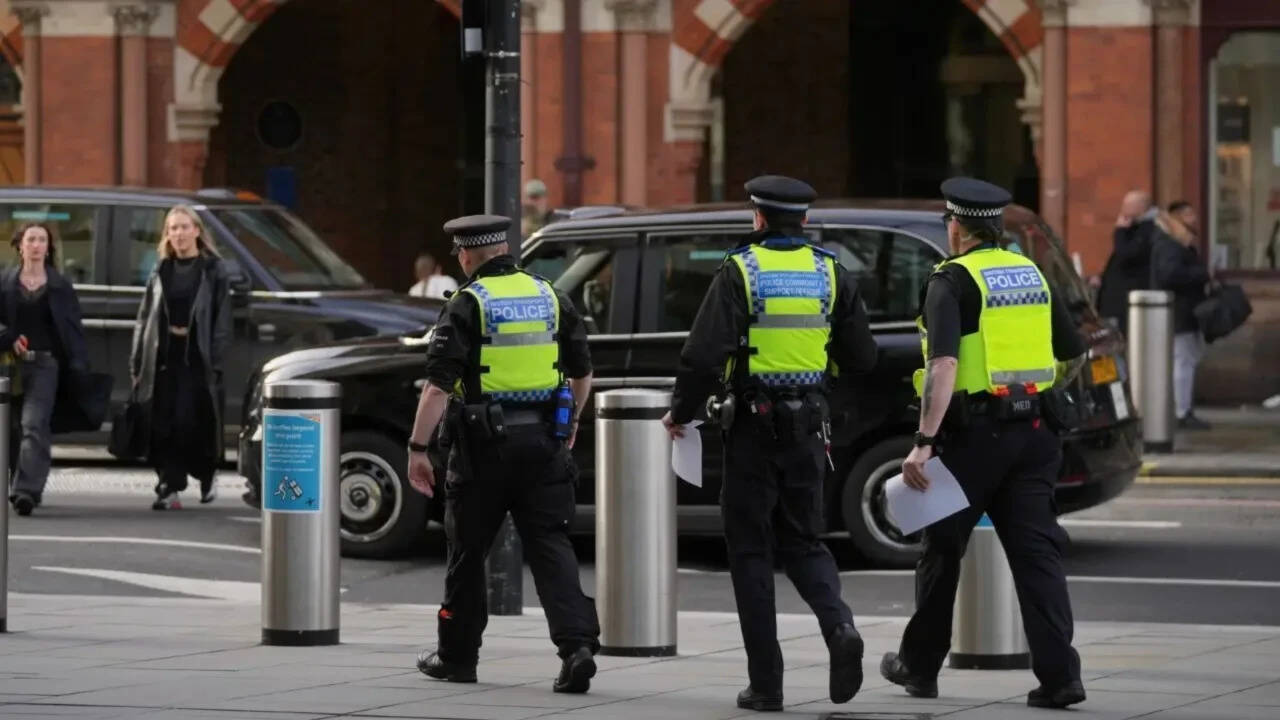
A Manchester cafe owner says two police officers tried to recruit him as an informant against Palestine Action by offering him financial help and a promise to overlook minor offences. The account raises serious questions about the methods being used by British police in their response to the banned direct action group.
Shams Sadiq, 51, who owns two cafes in Manchester, told The Guardian that officers made the approach when he visited Ashton-under-Lyne police station on May 15 to collect electronic devices seized during his arrest the previous year. The arrest was connected to alleged offences linked to Palestine Action.

Sadiq said the two officers, who he believes were part of Operation Wildflower (a Greater Manchester Police response to the war on Gaza), asked to speak with him privately. They told him they knew from his devices that he was "fully involved" with Palestine Action but would not be charging him for his earlier arrest.
"They said to me: 'We need your help. Look, there's benefits in helping us,'" Sadiq told The Guardian. When he asked whether that meant financial benefits, one officer said they could "help with things like that." The second officer added that they could "turn a blind eye to certain things" as long as no serious crime was involved. When Sadiq asked about speeding tickets, the officers said: "We don't care about speeding."
Sadiq said he understood the request to mean he should inform on Palestine Action and possibly identify individuals with extreme views at his local mosque. He added that the officers described him as well-respected in his community.
Four days before the station visit, Sadiq said he was stopped at Manchester airport under Schedule 7 of the Terrorism Act after returning from a holiday in Morocco. Officers questioned him for more than three hours about Palestine Action, Iran and his personal finances including his mortgage. His electronic devices were taken again.
He said the same officers then asked him to meet them at a Starbucks in the airport terminal three days later where they returned his devices and were "really nice, apologetic."
Sadiq said he decided to go public specifically because he was not taking up the offer and wanted to protect himself. "I feel like I need protection from the police rather than anything else," he said.