Get all your news in one place.
100's of premium titles.
One app.
Start reading
The Economic Times
The Economic Times
Trending Desk

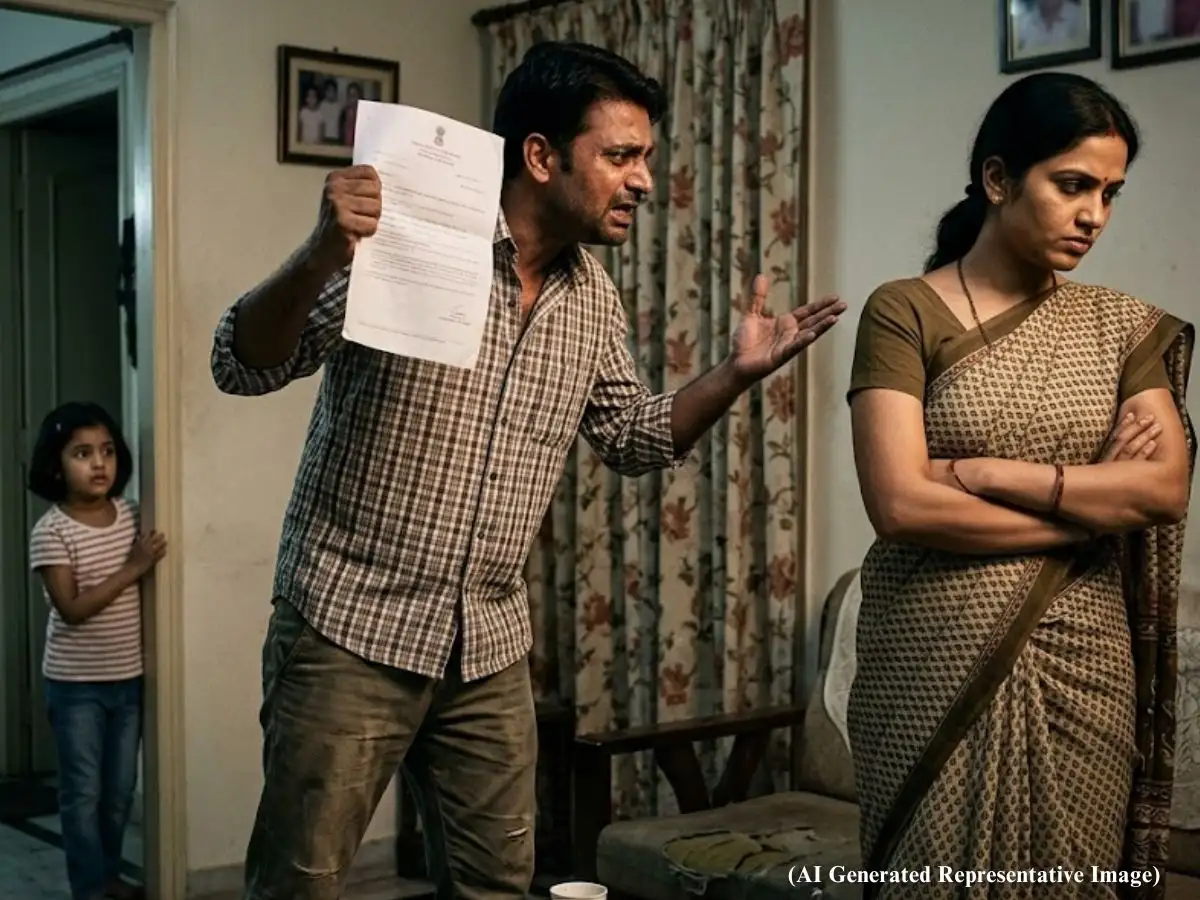
Man takes a DNA test, finds out he isn't the child's father; files for divorce but wife refuses official test; Supreme Court allows the paternity test

The Supreme Court of India has ruled that a child can be subjected to a court-ordered DNA paternity test in a matrimonial dispute where a husband has sought divorce on grounds of alleged unchastity and has claimed he is not the child's biological father, according to a Times of India report.

The ruling came from a bench of Justices M M Sundresh and Prasanna B Varale, which rejected a woman's plea opposing the paternity test and upheld orders passed by a family court in Pune and the Bombay High Court directing the test as part of ongoing divorce proceedings.
Also read: Ladoos, pedas sold as Ayodhya Ram Mandir Prasad found fake: Consumer body fines Amazon for misleading ads; says devotees' religious sentiments exploited

Why did the husband file for divorce?

The husband had privately undergone a DNA test at a laboratory in Hyderabad. The result showed that the probability of him being the child's biological father was zero.

Armed with that report, he filed a divorce petition and sought a court-directed DNA test to formally establish his claim. He submitted before the court that the allegation of unchastity against his wife could be proved conclusively only through a DNA test, as no other form of evidence would be sufficient to establish such a claim.

Why did the wife refuse the DNA test?

The wife opposed the paternity test, contending that it was a settled principle of law that no party can be compelled to undergo a DNA test. She argued that the divorce petition should be decided without ordering one.

The Supreme Court was not persuaded. Addressing her objection directly, the bench asked: "If you are loyal, then why should you object to the test."

What did Bombay High Court say about the paternity test?

Before the matter reached the Supreme Court, the Bombay High Court had upheld the family court's direction for a DNA test, recording detailed reasons for doing so.

The High Court said the private DNA report obtained by the husband, showing zero probability of fatherhood, constituted prima facie and sufficient material to conclude that a direction for undergoing a DNA test could be issued.

On the question of need, the High Court said the husband's allegation of unchastity was the main ground for divorce and that a DNA test report would have a material bearing on whether he was the biological father. It added that considering the nature of the allegation, it would be difficult to obtain conclusive evidence through any means other than a DNA report.

Can courts order a DNA paternity test in a divorce case?

The Supreme Court's ruling settles the question for cases of this nature. While the law presumes the legitimacy of a child born during a marriage, the court held that this presumption does not bar a paternity test when a husband has placed credible prima facie material before the court, established an eminent need for the test, and when unchastity is the central ground for divorce.

The court upheld the Bombay High Court order in full, clearing the way for the court-ordered paternity test to proceed.

(With TOI inputs)

Sign up to read this article
Read news from 100's of titles, curated specifically for you.
Already a member? Sign in here
Related Stories
Top stories on inkl right now
One subscription that gives you access to news from hundreds of sites
Already a member? Sign in here
Our Picks
Fourteen days free
Download the app
One app. One membership.
100+ trusted global sources.