Get all your news in one place.
100's of premium titles.
One app.
Start reading
The Conversation
The Conversation
Mags Lesiak, PhD Researcher in Psychological Criminology, University of Cambridge

Man convicted of causing his wife’s suicide – why this is a landmark moment for abuse victims

tonkid/shutterstock

Kimberly Milne was 28 when she climbed over the barrier of a motorway bridge and jumped to her death. That night, witnesses saw her cowering from her husband, Lee Milne, in a retail park in Dundee, as he trapped her against a wall. CCTV footage showed her trying to get away while he shouted, drove a car at her and pulled her back into his orbit.

In the year before her death, he had choked her, dragged her by the hair, hit her until she fell and lost consciousness, and apologised, promising he was “not that type of guy”. He went through her phone, controlled her movements and, according to messages shown in court, created a situation where leaving felt impossible: “How can I leave him if he’s saying he’s going to do himself in without me?”

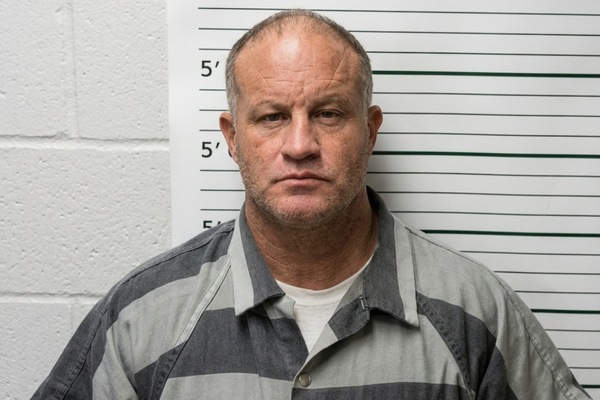
In a first-of-its-kind case in Scotland, Lee Milne has now been held criminally responsible for his wife’s suicide. The 39-year-old was convicted of culpable homicide and sentenced to eight years in custody.

In Spain, Noelia Castillo, 25, underwent euthanasia after a long and highly contested legal battle. In early adulthood, she reported multiple incidents of sexual assault. Days after being gang-raped, she attempted suicide by jumping from a building. She survived, but with irreversible paraplegia, chronic physical pain, neurological damage and profound psychological suffering.

Her euthanasia was legally granted on the basis of that condition. But the question remains: if the injuries that made her life unbearable followed a suicide attempt triggered by sexual violence, can her death be understood without that violence?

Homicide has long been treated as the most extreme outcome of abuse. But recent evidence suggests that abuse-related suicide may be at least as common, if not more so. Yet it remains far less recognised in law, policy and public understanding.

In 2022, an England-wide study found that people who had ever experienced intimate partner violence were almost three times as likely to have attempted suicide in the previous year, even after adjusting for other adversities.

Data in England and Wales suggests that what might be termed “perpetrator-produced suicide” (where sustained abuse produces the conditions in which a person ends their own life) is not uncommon. The Domestic Homicide Project, a research project led by the National Police Chiefs’ Council, recorded 98 suspected suicides following domestic abuse between April 1 2023 and March 31 2024. This was more than the 80 intimate partner homicides recorded, overtaking them for the second year in a row.


Read more: Are women more safe today in England and Wales than they were in the past – or less? What the evidence shows


This suggests that fatal outcomes linked to domestic abuse may be being categorised as individual acts, rather than perpetrator-produced harm. The result is underrecognition of abusers’ role in their victims’ suicide. There have only been five prosecutions of this kind in England and Wales, leading to just one confirmed conviction for manslaughter.

In Kimberly Milne’s case, the court found that sustained physical and psychological abuse was a significant contributing factor in her death. The judge concluded that Lee Milne’s actions drove his wife to a point of despair, from which she took her own life.

In Castillo’s case, the question of responsibility remains unresolved. The violence that preceded her suicide attempt and ultimately led to her death sits outside the frame of legal accountability. The law breaks these events apart: the assault is treated as a crime, the suicide attempt as her own act, and the later death as a medical decision, rather than recognising how violence can set the whole chain in motion.

‘Choice’ under coercion

To understand the link between suicide and domestic violence or coercive control, we must ask: what does it mean to “choose” to end one’s life, when that choice is made under coercion or threat?

My research explores weaponised attachment, where perpetrators of abuse deliberately use emotional bonds to control their victims. They form attachment through grooming, trauma-sharing and vulnerability, and then use that attachment to influence decisions about whether to stay, leave or seek help. Coercion often operates by shaping how decisions are made – narrowing the options a person can see and making the choice to leave feel impossible.

couple arguing behind frosted glass
Abuse and coercion can change the options a victim thinks are available. hxdbzxy/Shutterstock

Read more: How domestic abusers use emotional bonding to control their victims – new study


Research in behavioural economics and cognitive psychology shows that people make choices within the set of options they perceive as available, not the set that objectively exists. Under threat and loss, people seek more risk and are more likely to choose extreme options to escape unpleasant states.

When coercion shapes what a person sees as their obligations and options, a resulting decision cannot be treated as fully self-authored. It is made, but under conditions structured by another. In cases of perpetrator-produced suicide, the issue is not simply whether a victim “chose” to die, but whether that choice was made with the authority required for responsibility. The same mechanism operates in cases where victims are said to have “consented” to abuse.

Justice for victims

This conviction could change how criminal justice systems approach perpetrator-produced suicide. It could lead to more homicide-style investigations where suicide follows coercive control. In investigations, this would mean greater emphasis on patterns of abuse over time, rather than isolating the final event.

For this shift to be meaningful, changes are needed. First, there is a need for better recording of perpetrator-produced suicides, which are currently fragmented or likely misclassified as individual deaths. Second, what police consider as evidence must expand to include patterns of coercion, digital traces and how the relationship unfolded over time, rather than focusing only on what happened in the final moments.

Third, the law needs to be clearer about when sustained abuse leads to responsibility for a death, moving beyond vague labels like “vulnerability” and focusing on how a person’s options were restricted.

Finally, risk assessment practices should move away from predicting isolated incidents towards identifying coercive environments that generate escalating harm. Without these changes, this landmark ruling risks remaining an exceptional case, rather than a foundation for future accountability.


If you’re struggling with suicidal thoughts, the following services can provide you with support: In the UK and Ireland – call Samaritans UK at 116 123. In the US – call the National Suicide Prevention Lifeline at 1-800-273-TALK (8255) or IMAlive at 1-800-784-2433. In Australia – call Lifeline Australia at 13 11 14. In other countries – visit IASP or Suicide.org to find a helpline in your country.

The Conversation

Mags Lesiak does not work for, consult, own shares in or receive funding from any company or organisation that would benefit from this article, and has disclosed no relevant affiliations beyond their academic appointment.

This article was originally published on The Conversation. Read the original article.

Sign up to read this article
Read news from 100's of titles, curated specifically for you.
Already a member? Sign in here
Related Stories
Top stories on inkl right now
One subscription that gives you access to news from hundreds of sites
Already a member? Sign in here
Our Picks
Fourteen days free
Download the app
One app. One membership.
100+ trusted global sources.