Get all your news in one place.
100's of premium titles.
One app.
Start reading
Motor1
Motor1
Business
Stacy Fernandez

Man Buys $38,000 Kia. Then He Makes $37,000 In Payments. He Still Owes $28,000 On The Same Car

This man made the worst financial decision of his life when he traded in his old car. He’s now on the hook for tens of thousands of dollars, and despite paying off a healthy chunk of it, the interest just keeps adding up.

He’s sharing his story now in hopes that it doesn't happen to you. Here’s how a $5,000 repair bill landed him in a mountain of debt.

Upside Down On A Kia Loan: How Did He End Up Here?

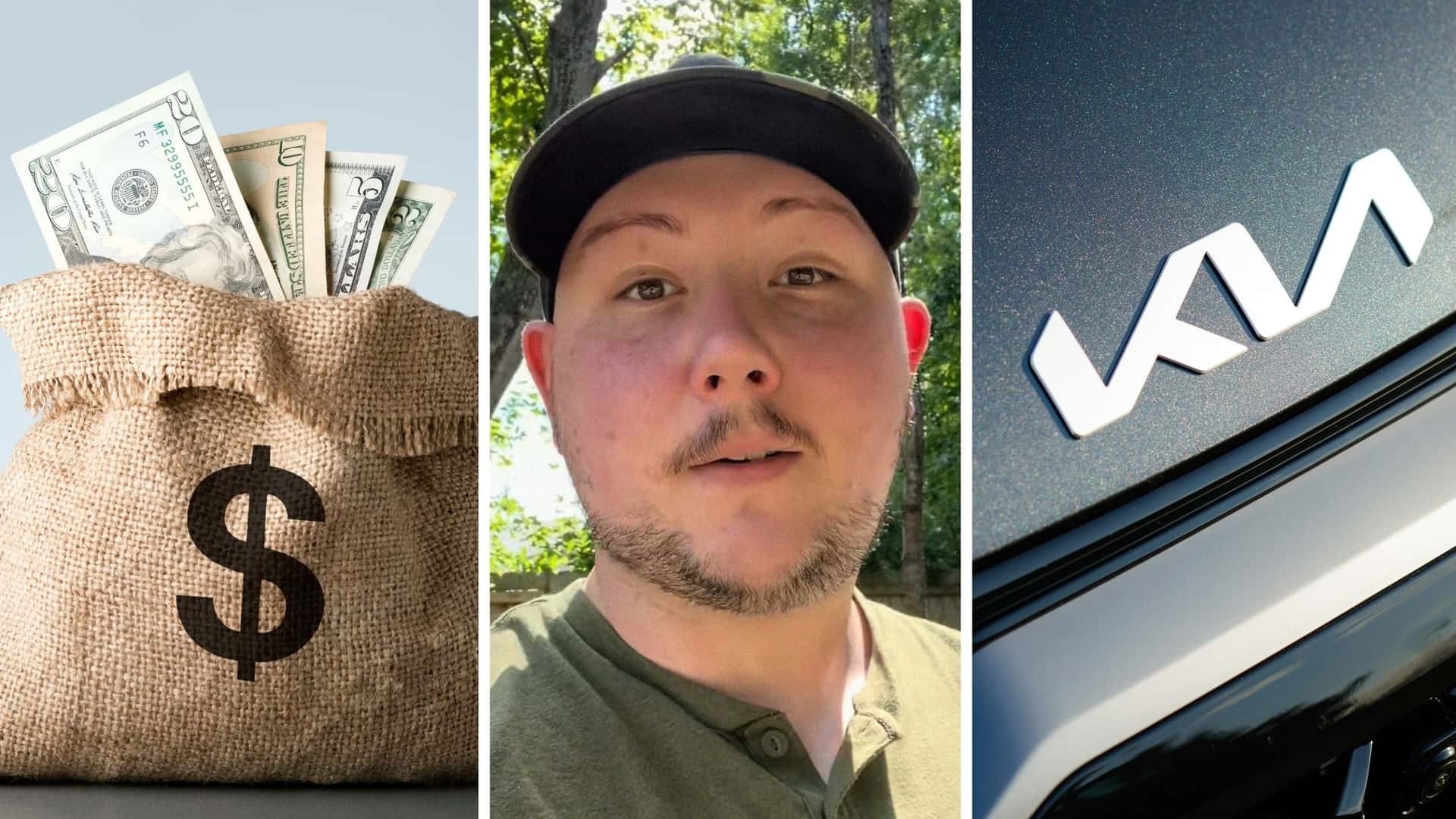
In a viral TikTok with more than 556,000 views, content creator Yancy (@debtfreemcgills) broke down what he calls the worst financial decision he has ever made—financing a 2022 Kia K5 at 23.5% interest.

Yancy says he owned a 2017 Ford Explorer four years ago. He liked the SUV, but it had several issues. The air conditioning stopped working, it had a coolant leak, and its water pump went out.

Together, the repairs would have cost around $5,000. Instead of shelling out the money to fix it, Yancy thought he’d be better off in the long run trading it in.

“I went and made the worst financial decision I’ve ever made and ever will make,” Yancy says.

The Explorer was worth less than what he still owed on it, leaving him with negative equity. Yancy says he put $5,000 down on the Kia and signed a loan with a starting principal balance of $37,880. His monthly payment ended up being $1,040.

Yancy says that after 36 payments he’s paid $37,440 toward the car, yet his principal balance had only fallen to $28,275. That means the principal was only reduced by $9,605. That’s not quite the payoff you’d expect for such high payments.

And getting rid of the Kia wouldn’t wipe out the remaining debt. Yancy says Kelley Blue Book appraised the car at $13,200, putting him roughly $15,000 underwater even if he could sell it for that amount.

“I’m not sharing this because I’m proud of it,” he says. “I’m sharing this because I know I’m not the only person in this world that has made a horrible financial decision. Instead of hiding from it, I’m documenting my journey to get out of this loan.”

Motor1 reached out to story subjects. We will update this story if they respond.

Why Doesn’t He Refinance Or Let The Kia Get Repossessed?

In a follow-up video labeled “Dumb Kia Q&A,” Yancy responded to some of the most common suggestions he received after sharing the loan.

On refinancing, Yancy says lenders aren’t interested because he owes about $14,000 to $15,000 more than the Kia is worth. When he asked one of his banks about refinancing, he said the employee laughed after learning the car was a Kia.

“So that pretty much sums up my refinancing options,” he says.

Repossession wouldn’t make the debt disappear, either. Yancy says the lender could sell the car at auction and still pursue him for the remaining loan balance. If it sold for only $5,000, for example, he says he could remain responsible for $23,000 while no longer having a car to drive.

He also rejected rolling the negative equity into a lease. By his estimate, the resulting payment would likely remain around $1,000 a month, only for a vehicle he would never own. A lease’s mileage limits would also clash with the Spark and other delivery work he uses to earn extra money.

“The goal is to get out of my thousand-dollar payment, not find a creative way to get a new one,” Yancy says.

And deliberately wrecking the car, another suggestion he says he received, is firmly off the table.

“I’m trying to get out of a Kia, not into the back of a police car or an ambulance,” he says.

Instead, Yancy plans to save enough to buy a cheap, reliable used car with cash. Then he’ll keep making extra payments on the Kia until its balance is low enough for him to sell it without carrying the debt into yet another vehicle.

“I got myself into this mess, and I’m getting myself out of it,” he says.

How Do Car Loans Work?

An auto loan lets a buyer borrow a lump sum for a vehicle and repay it, plus interest, over time. But the monthly bill alone doesn’t show how expensive that loan could be.

According to Bank of America, the three major factors that determine both the monthly payment and the total cost are the amount borrowed, the annual percentage rate (APR), and the loan term. The APR is the interest rate charged on the loan, while the term is the length of time the borrower has to repay it, typically between 36 and 72 months.

A longer term can make a car seem more affordable by shrinking the monthly payment. The catch is that the borrower pays interest for longer. In one example, Bank of America found that extending a $25,000 loan at 3% APR from 48 months to 60 months lowered the payment by about $104 per month. But it increased the total interest from $1,561 to $1,953.

Gallery: 2026 Kia K5

What Can You Do When You’re Upside Down On A Car?

Being upside down, underwater, or in negative equity all mean the same thing—you owe more than the vehicle is currently worth, NerdWallet explains.

To find out where a loan stands, check the current payoff balance, estimate the car’s trade-in value, and subtract the balance from that value. If you get a negative result, that means you have negative equity.

Here’s what NerdWallet recommends if you want to get out of it:

  • Make extra principal payments. Paying down the principal faster can close the gap between the loan balance and the car’s value while reducing the amount paid in interest. NerdWallet advises confirming that the lender applies the extra money to principal.
  • Look into refinancing. Refinancing won’t erase the remaining balance, but a lower rate or shorter term could reduce interest and help build equity faster. A shorter term usually comes with a higher monthly payment, though, and you still have to qualify for it.
  • “Drive through” the loan. Keeping the car and making payments on time may eventually allow the loan balance to fall below the vehicle’s value. NerdWallet says drivers with substantial negative equity may also want to consider gap insurance, which can cover the difference between an insurance payout and the remaining loan balance if the car is totaled.
  • Consider a lease carefully. NerdWallet notes that a driver may be able to trade an underwater car for a lease and walk away without a vehicle at the end of the term. However, the lease payments will still reflect the negative equity.
  • Avoid moving the debt into another car loan. Rolling negative equity into a new loan means borrowing more and continuing to pay interest on the old car’s unpaid balance. Doing it repeatedly can trap a borrower in the same cycle with an even larger payment.

‘Get Rid Of It Now!!!!’

People had their own thoughts and suggestions on the situation, some less helpful than others.

“If you have gap, total it,” a top comment read.

“$1,100 a month for a Kia is diabolical,” a person said.

“Why didn’t you just take the 5000 to go pay on a good reliable cash car?” another questioned.

Hindsight is 20/20.

Sign up to read this article
Read news from 100's of titles, curated specifically for you.
Already a member? Sign in here
Related Stories
Top stories on inkl right now
One subscription that gives you access to news from hundreds of sites
Already a member? Sign in here
Our Picks
Fourteen days free
Download the app
One app. One membership.
100+ trusted global sources.