With Christmas done and dusted for another year, inevitably people start looking ahead - to a fresh start, and, perhaps, to a change for the better.
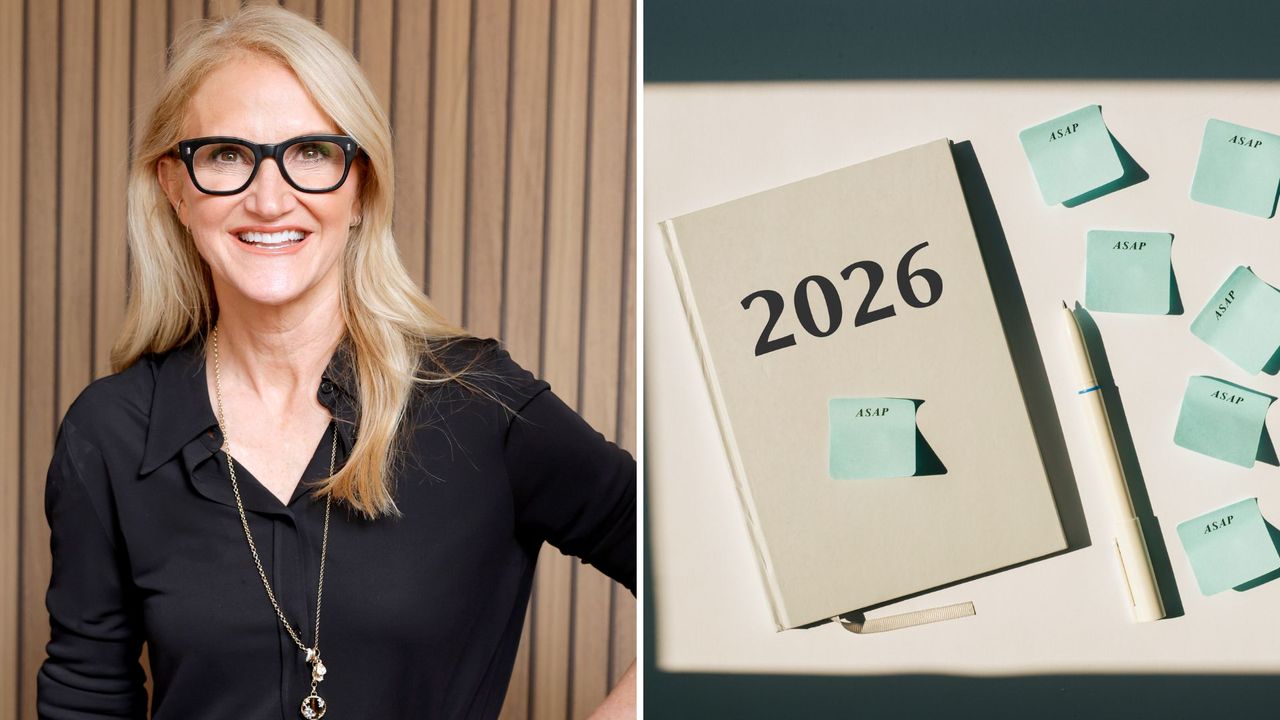
Best-selling author and mindset expert Mel Robbins is ready to help make that change a reality - and she knows that it won’t just happen by itself. She’s been doing the same end-of-year ritual for 22 years, and it involves asking six simple questions.
These questions help anchor oneself in self-awareness - 'the starting point for change'. And with this self-awareness in mind, you can create a plan to follow for your best year yet.
As she brilliantly surmised in a recent video, 'an amazing year, [and] an amazing life, doesn’t happen by chance, it happens by choice.' So, how do we make it a reality?

The six questions, which she shared in a recent video, are:
- What were the low points of your year?
- What were the high moments?
- What did you learn this year?
- What are you going to stop doing?
- What are you going to continue doing?
- What are you going to start doing?
What were the low points of your year?
'If you had a lot of low points, you’re not alone.'
This question is important to start with because, as Mel explains, it’s from the low points where you can learn the most and make the biggest positive changes.
Addressing the hard moments head-on is actually good for us, Mel reveals, citing a research-based study from 2018 from UC Irvine and Penn State.
The research, she explains, suggests that acknowledging hard and low moments gives our brains a time to process. When you don’t do that, the research shows that those negative feelings stay in your body and 'you’re going to feel more stressed, you’re going to have more issues with your physical health.'
So start with this first question and 'you’re freeing yourself from the weight' of issues that could have dragged you down or made you sick in 2026.
What were the high moments?
Just as important as it is to address the lows, embrace the highs because "the highs show you what you want more of".
And it doesn't have to be "big, flashy things" - Mel offers up some of her own personal highlights as just spending more time with the family, and getting in her first trip with just her and her middle daughter.
The lesson from asking yourself this question and looking through your photos or going through your memories is you can put things into better perspective, and help you "challenge the way you beat yourself up".
Mel’s own example showed her that she does spend a lot of time with her parents, even if her own inner narrative sometimes guilts her into thinking she doesn’t.
What did you learn this year?
Taking the first two questions, the third one is when you put into practice what you’ve taken away from your highs and lows.
As Mel explains, they’re not just memories, "they’re data" and this allows you to take lessons that are more personal, and more rooted in what will bring the most change to your life.
What are you going to stop, start and continue doing?
The next three questions can be grouped together under a 'stop, start, continue' mindset - something Mel explains is a framework used by companies and leadership programmes all over the world.
Once you’ve identified your highs and lows - and the lessons that these have offered up - answering what you are going to stop doing, what you are going to start doing and what you are going to continue doing should feel "easy and obvious".
Taking the insights from the first three questions and using them to form your ’stop, start and continue’ creates a tangible and strategic plan for 2026, something personal and clear to follow to hopefully have one of your best years yet.
And it doesn't have to stop there. As well as this end-of-year ritual, Mel has previously offered five powerful questions to ask yourself throughout the year to make your life better.