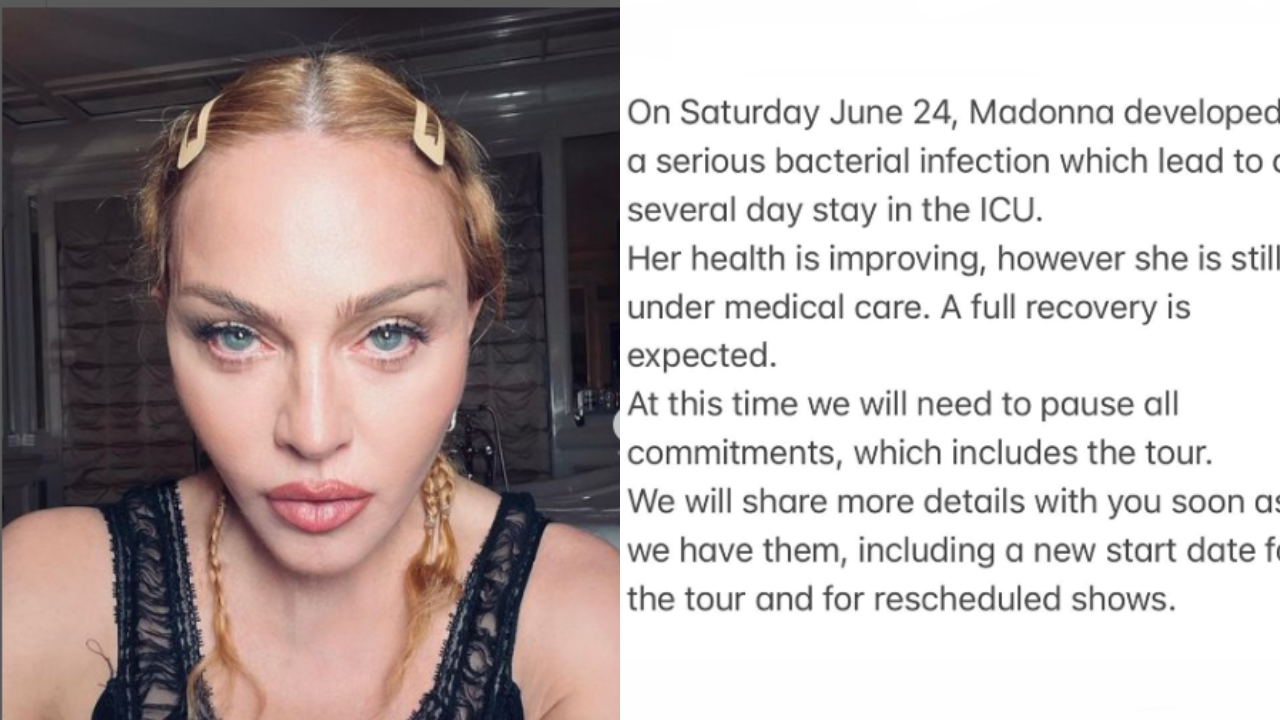
Madonna postponed her world tour after she was rushed to the intensive care unit of the hospital due to a bacterial infection. The 64-year-old was about to start her 84-date tour, which was scheduled to start in Vancouver, Canada, on 15 July and end on 30 January in Mexico City.
"On Saturday June 24, Madonna developed a serious bacterial infection which lead to a several day stay in the ICU. Her health is improving, however she is still under medical care. A full recovery is expected. At this time we will need to pause all committments which includes the tour. We will share more details with you soon as we have them, including a new start date for the tour and for rescheduled shows," Guy Oseary has shared on Instagram.

Bacterial infection
The actor was rushed to hospital after being found unresponsive and was then shifted to a New York City hospital. She remained intubated for nearly a week.
Bacterial infection, caused by pathogenic bacteria, is harmful to the body and not all bacterial infections need hospitalization. Some bacterial infections cause sepsis, which is basically an extreme response of the body to a bacterial infection.
Bacterial invasion cause several infections in the body like strep throat, urinary tract infection, pneumonia, food poisoning, and bacterial meningitis.
As of now, any other information on Madonna’s health and the bacterial infection she dealt with has not come to fore.
How to identify the signs of bacterial infection?
The common signs of a bacterial infection are fever, fatigue, swollen lymph nodes in the neck, armpits, or groin, headache, nausea, and vomiting.
Madonna was accompanied by her daughter Lourdes Leon throughout the treatment. In 2020, she had called off her show in Lisbon due to knee and hip injuries.
How do bacterial infections spread?
They can spread through direct contact which means the germs enter the body directly through skin cuts and wounds. It can also spread through inhalation, through eating contaminated food and water and can also be spread through unprotected sexual contact. A weak immune system, poor hygiene and repeated exposure to contaminants exposes one to bacterial infection.
Common antibiotics used for bacterial infection
Antibiotics are prescribed to treat bacterial infection. These medications inhibit the growth of the bacteria. Usually antibiotics are prescribed for 3-5 days after the symptoms are seen. Apart from antibiotics, vaccines also help treat bacterial infections. Vaccinations are available for infections like tetanus, pertussis and pneumococcal infections.