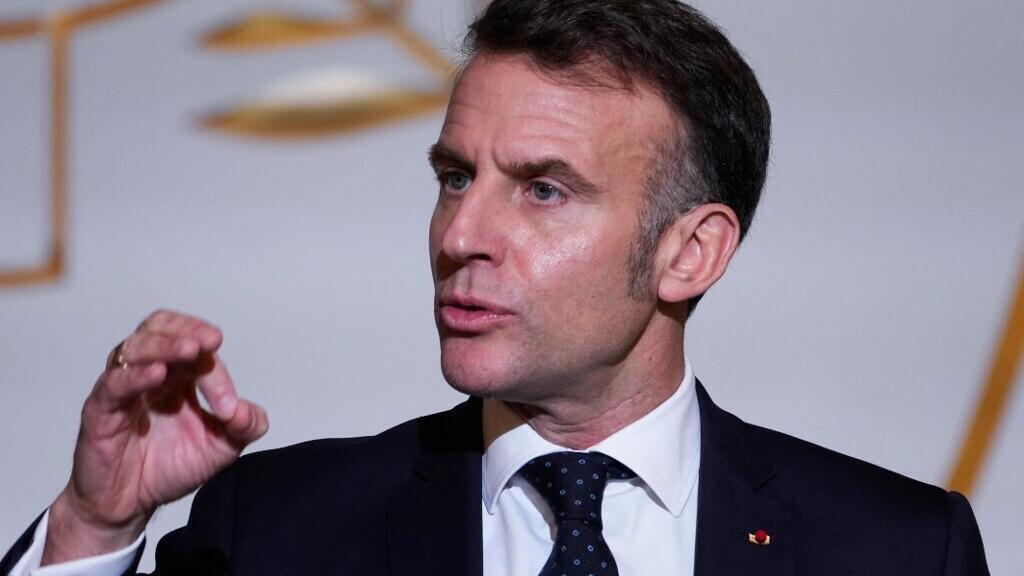
French President Emmanuel Macron on Wednesday urged parties across the political spectrum to disclose their links with groups advocating violence.
The demand came after a cabinet meeting in the aftermath of a march in Lyon on 21 February to commemorate the death of far-right activist Quentin Deranque.

The 23-year-old was killed on the sidelines of a meeting at Sciences Po Lyon hosted by the France Unbowed (LFI) MEP Rima Hassan on 12 February.
Deranque was treated by firefighters for a serious head injury and taken to hospital in a critical condition. He died on 14 February.
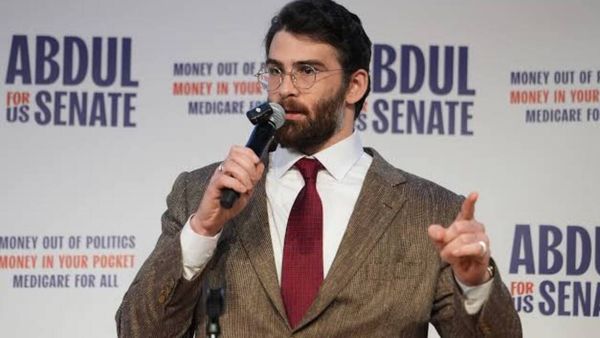
Seven people are under formal investigation for their alleged role in his death, including a former aide to a LFI lawmaker Raphaël Arnault.
"The president wants groups that have ties to violent groups – whether on the ultra left or the ultra right – to clarify their position,” said government spokesperson Maud Bregeon.
Macron urges 'calm' ahead of tense rally for slain far-right activist
“The president stressed that nothing, nothing in the Republic, justifies violence, and that we must condemn in the strongest possible terms these violent movements linked to the extreme left, just as we must condemn all violence, wherever it comes from,” Bregeon added.
Deranque providing security for activists from the Némésis identity collective, who were demonstrating against Hassan's visit.
Némésis blamed the killing on La Jeune Garde Antifasciste (Anti-Fascist Young Guard), a group co-founded by Arnault in Lyon in 2018 and dissolved by authorities in June.
“We will continue, without ambiguity, to carry out the necessary dissolutions of violent groups," Bregeon added.
French far-right leader Le Pen in high-stakes trial ahead of presidential race
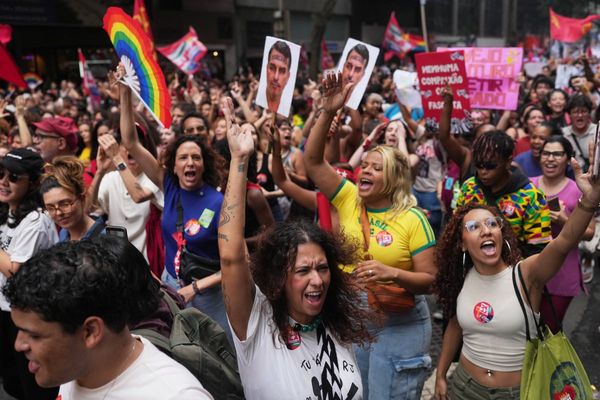
Around 3,200 people gathered for the march through the streets of Lyon. Many carried flowers and placards bearing pictures of Deranque and the words "Justice for Quentin" and "the extreme left kills".
Some wore surgical masks and sunglasses to cover their faces and chanted "We are at home" and "Antifa assassin".
The rally was heavily policed amid fears that clashes would break out between demonstrators and counter-protesters.
Videos circulating on social media showed Nazi salutes and racist insults. The local authority said it had reported them to the prosecutor.
Lyon mayor, Gregory Doucet, said he had tried to stop the procession fearing that French and European neo-Nazi groups would travel to the city for the event.
However, France's Interior Minister, Laurent Nunez, authorised the march, saying it should proceed in the interests of freedom of speech.