Get all your news in one place.
100's of premium titles.
One app.
Start reading
The Conversation
The Conversation
Marc Zimmer, Professor of Chemistry, Connecticut College

Machine learning cracked the protein-folding problem and won the 2024 Nobel Prize in chemistry

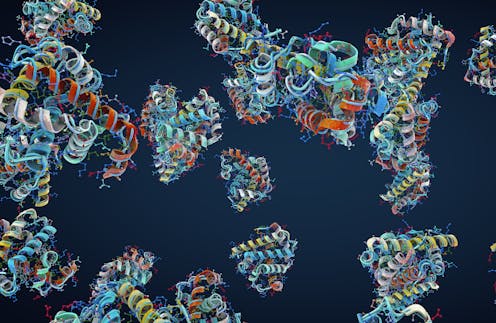
Protein molecules can have complicated structures that dictate their functions. Christoph Burgstedt/Science Photo Library via Getty Images

The 2024 Nobel Prize in chemistry recognized Demis Hassabis, John Jumper and David Baker for using machine learning to tackle one of biology’s biggest challenges: predicting the 3D shape of proteins and designing them from scratch.

This year’s award stood out because it honored research that originated at a tech company: DeepMind, an AI research startup that was acquired by Google in 2014. Most previous chemistry Nobel Prizes have gone to researchers in academia. Many laureates went on to form startup companies to further expand and commercialize their groundbreaking work – for instance, CRISPR gene-editing technology and quantum dots – but the research, from start to end, wasn’t done in the commercial sphere.

Sign up to read this article
Read news from 100's of titles, curated specifically for you.
Already a member? Sign in here
Related Stories
Top stories on inkl right now
One subscription that gives you access to news from hundreds of sites
Already a member? Sign in here
Our Picks
Fourteen days free
Download the app
One app. One membership.
100+ trusted global sources.