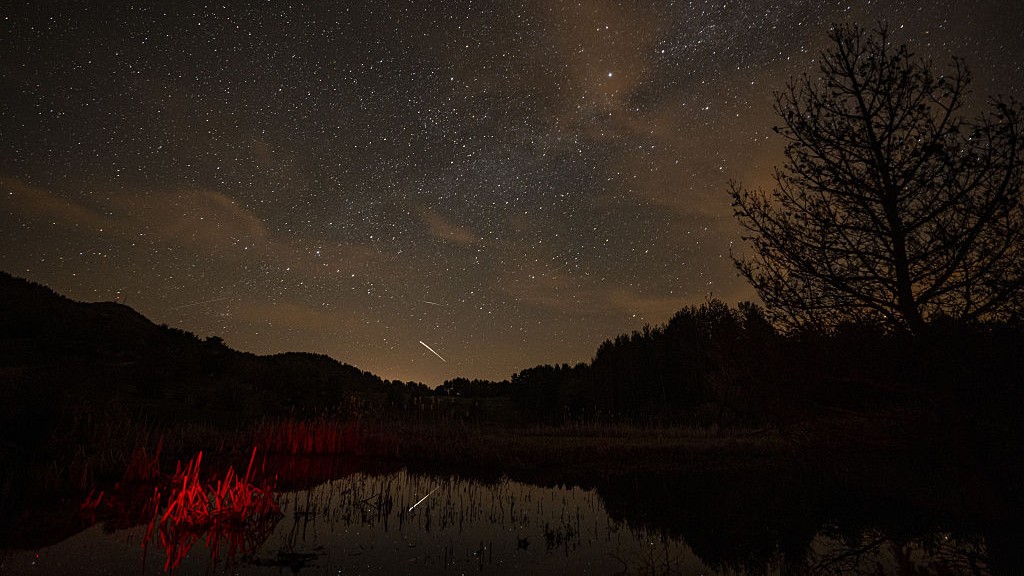
The Lyrid meteor shower put on a spectacular show, delighting sky watchers overnight with a peak rate of 10 to 20 meteors per hour.
The Lyrids occur each year between April 16-25 as Earth passes through the trail of primordial debris shed in the wake of the ancient comet C/1861 G1 Thatcher, which takes around 415 years to complete a single long, looping orbit of the sun. The first known recording of the Lyrid shower was made by Chinese astronomers in the year 687 BC, making it the oldest recorded recurring event of its type that is still active today, according to NASA.