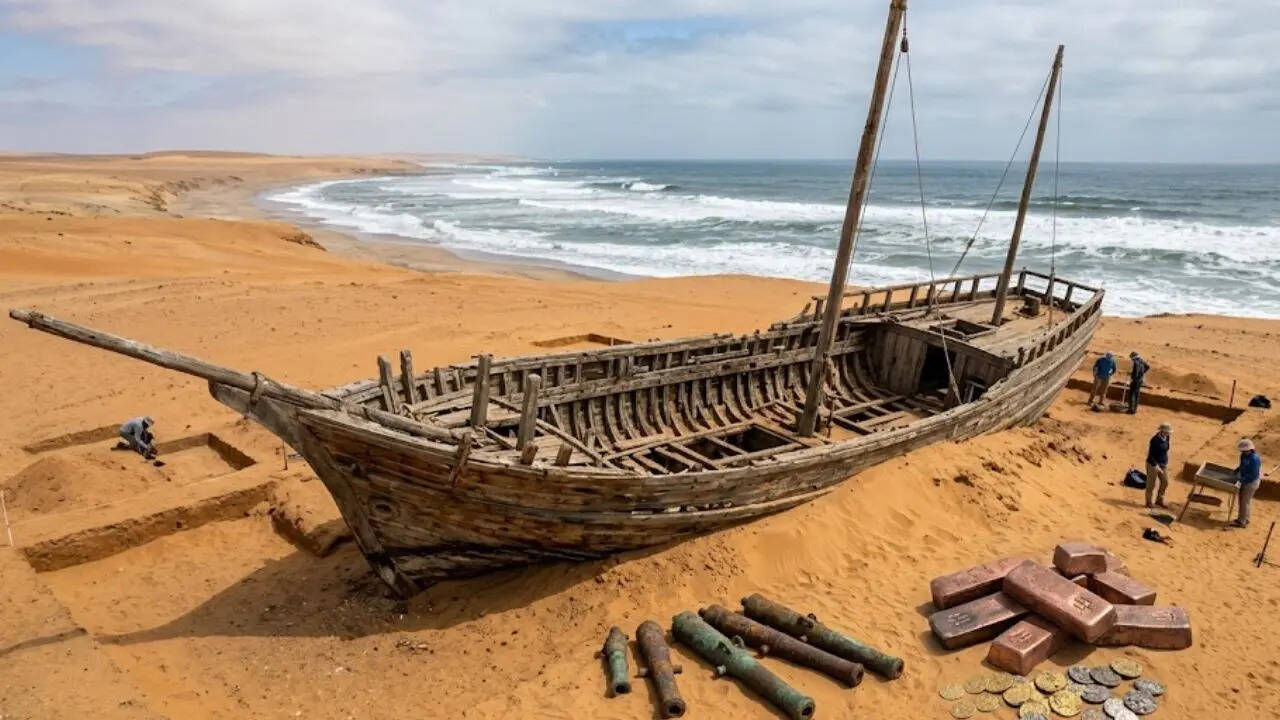
In 2008, a diamond mining operation near Oranjemund, Namibia, resulted in the discovery of a significant piece of history when the wreck of the Bom Jesus, a Portuguese merchant ship lost at sea in 1533, was found after being buried for over 500 years beneath layers of sand and water. The discovery allows archaeologists to view the wreckage as a time capsule from the Age of Discovery, with the ship's contents preserved almost perfectly, thanks to the ship's cargo of copper ingots, which provided protection for the ship from marine deterioration.
The discovery of the Bom Jesus opens up a variety of new opportunities to study the global trade routes of the 16th century, as well as the shipbuilding techniques of the time and the hazards faced by early explorers on their journeys through the treacherous Atlantic Ocean. These artifacts provide an unprecedented window into the maritime logistics and cultural exchanges that shaped early modern global navigation networks. Such findings also help historians reconstruct economic patterns and understand the scale of early globalisation during the Age of Discovery.