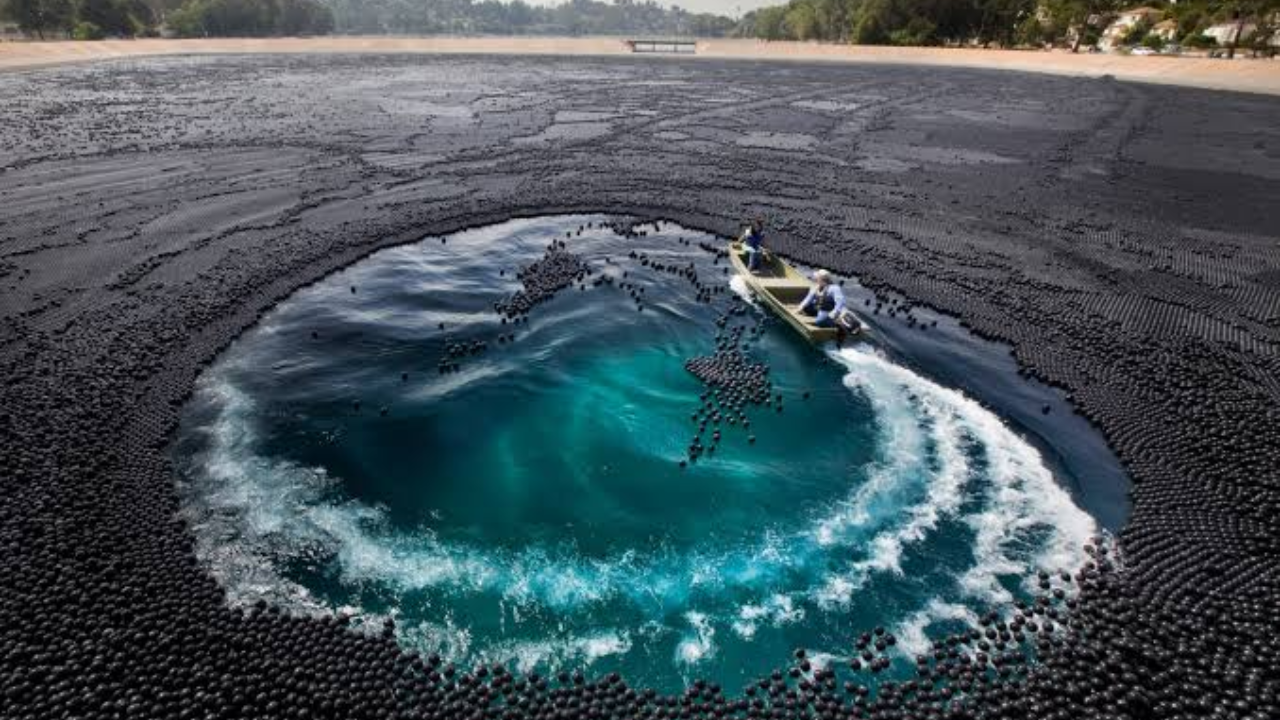
In 2015, millions of black plastic balls rolled across the surface of a reservoir in Los Angeles, creating an image that quickly travelled far beyond California. The 96 million shade balls were placed on the water during a severe drought, with a practical purpose: reducing evaporation while also helping protect drinking water from sunlight-related chemical reactions. At first glance, the idea appeared straightforward: cover the reservoir, block the sun and keep more water in the system. But there was another part of the calculation that was harder to see. Manufacturing such a vast quantity of plastic required substantial amounts of water, adding another environmental cost that was not immediately obvious when the balls were deployed. The plastic balls themselves required water to manufacture. A 2018 study examined that hidden water use and found that the environmental equation was more complicated than the reservoir alone suggested. The study highlighted how water-saving technologies can carry resource costs elsewhere in their supply chains. It showed why evaluating conservation measures requires considering not only their immediate benefits, but also the energy, materials and water needed to produce them.
Get breaking news anytime, anywhere. Download the TOI app now!